As a supplier of PVC hose machines, I’ve witnessed firsthand the critical role temperature control plays in the production of high – quality PVC hoses. In this blog, I’ll delve into what temperature control of a PVC hose machine is, why it’s so important, and how it impacts the overall manufacturing process. PVC Hose Machine
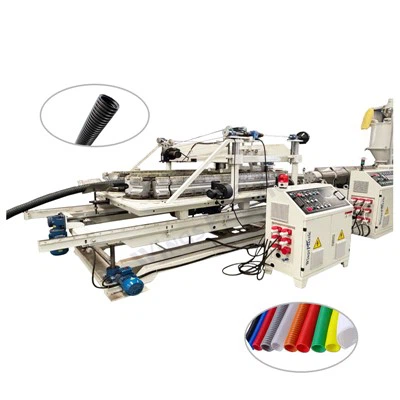
Understanding Temperature Control in PVC Hose Machines
Temperature control in a PVC hose machine refers to the precise regulation of heat at various stages of the hose manufacturing process. PVC, or polyvinyl chloride, is a thermoplastic material. This means that it can be softened by heat, shaped, and then solidified when cooled. The temperature control system in a PVC hose machine is designed to manage the heating and cooling cycles to ensure that the PVC material is processed under optimal conditions.
The process typically starts with the PVC resin being fed into the machine. At this stage, the temperature needs to be carefully controlled to melt the resin into a homogeneous, viscous state. The melting temperature of PVC can vary depending on the specific formulation, but generally, it ranges from 160°C to 200°C. If the temperature is too low, the resin may not melt completely, leading to uneven flow and potential defects in the hose. On the other hand, if the temperature is too high, the PVC can degrade, resulting in a loss of mechanical properties and a change in color.
Once the PVC is melted, it is forced through a die to form the shape of the hose. During this extrusion process, the temperature must be maintained to ensure a consistent flow rate and a smooth surface finish. After the hose is extruded, it needs to be cooled rapidly to set its shape. The cooling temperature and rate are also crucial. If the cooling is too fast, the hose may develop internal stresses, which can lead to cracking or other structural issues. If the cooling is too slow, the hose may deform or lose its shape.
Importance of Temperature Control
The importance of temperature control in a PVC hose machine cannot be overstated. Here are some key reasons why it is essential:
Product Quality
Proper temperature control ensures that the PVC hose has the desired mechanical properties, such as flexibility, strength, and durability. For example, if the temperature during the melting stage is not accurately controlled, the hose may have inconsistent wall thickness, which can affect its pressure – bearing capacity. In addition, maintaining the right temperature during cooling helps to prevent the formation of voids or bubbles in the hose, which can compromise its integrity.
Production Efficiency
Temperature control also plays a significant role in production efficiency. By maintaining the optimal temperature, the machine can operate at a consistent speed, reducing the likelihood of production stoppages due to material jams or other issues. Moreover, accurate temperature control allows for a faster cooling process, which means that more hoses can be produced in a given time period.
Cost – effectiveness
Effective temperature control can lead to cost savings. When the temperature is properly regulated, there is less waste of PVC material due to defective products. Additionally, the machine operates more efficiently, which reduces energy consumption and maintenance costs.
Components of a Temperature Control System
A typical temperature control system in a PVC hose machine consists of several components:
Heating Elements
Heating elements are used to raise the temperature of the PVC resin to the melting point. These can be in the form of electric heaters or oil – heated systems. Electric heaters are commonly used because they are easy to control and can provide precise temperature regulation. Oil – heated systems, on the other hand, offer better heat transfer and can maintain a more uniform temperature.
Temperature Sensors
Temperature sensors are crucial for monitoring the temperature at various points in the machine. They provide real – time feedback to the control system, allowing it to adjust the heating or cooling as needed. Common types of temperature sensors include thermocouples and resistance temperature detectors (RTDs).
Control Unit
The control unit is the brain of the temperature control system. It receives input from the temperature sensors and sends signals to the heating elements and cooling devices to maintain the desired temperature. The control unit can be programmed to follow a specific temperature profile based on the requirements of the PVC hose being produced.
Cooling Devices
Cooling devices are used to rapidly cool the extruded hose. This can be achieved through water cooling, air cooling, or a combination of both. Water cooling is more efficient and can provide faster cooling rates, while air cooling is more suitable for hoses that require a slower cooling process.
Challenges in Temperature Control
Despite the importance of temperature control, there are several challenges that manufacturers face:
Material Variability
Different PVC formulations have different melting and processing temperatures. This means that the temperature control system needs to be flexible enough to accommodate a variety of materials. Additionally, the quality of the PVC resin can vary, which can affect the temperature requirements during processing.
Environmental Factors
The ambient temperature and humidity can have an impact on the temperature control of the PVC hose machine. For example, in a hot and humid environment, the cooling process may be less effective, requiring additional cooling capacity.
Machine Wear and Tear
Over time, the heating elements, temperature sensors, and other components of the temperature control system can wear out. This can lead to inaccurate temperature readings and inconsistent temperature control. Regular maintenance and calibration are necessary to ensure the proper functioning of the system.
Solutions to Temperature Control Challenges
To overcome the challenges in temperature control, manufacturers can take the following steps:
Material Testing
Before starting production, it is important to test the PVC material to determine its melting and processing temperatures. This can help to set the appropriate temperature profile for the machine.
Environmental Control
Maintaining a stable environment in the production area can help to minimize the impact of ambient temperature and humidity on the temperature control system. This can be achieved through the use of air conditioning and dehumidification systems.
Regular Maintenance
Regular maintenance of the temperature control system is essential to ensure its accuracy and reliability. This includes cleaning the heating elements, replacing worn – out sensors, and calibrating the control unit.
Conclusion
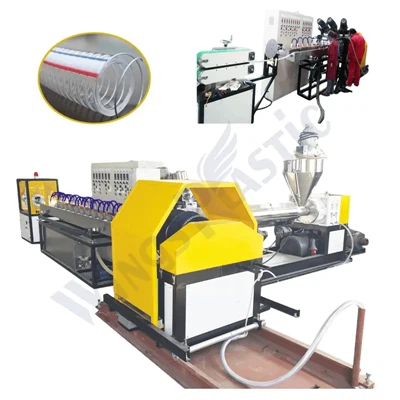
Temperature control is a critical aspect of PVC hose machine operation. It directly affects the quality, efficiency, and cost – effectiveness of the hose manufacturing process. As a PVC hose machine supplier, we understand the importance of providing our customers with machines that have precise temperature control systems. By investing in high – quality temperature control technology and following best practices, manufacturers can produce PVC hoses that meet the highest standards.
Plastic Corrugated Pipe Machine If you are in the market for a PVC hose machine and are interested in learning more about our products and how our temperature control systems can benefit your production, we invite you to contact us for a detailed discussion. Our team of experts is ready to assist you in finding the right solution for your specific needs.
References
- "Plastics Extrusion Technology" by John A. Brydson
- "PVC Handbook" by Eckhard Lücker and Rolf N. Rothon
Qingdao Wings Plastic Technology Co., Ltd.
As one of the most experienced pvc hose machine manufacturers and suppliers in China, we also support customized service. Please feel free to buy durable pvc hose machine made in China here from our factory. For price consultation, contact us.
Address: C02 Of Anshengyi Road, No.2 Fuan Industry Zone,Jiaodong Town, Jiaozhou City, Qingdao City, Shandong Province,China
E-mail: kelly@wingsplastic.com
WebSite: https://www.wingsextruder.com/
