If you’ve ever stood in a crowded co-working space, a busy hospital wing, or a bustling event venue, you’ve probably relied on divider panels without even noticing them. These unassuming partitions create quiet nooks, separate hazardous work zones, or break up open floor plans into functional spaces. But have you ever stopped to wonder what makes a divider panel actually good? As a divider panel supplier with nearly 15 years in this business, I’ve seen firsthand how the quality of these panels isn’t just a small detail—it’s the difference between a product that works hard for your space and one that becomes a costly, frustrating afterthought. Today, I want to pull back the curtain on what “quality” really means for divider panels, beyond just the price tag. Divider Panels
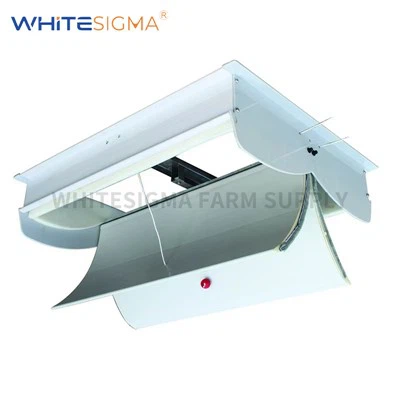
First, let’s get one thing straight: not all divider panels are created equal. I’ve visited job sites where cheap, thin panels bent in half under the weight of a single coat hook, or where the fabric covering peeled off after just a few months of moving them around. I’ve also worked with clients who invested in mid-grade panels that lasted years but struggled with sound privacy, leaving teams in open offices unable to focus on deep work. The quality of a divider panel is a mix of four core factors: material durability, functional performance, safety compliance, and design adaptability, and skipping any one of these leads to a product that doesn’t deliver long-term value.
Let’s start with the foundation: the core material and frame. Most people don’t realize that the frame is the backbone of a divider panel. A high-quality panel uses a heavy-duty, powder-coated steel or aluminum frame—aluminum is lightweight, perfect for mobile panels, while steel is ideal for fixed, permanent installations where maximum sturdiness is non-negotiable. I remember a client from a downtown tech startup who originally ordered $15 mobile panels from a big-box supplier. Within three months, the plastic casters on the frames had broken, the frames themselves were warping under the tension of being rolled across their concrete floor, and several panels had tipped over when a team member bumped into them. When they switched to our mid-tier panels with reinforced aluminum frames and industrial-grade casters, those same panels are still in use three years later, even though the team moves them every few weeks to reconfigure their workspaces. The mistake that cheap suppliers often make is cutting corners on the frame’s thickness. A standard quality frame should be at least 1.2mm thick for mobile panels, and 1.5mm for fixed ones. Anything thinner, and you’re asking for bending, wobbling, or breakage before the panel hits its first year of use.
Next up is the panel’s core material and surface covering, both of which impact durability and usability. The core of a quality divider panel is usually either honeycomb cardboard or solid particleboard, and there’s a common misconception that solid particleboard is always better. For most applications, honeycomb core is the sweet spot: it’s lightweight, so mobile panels are easy to move, yet incredibly strong. Our honeycomb cores are constructed with cross-linked paper that’s compressed into a hexagonal grid, making them rigid enough to hold a monitor, stack of files, or small whiteboard without bending. The surface covering is where suppliers can really go wrong with cheap products. Low-quality suppliers use thin, tear-prone vinyl that scratches or fades within months, or fabric that has low abrasion resistance. Our panels use two main surface options: a commercial-grade vinyl with a 100,000+ rub abrasion rating (that means you can wipe it down with disinfectant hundreds of times without it wearing out) and a solution-dyed fabric that resists fading from sunlight and doesn’t pill even after years of use. I learned this lesson the hard way early in my career, when we tested a cheaper fabric option for a hospital client. Within six months, the fabric had developed small snags and started to look dingy—something that’s unacceptable in a healthcare setting where cleanliness and professionalism matter. Now, all of our fabric surfaces are tested to meet healthcare-grade durability standards, and we stand by that with a 5-year warranty on all surface coverings.
Moving beyond the physical build, functional performance is a huge part of quality that many buyers overlook. The two most important functional metrics for divider panels are sound privacy and adjustability. For sound privacy, this is measured by the Sound Transmission Class (STC) rating, a scale that goes from 0 (no sound blocking) to 40+ (almost complete sound insulation). If you’re using divider panels in a co-working space where people are taking calls, or a law firm where attorneys need confidential conversations, an STC rating of at least 30 is non-negotiable. Cheaper panels often have an STC of around 18—enough to create a visual separation, but not enough to muffle the sound of a phone call or a team brainstorm. We use a special acoustic core in our mid and high-end panels, which adds a layer of dense, noise-dampening material between the honeycomb core and the surface covering, boosting STC ratings to 35 or higher. I had a client from a financial services firm tell me that after switching to our acoustic panels, their employee satisfaction surveys improved because people could finally work without overhearing colleagues’ client calls. That’s the kind of impact quality functional performance makes.
Adjustability is another key functional feature. A lot of buyers assume divider panels are one-size-fits-all, but great spaces evolve—so panels should too. Quality panels come with flexible add-ons: integrated power outlets for laptops, small whiteboards on the surface, clip-on shelves for files or plants, and even linking bars that let you connect multiple panels to create larger private areas. I’ve seen so many workplaces that have leftover, unused panels because they can’t adapt to new needs. For example, a startup that used their panels for individual workstations might later want to create a small meeting room—if their panels are compatible with linking bars and add-ons, they don’t have to buy new ones. Our panels are designed to be modular, so every add-on is interchangeable, and we offer custom cutouts for power or data lines for clients who need specific configurations.
Then there’s safety, a quality factor that’s non-negotiable for every application. Divider panels are used in places with kids (daycares), vulnerable people (hospitals), and high foot traffic (retail spaces), so they need to meet strict safety standards. First, fire resistance: most commercial spaces require panels to be Class A fire-rated, meaning they don’t spread fire rapidly or release toxic fumes when burned. Cheap panels often use low-quality materials that don’t meet fire codes, which can get a business fined or even closed down. All of our panels undergo third-party testing to meet NFPA 701 fire safety standards, the most common standard for commercial interior products. We also ensure that all edges are rounded and smooth, no sharp corners that could cause injury, and that the casters on mobile panels have brakes that lock securely, so panels don’t slide unexpectedly on smooth floors. For our healthcare clients, we also make sure all surfaces are non-porous and easy to disinfect, meeting OSHA guidelines for medical facilities. I once worked with a daycare that had a set of cheap panels from another supplier that had exposed particleboard cores—they were a magnet for spills and couldn’t be properly sanitized, which put them at risk for germ outbreaks. That’s why we prioritize non-porous surfaces for every panel we sell, even for clients that don’t explicitly need healthcare-grade products.
Now, you might be wondering why this matters if you’re just looking for a low-cost partition. The truth is, while a cheap panel might seem like a good deal upfront, it’s a false economy. Let’s do a quick math: a cheap mobile panel costs $50, and you’ll replace it every year. A mid-quality panel from a reputable supplier costs $150, and lasts 5+ years. Over five years, the cheap panels will cost you $250, plus the cost of labor to dispose of old panels and install new ones, plus the downtime when your space is being rearranged. The quality panels cost $150, and you never have to deal with that hassle. For businesses, that adds up. I’ve had clients tell me that switching to quality divider panels cut their annual facilities costs by thousands of dollars, because they weren’t constantly replacing broken equipment.
It’s also worth noting that quality doesn’t have to mean expensive. We work with small cafes, startups, and large corporations alike, and we offer tiered options so every client can get a quality panel that fits their budget. The key is knowing what to look for: ask for the STC rating, ask about the frame material and thickness, ask about safety certifications, and ask about warranties. If a supplier can’t answer those questions clearly, that’s a red flag. A few years ago, a small coffee shop owner came to me because he’d bought cheap panels to create separate seating areas for remote workers. Within two months, the panels were warping, the casters were breaking, and he had to take them down. He couldn’t afford to replace them all right away, so he bought a small set of our mid-grade panels. Those panels are still in use three years later, and he even bought more when his business expanded. That’s the value of quality: it works for your business, not against it.
At the end of the day, divider panels are more than just a way to split up a space. They’re tools that impact productivity, privacy, safety, and the overall atmosphere of a room. A good quality divider panel doesn’t just look nice—it lasts, performs well, keeps people safe, and adapts to your changing needs. I’ve been in this industry long enough to know that when you invest in a quality product, you’re not just buying a panel—you’re buying peace of mind. Whether you’re outfitting a new office, reorganizing a hospital wing, or setting up a pop-up event, the quality of your divider panels will make a difference.
If you’re ready to talk about what divider panels would work best for your space, let’s connect. We can walk through your needs, show you our product options, and answer all your questions about durability, performance, and safety. We don’t do one-size-fits-all solutions, because every space is unique. Whether you need a few mobile panels for a small co-working area or a full set of fixed acoustic panels for a large corporate office, we can help you find the right product that delivers long-term value.
Farm Gates References
- National Fire Protection Association. NFPA 701 Standard Methods of Fire Tests for Flame Propagation of Textiles and Films.
- American Society for Testing and Materials. ASTM E90 Standard Test Method for Laboratory Measurement of Airborne Sound Transmission Loss of Building Partitions and Elements.
- Occupational Safety and Health Administration. OSHA Guidelines for Commercial Interior Safety and Sanitation in Healthcare Facilities.
- Business and Institutional Furniture Manufacturers Association. BIFMA X5.5 Standard for Office Partitions and Workstations.
- U.S. General Services Administration. GSA Standard for Modular Office Partitions for Federal Facilities.
Whitesigma Farm Supply Co., Ltd.
Whitesigma Farm Supply Co., Ltd. is one of the most professional divider panels manufacturers and suppliers in China, specialized in providing high quality customized service for global clients. We warmly welcome you to wholesale durable divider panels made in China here from our factory.
Address: North Ring Road East, Donghe Village, Zhuozhou City, HeBei, China.
E-mail: Snow@whitesigma.com
WebSite: https://www.whitesigma.com/
