If you’ve ever stood next to a prototype lab bench at 2 a.m., watching a new wearable’s battery die 10 minutes before a critical test, or debugged a server motherboard where a regulator was overheating so badly it started melting the adjacent solder mask, you’ve probably wondered: why does that little linear regulator here work fine for low-current circuits, but fall apart when I need more than 500mA? That’s where a high current LDO comes in—and if you’re sourcing power management for devices that draw a lot of steady current without the chaos of switching regulators, understanding exactly what these parts are, and what makes them different from regular LDOs, could save you weeks of redesign work and thousands in failed prototypes. LDO
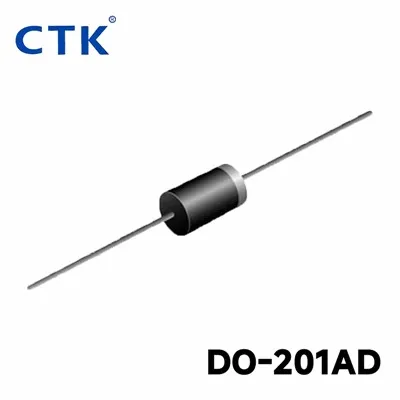
Let’s start with the basics, because you can’t talk about a high current LDO without first recalling what a standard LDO is. LDO stands for Low Dropout Regulator, right? Unlike switching regulators (which pulse current to step voltage up or down, and are great for efficiency but can add electromagnetic noise that messes with sensitive circuits like medical monitors or radio transceivers), LDOs are linear regulators. They work by using a pass transistor to sink or source current, adjusting its resistance to keep the output voltage stable, even if the input voltage or load current changes. The “dropout” is the minimum difference between input and output voltage the regulator needs to keep that stability—standard LDOs might have a dropout of 200mV or more at full load.
A high current LDO is just an LDO designed to handle load currents of 1A or higher, with many modern parts topping out at 5A, 10A, or even 20A in single packages, and arrays that can deliver 50A or more for data center and industrial applications. But here’s the thing: it’s not just a bigger pass transistor. If you take a regular 500mA LDO and swap its pass transistor for a larger one to try to get 5A out, you’ll run into all kinds of problems that can make the part useless, or even damage your circuit. That’s why designing a good high current LDO requires way more than just scaling up components.
Let’s talk about the biggest difference between standard and high current LDOs: thermal management. When a regulator converts voltage, it wastes power as heat, and that waste is called power dissipation. The formula for power dissipation in an LDO is simple: P = (V_in – V_out) × I_load. So if you have a 5V input to a 3.3V output LDO delivering 5A, that’s (5-3.3) ×5 = 8.5W of heat. A standard 500mA LDO might only dissipate 0.85W in the same scenario, which is trivial—no heat sink needed, you can just mount it on a PCB and forget about it. But 8.5W? That’s like leaving a phone charger plugged in and running at full tilt 24/7. If you don’t get rid of that heat, the junction temperature of the silicon inside the LDO will rise, way past its rated maximum (usually 125°C or 150°C), and it will either shut down to protect itself, or fail catastrophically.
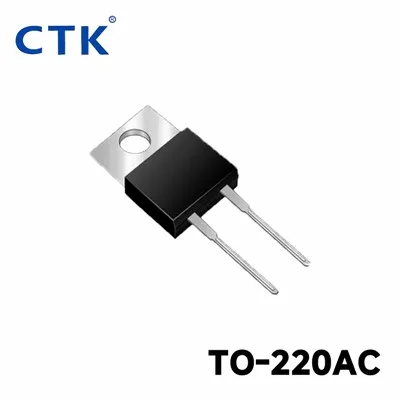
Good high current LDOs solve this in two key ways. First, they use large, exposed thermal pads on their packages. Unlike small SOT-23 packages for low-current LDOs, high current parts come in packages like D2PAK, TO-220, or even larger surface-mount packages with a 10mm x 10mm thermal pad. This pad connects directly to the silicon die inside, and you’re meant to solder it to a large copper pour on your PCB, usually with multiple vias to carry heat down to the inner and outer layers of the board. Second, many high current LDOs have integrated thermal protection circuits, but smart suppliers like ours design those circuits to activate before the junction temperature gets too high, not after the part is already smoking. We’ve seen a lot of designers think “my 5A LDO only needs a small heat sink because it’s only dissipating 8W,” but at 125°C junction temperature, that 8W feels way hotter than it would if it was spread evenly over a large surface. A 10mm x 10mm thermal pad connected to 4 square inches of PCB copper can dissipate that 8W easily with no heat sink, but skimp on the copper pour, and you’ll be dealing with brownouts or random resets.
Next, load transient response. If you’re designing a circuit that has parts that turn on and off suddenly—like a camera in a drone that takes a photo, or a hard drive in a server that spins up—you need a regulator that can keep the output voltage steady when the load current spikes. A standard LDO has a small pass transistor and output capacitor, so when the load jumps, it can only adjust so fast. For a high current LDO, the pass transistor is bigger, but that also means its parasitic capacitance and inductance are higher. Badly designed high current LDOs have terrible transient response: when your load jumps from 100mA to 5A in a microsecond, the output voltage drops by hundreds of millivolts, enough to crash a microcontroller or corrupt data.
Great high current LDOs optimize their control loop to handle this. They use smaller, higher quality output capacitors—often ceramic capacitors, which have lower ESR (equivalent series resistance) than the electrolytic capacitors used in many older designs—paired with precision error amplifiers that can adjust the pass transistor in nanoseconds. At our company, we test every high current LDO we ship with load transient tests that mimic real-world use: we jump the load from 10% to 100% of rated current in 1µs, and the output voltage variation is never more than 50mV, even at full load. That’s the kind of performance that matters when you’re powering sensitive electronics.
Noise is another big one. LDOs are popular because they’re quieter than switching regulators, but high current LDOs have a hidden problem: the larger pass transistor can introduce more electrical noise, especially at high loads. For applications like medical devices, where a power line spike can mess with an ECG reading, or RF transceivers, where noise can break a wireless signal, even a few millivolts of noise is unacceptable. Top-tier high current LDOs add noise reduction features: things like internal low-noise voltage references, and many have built-in bypass pins where you can add a small capacitor to filter out residual noise, or even sync to an external clock to avoid interfering with other circuits. We’ve had customers come to us after using a generic high current LDO that added enough noise to their EEG monitor to make readings unreadable; switching to our low-noise high current LDO solved the problem overnight, no extra filtering needed.
Wait, let’s also clear up a common misconception: high current LDOs are only for big, industrial or data center parts. That’s just not true. Think about a portable defibrillator, which needs to deliver a high current pulse to the patient, but the control circuits inside are sensitive to noise. Or a power tool, which has a brushless motor that draws high current when it starts, but its microcontroller needs a steady, low-noise 3.3V supply. Even high-end Bluetooth speakers, where the audio amplifier draws a lot of current when playing loud music, use high current LDOs to keep the audio clean, no distortion from power line fluctuations. We’ve shipped high current LDOs to startups building wearable exoskeletons, to small businesses making industrial sensor nodes, to automotive suppliers building advanced driver-assistance systems (ADAS)—all of them need high current, but not all of them have space for a big switching regulator, or can tolerate the noise that comes with it.
Now, if you’re in the market for a high current LDO, what should you look for, beyond just the rated current? First, check the dropout voltage at your target current. A lot of datasheets will list the dropout at maximum load, but if you only need 3A out of a 5A LDO, the dropout might be lower. For example, a 5A LDO with a 200mV dropout at 5A might have a 120mV dropout at 3A, which saves you power and heat. Second, check the thermal resistance, usually listed as θ_JA (junction to ambient). A part with a θ_JA of 20°C/W will run way cooler than one with 40°C/W, even with the same power dissipation. Third, check the transient response and noise specs—don’t just go by the rated current, because two LDOs with the same 5A rating can perform very differently in real circuits.
At our company, we’ve been making LDOs for over 15 years, and most of our business is in custom and standard high current LDOs for customers who’ve been burned by generic parts. Last year, a customer building a line of outdoor IoT sensors came to us saying their prototype boards were failing after 1000 hours of operation, because their generic high current LDO was overheating even with a heat sink, and the junction temperature was exceeding its rating. We swapped in our 3A high current LDO, which has an exposed thermal pad optimized for PCB heat dissipation, no extra heat sink, and their long-term reliability test passed with flying colors. Another customer, a medical device startup, needed a low-noise high current LDO for their new portable ultrasound; their original switching regulator introduced noise that blurred the ultrasound images, and our low-noise high current LDO fixed that without any changes to their board design.
The truth is, power management is one of those things most engineers don’t think about until it breaks. You design the microcontroller, the sensor, the battery, and then you just pick a random regulator from the datasheet, without checking if it can handle the current, or if it will overheat, or add noise. But a good high current LDO isn’t just a bigger version of a regular LDO—it’s a carefully designed part that balances current capacity, thermal performance, transient response, noise, and reliability, all without the downsides of switching regulators.
If you’re working on a new design, and you’re wondering if a high current LDO is right for you, or if your current regulator isn’t performing as well as it should, feel free to reach out to our team to discuss your power needs. We can help you pick the right LDO, or even design a custom part if your application has unique requirements.
Transistor References
Linear Voltage Regulator IC Selection Guide, Texas Instruments
Understanding LDO Regulator Dropout Voltage and Power Dissipation, Analog Devices
Thermal Design of Linear Regulators, ON Semiconductor
Load Transient Response for Linear Regulators, MaxLinear
Low Noise Linear Regulators for Sensitive Analog Circuits, NXP Semiconductors
Tongke Electronic Co., Ltd.
Tongke Electronic Co., Ltd. is one of the most experienced ldo manufacturers and suppliers in China, featured by quality products and low price. Please rest assured to wholesale advanced ldo made in China here from our factory. Contact us for pricelist.
Address: No.3,Chayuan Rd, Street 3, AilingKan, Dalingshan, Dongguan, Guangdong, China.
E-mail: tina@ctk-elec.com
WebSite: https://www.ctkchip.com/
