If you’ve ever stood in a shipping yard watching a semi-trailer pull away, bouncing slightly as it navigates a tight turn, you’ve probably wondered: how did they get that load on there? Too often, I see drivers and warehouse teams cut corners when loading semi-trailers—stacking boxes haphazardly, overloading one side, or forgetting to secure the rear of pallets—and it’s not just a hassle. It’s dangerous. As a semi-trailer supplier who’s been in this industry for 12 years, I’ve seen firsthand what happens when a load isn’t secured right: damaged cargo, overturned trailers, even accidents on the highway that hurt people and cost businesses thousands. Today, I’m breaking down exactly how to load a semi-trailer properly, the science behind it, and the small mistakes that sink big operations. Semi-trailer

First, let’s talk about pre-load planning. This isn’t just “grab the pallet and go.” Before you move a single item into the trailer, you need to know two things: your trailer’s weight limits and your cargo’s specific needs. Every semi-trailer I build has a clearly labeled gross vehicle weight rating (GVWR)—that’s the total weight the trailer can hold, including the trailer itself, cargo, and any equipment. I’ve seen new customers try to cram 10,000 pounds of extra product into a trailer rated for 34,000 pounds, and by the time they hit the scale at a weigh station, they’re facing fines that make the cost of an extra trailer load look like pocket change.
Beyond total weight, you have to distribute that weight evenly. A common mistake is loading all the heavy pallets at the front of the trailer, near the cab. That shifts too much weight to the steer axle of the truck, making steering jerky and unsafe. Or loading all the heavy stuff at the back, which overworks the trailer’s rear axle and can cause swaying on the highway. The golden rule here is 60% of the cargo weight goes to the front half of the trailer, 40% to the back half. Wait, you say—what if my cargo is all heavy and uniform, like steel coils or engine blocks? Then I suggest shifting 55% to the front, just a little more, to account for the trailer’s own weight. For lighter, bulkier cargo like cardboard boxes or furniture, you can stick to that 60/40 split, but still keep heavy items low to the ground. Gravity is your friend here—lower center of gravity means less rollover risk.
Next, how to arrange cargo on the trailer floor. Start with a clean, flat surface. I’ve had customers tell me they “saved time” by not sweeping the trailer before loading, only to find a loose nail under a pallet that punctured a hole in the trailer’s floor mid-route. Not only does that cost a lot to repair, but it can damage whatever cargo is above or below the damaged spot. Once the floor is ready, use your pallet jack or forklift to place the first pallet along the left side of the trailer, about two feet from the side wall. Leave that space for a reason: it gives you room to walk between pallets for strapping later, and it prevents cargo from shifting side to side.
Now, stack pallets tightly, with no gaps. Gaps are the enemy. If you leave a foot of space between two pallets, when the trailer hits a pothole or slams on brakes, that space turns into momentum— the pallet slams into the next one, or worse, shifts sideways and falls over. For uniform pallets, stack them in blocks that line up perfectly. For non-uniform cargo, like odd-sized boxes or crates, fill gaps with dunnage—those lightweight wooden or plastic blocks we supply as standard with every new trailer. Don’t use old cardboard boxes as dunnage; they crush easily and leave gaps over time.
Here’s a tip most loading teams miss: align the top layers of pallets with the lower layers. If the bottom pallet is 40 inches high and the next one is 36 inches, that creates a bump on top that puts extra pressure on the edges of the pallets below. Over long hauls, that pressure weakens the pallets, leading to collapsed stacks and damaged cargo. I always tell my customers: measure every pallet’s height before stacking, and adjust accordingly. If one pallet is a little shorter, add a thin layer of dunnage on top of the lower pallet to make a flat, even surface.
Now, securing the load. Even if you arranged the cargo perfectly, it will shift if you don’t strap it down. First, use the right equipment. I recommend using 2-inch-wide polypropylene straps for most general cargo, and 3-inch straps for heavy, dense loads like machinery. Never use bungee cords or twine—those are for moving a couch across town, not 50,000 pounds of cargo on the highway.
Start with vertical straps. Thread the strap through the built-in tie-down points on the trailer’s side walls or floor, not through the pallet slats. Pallets can snap if you pull too hard, which is a common hidden hazard. Pull the strap tight, but don’t over-tighten—you don’t want to bend the trailer’s side walls, which weakens them over time. For every four pallets in a row, add one vertical strap along the middle of the group to keep it from shifting side to side.
Then add horizontal straps across the top of the cargo stack. These prevent the top layers from sliding forward when the driver hits the brakes. For a stack that’s 8 feet high, add at least two horizontal straps: one near the top of the stack, one about four feet down. If your stack is taller than 8 feet, add a third strap halfway between the first two. A lot of teams only add horizontal straps along the front and back of the stack, but the middle is where the most shifting happens. Think of it like a bookcase: the middle shelves hold the most weight, so you need extra support there.
For very heavy or unstable loads, like those coils I mentioned earlier, use corner protectors to keep the straps from cutting into the cargo. And always double-check that your straps are rated for the weight you’re securing. A 5,000-pound strap won’t hold a 10,000-pound load—simple as that. I’ve had a customer come back to me last year with a load of steel pipes that shifted mid-route, because they used straps rated for only half the weight. The pipes crushed three pallets of electronics, and the trailer’s side wall was bent so bad we had to replace the whole section. That’s a $15,000 mistake that could have been avoided with the right straps.
Wait, what about open-top trailers? A lot of my customers use these for construction materials or large equipment. Loading these follows the same weight distribution rule, but you have to add side nets or tarps, and make sure the cargo is tied down to the trailer’s roof tie-downs too. Never leave open-top loads uncovered—wind can catch a stack of lumber or a pile of pipes and lift them right off the trailer. I’ve seen that happen on I-95 in Florida, and it not only destroyed the cargo, but it caused a multi-car accident. It’s not worth cutting that corner.
Now, a few common mistakes I see every week, even from experienced teams. First, overhanging cargo. You might think it’s smarter to stick a few extra boxes over the back of the trailer to save space, but that overhang creates a lever effect. When you hit a bump, that overhang pulls on the back of the trailer, straining the frame, and if it’s too long, it can hit low bridges or other vehicles on the road. The rule is: no cargo can extend more than 4 feet beyond the rear of the trailer. If you need more space, use the next trailer.
Second, not labeling fragile cargo. If you have boxes marked “fragile” or “this side up,” make sure they’re placed on the top of the stack, not buried under 1,000 pounds of heavy boxes. I once had a customer bury a crate of glass jars under a stack of canned goods, and by the time they reached their destination, every jar was shattered. It took them three days to resend the order, and they lost a major client. Small labels save big headaches.
Third, forgetting to check the trailer’s condition before loading. I can’t stress this enough. Before you even bring the first pallet in, walk the entire trailer. Check the floor for dents or holes, the side walls for cracks, the tie-down points for rust or damage. A few years ago, a customer loaded a trailer without noticing a broken tie-down point, and when they tightened the strap, the wall collapsed. They had to pay for a new trailer, and the load was delayed for a week. That’s avoidable.
So why does all this matter to you? If you’re a business owner, proper loading isn’t just about following rules—it’s about saving money. Damaged cargo costs you money in replacements and lost revenue. Accidents cost you fines, lawsuits, and damage to your brand. And as a semi-trailer supplier, I’ve seen that businesses that load their trailers properly have fewer breakdowns, longer trailer lifespans, and safer drivers. A trailer that’s loaded right can last 15 years or more, while one that’s overloaded or poorly secured will need repairs every few months.
Here’s the thing: you don’t have to be a logistics expert to do this right. It’s just following a few simple, consistent steps. Plan the weight distribution, arrange cargo tightly with no gaps, use the right straps, and check everything before you hit the road. If you’re new to the industry, start small—practice on a few loads, get a feel for the weight limits, and work with a reputable supplier who can give you tips specific to your trailer.
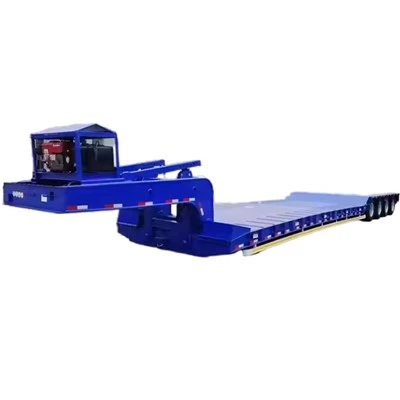
If you’re tired of dealing with damaged cargo, frequent repairs, or safety risks when loading your semi-trailers, I’m here to help. Whether you need to replace a worn trailer, get a new trailer built to your specific loading needs, or just pick up a few tips from someone who’s been doing this for decades, I’d love to chat.
Truck Reference:
- Federal Motor Carrier Safety Administration. (2022). Cargo Securement Rules: 49 CFR Part 393. Federal Motor Carrier Safety Administration.
- North American Trailer Dealers Association. (2021). Best Practices for Semi-Trailer Loading and Weight Distribution. North American Trailer Dealers Association.
- National Institute for Occupational Safety and Health. (2020). Workplace Safety in Heavy Duty Loading and Unloading Operations. U.S. Department of Health and Human Services.
Shandong Huajiang Automobile Trading Co., Ltd.
As one of the most professional semi-trailer manufacturers and suppliers in China, we also support customized service. With abundant experience, we warmly welcome you to buy advanced semi-trailer for sale here from our factory. For price consultation, contact us.
Address: Industrial Park, Quanpu Town, Liangshan County, Jining City, Shandong Province
E-mail: 15105379161@163.com
WebSite: https://www.hj-trailer.com/
