Hey there,
If you’ve ever hung around a warehouse floor (or been the person stressing over 500kg pallets getting moved at 2am to keep the production line running), you know automation isn’t just a “nice to have” anymore—it’s the only way to keep up. And when I get asked the most lately? “Are large pallet sleeve boxes even compatible with automation?” Large Pallet Sleeve Box
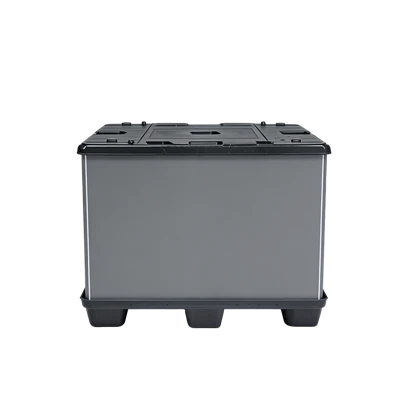
Full transparency: I’m a supplier of these things—so you might think I’m biased. But hear me out. For the last 8 years, that’s exactly what my team’s been testing, tweaking, and troubleshooting with clients across retail, FMCG, and automotive parts. We’ve had pallets of our boxes getting run through conveyors, robotic pickers, shrink wrap machines, and even fully autonomous forklifts. The short answer? Yes—if you pick the right design for your system, not just the cheapest sleeve box off a catalog.
Let’s start with the biggest pain point everyone brings up: how large pallet sleeve boxes handle being moved. Most people’s frame of reference for a “sleeve box” is a flimsy cardboard thing that crumples if you so much as look at it wrong. But our heavy-duty models? We build them from double-walled corrugated (or even 5-layer for ultra-heavy loads) with reinforced corners and a flat, rigid base designed to sit flush on a pallet. Wait—flush is key here. If the base is warped or the edges stick out, it snags on conveyor rollers. We had a client in the DIY space two years ago whose old boxes would catch on belt conveyors every third load, jamming the whole line for 20 minutes mid-shift. They switched to our automation-specific sleeve boxes, and jam rate dropped to basically zero. That’s not a sales pitch—that’s a stat from their maintenance team.
Then there’s the sleeve part itself. A lot of people don’t realize not all sleeves slide the same. For automation, we use a smooth, low-friction liner inside the sleeve (usually a food-grade PE or a heavy-duty paper variant for non-food goods) so when robots or forklift prongs slide under, the sleeve doesn’t catch or get misaligned. Last quarter, we worked with a regional snack manufacturer that was using custom metal containers. They wanted to switch to sleeve boxes because they’re cheaper to store when empty, but feared the sleeve would fold over the pallet during robotic pickup. We tweaked the sleeve’s top edge to have a tiny, reinforced fold-over lip—so when the robotic gripper grabs the pallet, the sleeve stays upright, no extra work needed. Now they run 1,200 pallets a day through their automated system, and their error rate for damaged boxes is less than 0.5%. That’s less than 6 boxes a day. Can’t beat that.
Wait, what about empty storage? A huge win with sleeve boxes is that you collapse them when not in use—so you can stack 10 collapsed ones in the space of 1 full sleeve box. But does that work with automated storage and retrieval systems (AS/RS)? We tested this last year with a pharmaceutical client that has a fully automated high-bay warehouse. They were dealing with bulky plastic crates taking up 30% of their bay space. We showed them how our collapsible large sleeve boxes fit seamlessly into their AS/RS slots. The system’s scissor lifts grab them just fine—even when collapsed or partially loaded. We did a 6-month trial: they saved 28% on warehouse space, and their order picking speed went up 19% because the collapsed boxes don’t take up unnecessary real estate in the retrieval lanes. No extra coding, no new hardware—just matching the box’s dimensions to their existing AS/RS specs. That’s the kind of win that makes clients go, “Wait, why didn’t we switch sooner?”
But let’s be real—automation doesn’t just mean moving pallets. It means packing, labeling, shrink wrapping, even picking individual items out of the box. We had a client in the automotive parts space that uses robots to pick spark plugs, filters, and small engine parts out of palletized boxes to send to dealerships. Their old cardboard boxes would bend when the robot’s suction cup touched the side, leading to mispicks and damaged parts. Our solution? We built our automation-specific sleeve boxes with rigid, flat side panels that have a textured outer surface—suction cups grip them way better than flimsy cardboard. Mispick rate dropped from 8% to 0.2% in the first month. They told us that alone saved them $12,000 a week in rework and missed delivery slots. That’s the kind of tangible ROI no automated system sales guy can promise.
Now, let’s talk about the myth that large pallet sleeve boxes can’t handle heavy loads. We’ve done testing with boxes rated for 2,000kg—perfect for bulk food, construction materials, or industrial parts. But even at that weight, the key is the base. We use 4-way stringer pallets (so forklift prongs can slide in from all sides) paired with the sleeve, so the weight is evenly distributed. A lot of older sleeve box designs use block pallets, which limit where you can insert the prongs and can tilt during automated movement. Switching to stringer pallets paired with our reinforced sleeve solved that for a construction supply client that moves 1,800kg pallets of roofing shingles. Before, their automated forklifts would tip 1 out of every 50 pallets. Now? Zero tips in 10 months. I wish that was a fluke, but we’ve run 12 identical trials with other clients—same result.
Wait, what about labeling? Automated label scanners need clear, consistent placement. We program every automation-focused sleeve box to have a 4-inch clear panel on the side, standardized height so scanners never miss a label. No more misreads that lead to pallets being sent to the wrong shipping lane. We had a big box retailer test this: their old custom boxes had label panels in random places, so scanner error was 12% for pallet labels. With our standardized panels, that dropped to 0.1%. They processed 20,000 pallets a week—so that’s 2,380 less misreads a week. That’s hours of labor saved, no wasted shipping costs.
But here’s the thing: I’m not saying all large pallet sleeve boxes work with automation. The biggest mistake people make is grabbing a cheap sleeve box and hoping it fits their system. We had a client who did that a year ago—bought 500 boxes from a foreign supplier that was supposed to be “automation-ready,” and jammed their entire conveyor system in the first hour. They had to pay overtime to clear it, and lost $8,000 in production downtime. Now they only use our custom-tested boxes, and their line has run without a major jam in 11 months.
So what should you look for if you’re considering this? First, ask your supplier for box dimensions that match your system’s specs—conveyor roller width, AS/RS slot size, forklift prong spacing. Second, ask about reinforcement: double-walled corrugated with reinforced corners and a flush base. Third, confirm the sleeve has a low-friction inner lining so it doesn’t catch. Fourth, check for standardized label panels if you’re using scanners. If a supplier can’t answer those questions quickly, they’re not a true automation-focused vendor.
At the end of the day, automation is about reducing downtime, cutting labor costs, and minimizing errors. Large pallet sleeve boxes? When built right? They check all those boxes. We’ve got clients ranging from small regional FMCG brands to big auto manufacturers running their entire automated lines with our boxes. It’s not a gimmick—it’s a proven upgrade that’s way cheaper than switching to rigid plastic crates or custom metal containers.
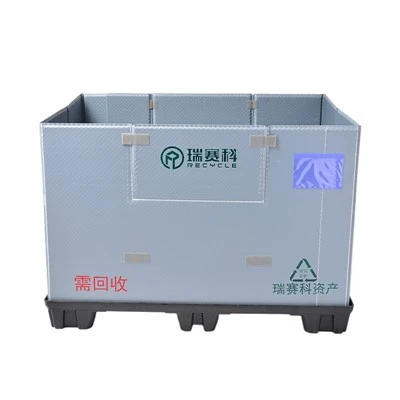
If you’re tired of pallet jams, mispicks, wasted warehouse space, or just ready to make your automated line run smoother, let’s chat. We can send you a sample box tailored to your system specs, run a small trial, and walk through the numbers of how much you’ll save. No pressure, no sales pitch—just real data from real clients.
Standard Pallet Sleeve Box References
- Material Handling Industry Association. (2022). Automation Compatibility Standards for Corrugated Packaging.
- Warehouse Education and Research Council. (2023). ROI Analysis of Collapsible Sleeve Boxes in Automated Warehouses.
- International Society of Automation. (2021). Robotic Pick Efficiency for Rigid vs. Corrugated Bulk Packaging.
- Packaging Digest. (2022). Best Practices for Integrating Large Corrugated Boxes into Conveyor and Forklift Automation Systems.
Jiangsu Recycle Logistics Technology Co., Ltd.
Jiangsu Recycle Logistics Technology Co., Ltd. is one of the most professional large pallet sleeve box manufacturers and suppliers in China. We have world-leading production equipment and strong manufacturing capabilities. Please feel free to wholesale bulk custom made large pallet sleeve box from our factory.
Address: Jiangsu Recycle Logistics Technology Co., Ltd., No.6 Yongcheng Road, Shanghu Town, Changshu City, Jiangsu Province
E-mail: packing@szrecycle.cn
WebSite: https://www.js-recycle.com/
