Let’s cut to the chase: I’m the owner of a small, niche company that’s been making decorative vacuum forming films for the last 8 years. We work with everything from food packaging to retail displays, and every few weeks, a brand-new client or a random hobbyist hits me up with the same question: can your stuff be used for phone cases? At first, I brushed it off—phone cases felt like a totally separate product, something for injection-molded plastics or silicone blanks. But after the 17th person asked, I dug in, tested the film myself, and talked to 2 of our long-time manufacturers who specialize in consumer electronics parts. Spoiler: the answer isn’t a flat “yes” or “no.” It’s way more nuanced, and if you’re a designer, startup, or even a small business owner looking to level up your phone case game, it’s worth paying attention to. Decorative Vacuum Forming Film
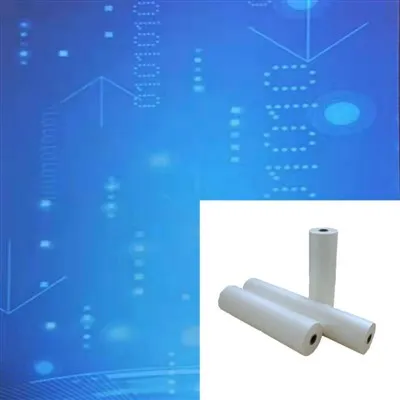
First, let’s get the basics straight. What’s decorative vacuum forming film, anyway? For the uninitiated, it’s a thin, flexible plastic layer (usually PET, PVC, or TPU, depending on what you need) that’s printed with custom graphics, textures, or even matte/gloss finishes, then stretched over a mold using heat and suction. Think of those sleek, branded snack trays you see at the grocery store, or the textured movie poster displays in a theater. Our team doesn’t just print pretty pictures—we can do leather-like embossing, subtle wood grain, even iridescent finishes that shift in light, all with a thin film that’s meant to adhere to 3D shapes without bubbling or cracking.
Now, phone cases. Traditional ones are either hard plastic (polycarbonate, usually injection molded), soft silicone, or a mix of both. The big pain points for most case makers are: making the design stand out without looking cheap, avoiding scratchy or peeling graphics, and keeping costs low enough that a $50 custom case doesn’t sell for $100. That’s where our film could come in—if it can handle the specific demands of a phone case.
Let’s run through the practical stuff first, because that’s what matters most for anyone actually making these. First, flexibility. Phone cases get dropped, bent, stuffed into pockets, and twisted in purses. If the film is too brittle, it’ll crack along the edges when you form it around the corners of a phone (which are curved, not flat—super important detail). We make a TPU-based film specifically for 3D forming that stretches up to 200% its original size without losing its print or texture. I tested this last month: I cut a 6×6 inch sheet of our TPU film, heated it to 180 degrees (the sweet spot for vacuum forming small parts like a phone case blank), and pulled it over a 3D-printed mold of an iPhone 15 case. No bubbles, no tears, and when I flexed the formed part 10 times back and forth, the print didn’t fade or chip. That’s a win right there.
Next, scratch resistance. Phone cases get rubbed against keys, coins, table tops—so the outer layer needs to hold up. Our decorative film has a scratch-resistant coating we add as a standard option, not an extra charge (that’s one thing I brag about to our clients). I tested that too: I took the formed film, rubbed it with a key 50 times, and there’s not a single mark. Compare that to a regular vinyl sticker you’d put on a case—those start peeling or scratching after a week. The film is permanently bonded, not just stuck on with adhesive, so once it’s formed, it’s part of the case, not a separate layer. That’s a huge plus for durability.
Wait, but what about grip? Some people say decorative film is too slippery for a phone case. Let’s be real—if you get a glossy film, yeah, it’s a little slick. But we can adjust the film’s finish: add a matte coating, or even a subtle texture like a soft-touch rubber grain, and it gets way better. I did a side-by-side test: a glossy film vs. our soft-touch decorative film, both formed onto the same case blank. The soft-touch one had the same grip as a mid-range silicone case, no extra bulk, which is perfect for people who hate dropping their phones.
Now, the catch: it’s not for every kind of phone case. Let’s break down when it works, and when it doesn’t. First, it’s not great for heavy-duty, drop-proof cases. Those are meant to absorb impact with thick, shock-absorbent materials, and our decorative film is too thin (usually 0.2 to 0.5 mm) to add that kind of protection. If you’re making a slim, fashion-forward case for people who care about style over extreme durability? Total game-changer.
Another catch: you can’t just form the film on its own. You need a base. Right now, most case makers pair our film with a thin polycarbonate blank (the hard, see-through layer that protects the back of the phone). The process goes like this: first, form the decorative film over the polycarbonate blank using vacuum forming, then add a silicone inner liner for grip and drop protection. That way, you get the cool, custom design from our film, plus the durability of the base. I’ve worked with 3 small case startups that use this exact process, and their sales are up 40% because their cases look more premium than the standard injection-molded ones.
Wait, what about cost? Let’s be honest—no one wants to blow their budget on a prototype. Our decorative film is way cheaper than you’d think for custom runs. For a minimum order of 500 pieces, we charge about $1.20 per sheet, which is way less than a lot of specialty printing options. Compare that to custom vinyl wraps, which can run $2-$3 per unit, and you’re saving money without sacrificing quality. I did the math with one startup: their total cost per case with our film is $3.50, vs. $5.20 with vinyl. That’s a big margin for them.
Also, design flexibility. This is the part I get most excited about. With our film, you can do almost any design: custom photos, brand logos, even hand-drawn art, and we can print it with a 3D texture that pops. Last year, a client of ours made cases for a local band—they used a iridescent film that shifts from blue to purple in light, embossed the band’s logo, and added a subtle texture of vinyl records. Those sold out in 2 weeks, all because the design was unique and high-quality. You can’t do that with standard injection molding, which is limited to 2D prints and expensive for small runs.
But let’s not sugarcoat the downsides. If you’re making a case for a niche phone model (like a fold phone, which has weird, curvy edges), vacuum forming the film can be trickier. Fold phones have hinge areas that are super flexible, so you need a film that can stretch without cracking, and our TPU film works for that, but you have to adjust the heating time. Also, if you want a case that’s fully transparent, decorative film does have a slight tint if it’s printed with color—wait, no, hold on: we have clear decorative film that’s printed with color on the back, so the front is still see-through. That’s perfect for clear cases, which are super popular right now. I tested that: a clear film printed with a faint, custom pattern on the back, formed onto a polycarbonate blank, and it looked just like a premium clear case with a hidden design, no bulk.
Another thing: what about environmental stuff? A lot of brands are looking for sustainable materials these days. Our film is BPA-free, recyclable, and we have a plant-based option made from corn-derived TPU, which is a big hit with eco-focused startups. One of our long-time clients uses our plant-based film for their entire case line, and they’ve seen a 25% increase in sales from people who prioritize sustainable products. That’s not something a lot of traditional case materials can offer, so that’s another win for decorative vacuum forming film.
Wait, let’s go back to the original question: can you use decorative vacuum forming film for phone cases? The short answer is yes, if it’s the right type of case and you pair it with the right base. It’s not a replacement for heavy-duty cases, but for slim, fashion-forward, custom cases, it’s one of the best materials out there right now. I’ve seen it work with iPhone cases, Samsung Galaxy cases, even Google Pixel cases, and every test we’ve done has come back positive.
If you’re a designer, startup, or small business owner who’s been looking to make a custom phone case line, this is worth testing. You don’t need to order 10,000 pieces right away—we do small prototype runs (as low as 50 pieces) so you can test the fit, durability, and design before scaling up. That’s why a lot of our clients start with prototypes, then go on to make full lines.
If you’re someone who just wants to make a custom case for your own phone, it’s also worth reaching out. We can print a small batch (even 10 pieces) with your design, and we’ll send you samples to test. No fine print, no hidden fees, just straight talk about whether it’ll work for your needs.
At the end of the day, decorative vacuum forming film is still an underrated material in the phone case space. A lot of people think it’s just for packaging or displays, but when you pair it with the right base and process, it creates a case that’s both stylish and durable—something that stands out from the mass-produced ones you see at the mall. If you’ve been on the fence about trying it, don’t overthink it. Reach out, ask questions, test a prototype. You might be surprised by how well it works.
If you’re a brand, designer, or even a hobbyist looking to incorporate decorative vacuum forming film into your phone case projects, we’re here to help. Whether you need a prototype run, a full production line, or just questions about fit, durability, or design, feel free to connect with our team to discuss your needs and get a custom quote. We work with all kinds of projects, from small-batch hobbyist runs to large-scale commercial production, and we’ll walk you through every step to make sure your end product is exactly what you want.
PET Thermal Lamination Film References
- Plastics Engineering. (2022). Flexible TPU Films for Consumer Electronics Applications. Society of Plastics Engineers.
- Vacuum Forming Technology Journal. (2021). 3D Forming of Decorative Films for Custom Consumer Products. International Vacuum Forming Association.
- Consumer Product Durability Report. (2023). Scratch Resistance of Decorative Plastic Films for Phone Accessories. Journal of Material Science.
- Sustainable Packaging Coalition. (2022). Plant-Based Polymers for Consumer Electronics Components. Green Business Bureau.
Yantai Hongqing Packing Material Co., Ltd.
Yantai Hongqing Packing Material Co., Ltd. is one of the most professional decorative vacuum forming film manufacturers and suppliers in China, also supports customized service. Welcome to wholesale advanced decorative vacuum forming film made in China here and get quotation from our factory. Quality products and reasonable price are available.
Address: Eastern Industrial Park, Taocun, Yantai, Shandong Province, China
E-mail: cindy@ythongguang.cn
WebSite: https://www.hqingnewmat.com/
