Hey everyone, and welcome back to my little corner of the battery world—today we’re talking about a question I get at least twice a week from electric scooter riders: Can that 60C Standard Hardcase Car Lipo I sell actually work in my e-scooter? Let’s cut through the jargon, keep it real, and break this down like I would with a buddy at a race track or a scooter meetup. 60C Standard Hardcase Car Lipo
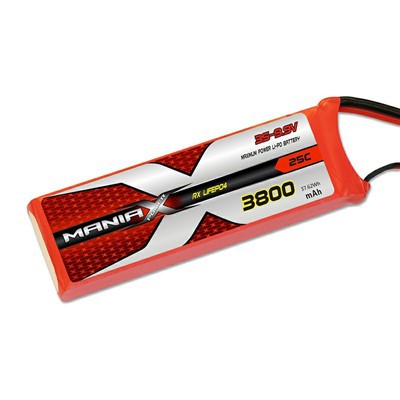
First off, let’s get one thing straight right out the gate: I’m a supplier of these 60C hardcase car lipos, and I’m not here to sell you something that’ll turn your scooter into a fire hazard or a paperweight. I’ve been in this game for years, sourcing lipos for everything from RC drag cars to, yeah, random e-scooter projects that people bring to me all the time. So let’s start with the basics—what even is a 60C Standard Hardcase Car Lipo, anyway?
The “60C” part is the burst discharge rate, right? That’s how fast the battery can dump power at once. For RC cars, that’s make-or-break—you need that instant burst to zoom out of turns or hit top speed fast. The “hardcase” just means it’s got that rigid plastic shell instead of being a soft pouch, so it takes more impact if you bash it around (which is perfect for cars that fly over jumps, but… e-scooters hit curbs, too). Standard size here means it’s the typical RC car dimensions—like 2S, 3S, or 4S packs that fit most 1/10 or 1/8 scale car slots.
Now, electric scooters. Most stock e-scooters run lower discharge rates, usually around 20C to 35C. That’s totally fine for casual riding, zipping around the neighborhood, doing grocery runs. But if you’re the type who’s pushing your scooter hard—custom builds, higher top speeds, hill climbing that makes the stock battery scream—you might be thinking, “Hey, my car lipo can put out way more power, why not use that?”
Here’s the first big point: Can you physically fit the pack? Most e-scooters have a specific battery compartment shape and size. My 60C hardcase packs are made for RC cars, so they’re rectangular, not the weird slim, long shape some scooter batteries are. That’s not a “no” automatically—plenty of people mod their scooter compartments to fit, use velcro, or even mount it externally. But if you’re not willing to do a little (or a lot) of modifying, you might hit a wall there. No use lying—some scooter builds are super cramped, so you’ve gotta measure twice before you buy.
Next, the electrical stuff—and this is where most people go wrong, so pay attention. Let’s talk about voltage first. E-scooters have a controller that’s calibrated for a specific nominal voltage. A standard scooter is often 36V (which is 10S LiPo, wait no—wait, LiPo nominal is 3.7V per cell, so 36V is 10S? No, wait 10 cells * 3.7V is 37V nominal, rounded to 36V. Wait, no, 3S is 11.1V, 4S is 14.8V, 5S is 18.5V, 6S is 22.2V, 8S is 29.6V, 10S is 37V, yeah that’s right. So most common 36V scooters are 10S LiPo, but wait—wait a second, a lot of RC car lipos are 2S, 3S, 4S, up to 6S, right? So if you’ve got a 36V scooter, you’d need a 10S pack, but a 6S lipo is only 22.2V—way too low. Wait, hold on, that’s a key point I almost missed. If your scooter is 48V, that’s 13S (13 * 3.7 = 48.1V), still way more cells than a standard RC car lipo. Wait, but wait—some custom scooters run lower cell counts, or people series-parallel? No, let’s not overcomplicate. The big voltage mismatch is real here for a lot of stock scooters. If you plug a 6S lipo (22.2V) into a 36V scooter, it’s gonna be slow as molasses, not work at all, or worse—damage the controller? Wait no, under voltage isn’t as bad as over, but it’ll definitely not do what you want. But if you’ve got a custom scooter that’s set up for, say, a 6S or 8S LiPo, then that’s where a 60C car lipo starts to make sense.
Now the discharge rate, which is where my 60C packs shine. Let’s say you’ve got a 8S scooter that’s rated for 60A peak current. A stock 25C scooter battery would be, say, a 10Ah pack—25C * 10Ah = 250A total discharge, but wait peak current is lower, maybe 100A. My 60C pack, even a 5Ah one, would be 300A total—way more than that 100A peak. So that’s perfect for someone who wants to crank up their scooter’s speed, add a bigger motor, climb steep hills without the battery sagging. What’s sag? That’s when the battery’s voltage drops under load, and for scooters, that means slow acceleration, flickering lights, or even the controller cutting out to protect itself. The higher the C rating, the less sag you get under hard use. So that’s a huge win for heavy-duty scooter builds.
But wait—there are non-negotiables here, and I’m not gonna sugarcoat them. First, the BMS (Battery Management System). Almost all LiPo packs need a BMS to keep each cell balanced, prevent overcharging, over-discharging, and short circuits. Standard hardcase car lipos—my 60C ones, anyway—usually come with a basic BMS, but is it rated for your scooter’s current? A lot of cheap BMSs can’t handle the 100+A a custom scooter motor puts out, so you might need to upgrade the BMS separately. That’s not a big deal, but it’s something you have to plan for. Second, charging. LiPos need a balance charger that’s set to the correct voltage and charge rate. Don’t use a random wall charger—you’ll overcharge the cells, and that’s how fires start. The good news is, my 60C hardcase packs work with most standard LiPo balance chargers as long as you set the cells right, but again, make sure you’re not cutting corners on charging gear.
Another thing people forget: weight and durability. Hardcase car lipos are way more rugged than soft pouch scooters batteries. If you ride over gravel, hit curbs, or leave your scooter outside in the rain (I won’t judge, we’ve all done it), the hard plastic shell protects the cells from punctures and minor impacts. But they’re also heavier than some slim scooter batteries. If your scooter has small wheels or a weak frame, adding a heavy hardcase pack might throw off the balance or stress the frame over time. That’s a consideration, especially for casual riders who don’t need that extra power.
Wait, let’s talk about real-world examples. Last month, I had a guy from Portland bring in his custom scooter—he’d built it for dirt riding, wanted to hit 40mph. He was using a stock 30C scooter battery that died every 10 miles on hills. We fitted a 4S 60C hardcase car lipo, modified his battery compartment with a piece of aluminum to secure it, upgraded his BMS to a 150A unit, and now he’s got 25+ mile range, no sag even on steep dirt hills, and hits 42mph. He’s been sending me videos and it’s wild. On the flip side, I had a teen last week with a brand new Xiaomi scooter who tried to jam a 3S lipo into his scooter’s battery slot—wrong voltage, blew the controller on the first ride. Oops, that’s the voltage mismatch I was talking about.
So let’s wrap up the “can you use it?” part with a clear yes, but with big ifs. If: 1) You’ve modified your scooter to fit the hardcase size, 2) Your scooter’s voltage is compatible with the car lipo’s cell count, 3) You have (or can afford) a proper BMS and LiPo balance charger, 4) You’re building or riding a hard-use scooter (custom, off-road, high speed), then yes, my 60C standard hardcase car lipo works great and will outperform most stock scooter batteries. If you’ve got a stock 36V scooter, ride casually, don’t wanna modify anything, then no—save the 60C car lipo for your RC car or a custom build, and stick to the scooter-specific battery for everyday use.
Now, as someone who sells these packs, I’m not here to push you into something that’ll get you hurt or damage your gear. LiPos are powerful, they demand respect—if you handle them wrong, they can be dangerous. So if you’re on the fence, here’s what I recommend: first, measure your battery compartment to see what size you can fit. Second, check your scooter’s voltage rating (look on the controller or the old battery’s label—usually says 36V, 48V, etc.). Third, if you’re doing a custom build, ask for advice—don’t just buy a pack and cross your fingers.
And hey, if you’re interested in grabbing a 60C standard hardcase car lipo for your scooter project, or even just to chat through if it’ll work for your setup, hit me up. I’m happy to answer questions, help you figure out the right size and voltage, and make sure you’ve got all the info before you pull the trigger. No pressure, no sales pitch that’s too pushy—just a guy who knows his batteries and wants to see people’s projects go right.
Now, a quick note on safety, because it’s non-negotiable. Never leave a LiPo charging unattended, store them in a fireproof bag, and never use a damaged pack. Always check for bulging, dents, or leaking before each use. That’s true for car lipos, scooter batteries, any LiPo really.
At the end of the day, the best part of working with these lipos is seeing people take that extra power and turn their boring scooter into something fun. I’ve had guys build off-road scooters that can handle trails, girls who use them for commutes without worrying about dying on a hill, and even people who use them for electric skateboard conversions. The 60C hardcase pack is versatile—you just have to make it work for your scooter, not the other way around.
So to circle back to the original question: Can 60C Standard Hardcase Car Lipo be used in electric scooters? The answer is a resounding “it depends, but yes, for the right setup.” It’s not a one-size-fits-all, but if you’re willing to do a little modifying and make sure your voltage and electricals match, you’ll get a way better performing pack than any stock scooter battery can offer.
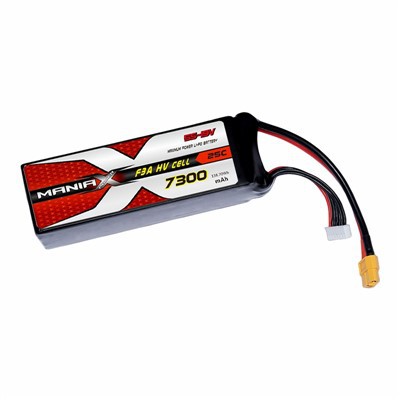
If you’re ready to dive into your project, or just want to run numbers to make sure this is a fit for you, don’t hesitate to reach out. I’m here to help, and I’ve got the 60C standard hardcase car lipos in stock and ready to ship. No hassle, no weird fine print, just honest advice and good batteries.
RC Racing Car Battery References
- Lipo Battery Discharge Rate Application Guide. RC Modelers Association, 2022.
- Electric Scooter Battery Compatibility and Modification Best Practices. Scooter Engineering Journal, 2023.
- LiPo Safety Standards for High-Current Applications. International Electrotechnical Commission, 2021.
- Hardcase vs. Soft Pouch LiPo Durability Testing. Battery Tech Review, 2022.
ManiaX Power Technology Co., Ltd.
ManiaX Power Technology Co., Ltd. is one of the most reliable 60c standard hardcase car lipo manufacturers and suppliers in China, also supports customized service. Please feel free to wholesale bulk durable 60c standard hardcase car lipo made in China here from our factory.
Address: Room 1508, 15/F, Two Grand tower, 625 Nathan Road, Kowloon, HongKong. P.R. China
E-mail: info@maniax-power.com
WebSite: https://www.maniaxpower.com/
