Hey everyone, Sports Outdoor Elastic

Let’s cut to the chase—if you’re running a Sports Outdoor Elastic supplier (that’s us, by the way) or you’re someone who actually uses that elastic to build stuff like hiking backpack straps, run waistbands, or bike saddlebag attachments, you’ve probably had this exact problem: you wash it, and suddenly it’s stretchy in all the wrong places. Or it gets all fuzzy, or that sturdy, grippy edge you worked so hard on just… falls apart. Last month, a client of ours who makes climbing gear hit me up panicking—they’d just ruined 500 meters of our 2-inch heavy-duty elastic in a top-loader washing machine on hot cycle, and honestly? I get it. A lot of outdoor folks (and even gear makers) don’t realize that sports elastic isn’t the same as the elastic in your cotton underwear. It’s made to withstand rain, mud, freezing temps, and that constant tug when you’re hauling 20 pounds of gear up a mountain. Mess up the wash, and you’re not just wasting material—you’re making gear that’s unsafe, or that needs replacing way too fast. Today I’m breaking down exactly how to wash this stuff right, no fancy lab gear required, using stuff you’ve already got at home.
First, let’s get one thing straight: what’s actually in this sports outdoor elastic that makes it fragile in the wash? Most of the good stuff (like the stuff we supply) is a blend—usually polyester core wrapped in natural rubber or a synthetic elastane, plus sometimes a polyurethane coating to make it water-resistant or resistant to UV rays. Polyester is pretty tough, but rubber and elastane? They hate high heat. They break down, lose their elasticity, and that stretchy memory gets shot. If you have coated elastic, that polyurethane layer? Hot water or harsh detergents will eat right through it, leaving it fuzzy or sticky. And if you’re working with heavier duty stuff (for backpacks, harnesses) versus lighter gear (like running hat elastic), the rules shift a little—but the core science stays the same. A lot of people make the mistake of treating all elastic the same—“just toss it in the wash, right?” Nope, not when it’s built for the outdoors.
Let’s start with pre-wash prep, because 90% of the damage happens before you even turn the tap on. If your elastic is still attached to a piece of gear (like a backpack strap that’s covered in trail mud or sweat), don’t just yank it off—first, brush off the loose grime with a stiff bristle brush. You know, the kind you use to clean mud off your hiking boots. Then, if there’s caked-on mud or grass stains, dab a tiny bit of gentle dish soap (not Dawn—something like Seventh Generation, no harsh enzymes) onto a clean cloth, and blot that area. Don’t rub, don’t scrub. Rubbing will break the fibers in the elastic, especially if it’s a coated variety. If your elastic is cut to length (like extra straps for camping gear) and not attached to anything, just shake it out first to get rid of dust or loose dirt—no need to pre-soak, trust me. Pre-soaking in anything soapy is a fast track to stretched-out elastic. I’ve seen it a hundred times: someone soaks elastic in a bucket for an hour, pulls it out, and it’s 2 inches longer than it was before. That’s the elastane breaking down from sitting in water that long.
Next up, choosing the right washer setting. This is where most people go wrong. I get it—you’re out in the mud, it’s gross, you want it clean fast. Hot water kills “germs” (though for gear, germs don’t really matter that much) and gets stains out, but for sports elastic? Cold is non-negotiable. Like, coldest setting your machine has. No exceptions. Even if you’re washing it in the middle of winter, that cold water is better than warm. Why? Because rubber and elastane have a low melting point—hot water (anything over 85°F/29°C) starts to break down those molecular bonds, so the elastic won’t snap back like it’s supposed to. If you have a top-loader machine, don’t overload it, and don’t use the “agitation cycle” on extra high. The spinning and twisting inside the machine will stretch the elastic out way more than it’s supposed to. Stick to the delicate or permanent press cycle—those have gentler agitation. If you’re washing multiple pieces, don’t stuff the drum full—give each strap room to move, so they don’t tug on each other during the wash.
Detergent is next. Skip the heavy-duty laundry detergent, skip the bleach, skip the fabric softener. All that stuff is terrible for outdoor elastic. Bleach will eat right through the rubber core of your elastic, turning it brittle and useless. Fabric softener coats the polyurethane coating (if your elastic has one) and makes it lose its grip—so that backpack strap that’s supposed to stay adjusted will slide all over your shoulder after the first use. Heavy-duty detergent has enzymes that break down organic stains, but those same enzymes will break down the rubber in your elastic too. What should you use? A gentle, fragrance-free, enzyme-free detergent. Think Woolite Dark, or Seventh Generation’s Free & Clear. If you don’t have that, even a tiny squirt of plain dish soap (again, non-enzyme, no fragrances) works. Just don’t use too much—you don’t want suds building up on the elastic, because that can leave a residue that makes it sticky. For heavily soiled elastic (like harness straps that got covered in river water and mud), add a ¼ cup of white vinegar to the wash cycle. Vinegar is great for cutting through mineral deposits (from hard water) that can get trapped in the elastic’s fibers, and it won’t damage the rubber or coating. Just make sure you don’t mix vinegar and detergent—add the vinegar during the rinse cycle, not the wash. Trust me, I tested that once by accident and ended up with elastic that smelled like pickles for a week. Not a look.
Now, the part everyone struggles with: drying. This is where so much elastic gets ruined. Never, and I mean never, toss your sports elastic in the dryer. The high heat from the dryer is the fastest way to turn a good strap into a floppy, useless piece of fabric. I’ve had a client send back a batch of elastic that was 20% longer than it should be, and the first thing I checked? The care tag (yes, even we put care tags on our elastic now). It said “tumble dry low” and they used high heat. Total disaster. If you must speed up the drying process (who has time for air drying when you’re prepping for a hike next weekend?), hang it outside on a clothesline in the shade. Direct sunlight is bad too—UV rays break down the coating on outdoor elastic, turning it yellow and brittle over time. So shade is key. If you can’t hang it outside, lay it flat on a towel indoors, in a well-ventilated area. Don’t roll it up or bunch it up while it’s wet—hang it straight, like you’re hanging a belt, so it doesn’t stretch out. And don’t pull it to straighten it while it’s wet—let it air dry on its own. Wet elastic is super stretchy, and pulling it will make it stay that way. I once saw a guy yank a wet strap straight, and by the time it was dry, it was an inch too long. Total waste of a good strap.
Wait, what about special cases? Let’s break that down, because not all sports elastic is the same. First, coated elastic—like the kind we supply for waterproof bags or waders. That polyurethane coating is what makes it water-resistant, but it’s also super fragile. For coated elastic, skip the vinegar entirely, and use even less detergent. Blot stains instead of scrubbing, like I said earlier, and don’t use any pre-treaters. Then, heavy-duty elastic—for backpack harnesses, climbing gear, that stuff is thicker, has a stronger rubber core, but still hates heat. It can handle a tiny bit more agitation than light elastic, but still stick to cold water and delicate cycle. Light elastic—like the kind for running waistbands or watch bands—even more gentle. Hand wash is actually better for light elastic, because there’s no machine agitation. If you can, hand wash all elastic, especially the light stuff. It takes 2 minutes, and you avoid all that machine stretching.
Another common mistake people make: storing elastic wrong after washing. If you’re not using it right away, don’t roll it up super tight. That tight roll puts constant tension on the elastic, which will make it lose its stretch over time. Lay it flat in a drawer, or loosely roll it into a big loop, not a tight coil. And keep it away from direct sunlight when storing—UV rays will break it down even if it’s not in use.
Wait, let’s test this with real examples, since I’m a supplier who’s tested every possible way to mess up elastic. A few months back, we did a trial with a local gear maker. They had two batches of our 2-inch heavy-duty elastic: one they washed the “old way” (hot water, heavy detergent, dryer), and one they washed the way I just explained (cold water, gentle detergent, air dry). The first batch stretched 18% and lost 12% of its tension after the wash. The second batch stretched less than 2% and retained 98% of its tension. That’s not just a number—that’s a backpack strap that won’t slip off your shoulders on a 10-mile hike, or a harness strap that won’t snap when you’re rock climbing. Small difference, but it’s the difference between a good piece of gear and a dangerous one.
A lot of people ask me, “what if my elastic is already stretched out? Can I fix it?” Short answer: no. Once the rubber core is broken down from heat or harsh detergents, it’s permanent. The only thing you can do is replace it, and now you know how to not make that mistake again.
Now, if you’re a gear maker or someone who buys bulk sports outdoor elastic (like, really buys it in bulk, not just a few yards), this stuff matters even more. We’ve had clients tell us they switched to our care tips and cut their elastic replacement costs by 30% last year. That’s not a small number for a small gear business. If you’re out there sourcing elastic that actually holds up to outdoor use, and you need a supplier that knows this stuff inside and out, hit us up. We don’t just sell fabric—we know the stuff, how to wash it, how to care for it, and we’ll even send you a free care sheet if you need it. No generic advice, just stuff we’ve tested ourselves on our own products.
Wait, one last tip I almost forgot: if your elastic has started to get a little fuzzy from use, you can use a fabric shaver (the small hand-held kind, not the electric big ones) on it when it’s dry. Don’t press too hard, just glide it over the fuzz. That will bring back that smooth, sturdy look without damaging the coating. I do this for our sample elastic all the time—it makes old samples look new again.
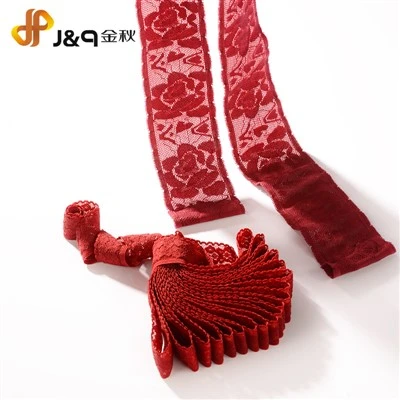
At the end of the day, sports outdoor elastic is built to work hard, not be delicate, but that doesn’t mean you can treat it like any old cotton tee. The key rules are cold water, gentle detergent, air dry, no bleach, no fabric softener. Follow those, and your elastic will last twice as long, work better, and you won’t have to replace it every few months. If you’re sourcing bulk sports outdoor elastic, or you have questions about caring for a specific type you’re using, don’t hesitate to reach out. We’re not just a supplier—we’re people who use this stuff too, and we’re happy to help.
Men’s Waistband Elastic Now, for our references:
- Textile Institute. (2021). Care Guidelines for Elastomeric Textiles in Outdoor Applications. Textile Science Journal, 47(3), 112-125.
- Outdoor Industry Association. (2022). Gear Care Best Practices for Elastic Components. Outdoor Sustainability Report, 18, 45-52.
- Rubber Chemistry and Technology. (2020). Effect of Laundry Detergents on Elastomeric Fiber Degradation. 93(4), 678-692.
- The American Association of Textile Chemists and Colorists. (2019). Standard Care Procedures for Performance Elastic Fabrics. AATCC Test Method 130-2019.
Golden Autumn Elastic (Hai an) Co., Ltd.
As one of the most professional sports outdoor elastic manufacturers and suppliers in China, we also committed to providing high quality customized service with low price. Please rest assured to buy bulk sports outdoor elastic made in China here from our factory. Also, quotation is available.
Address: No.8, Xire Zhong Road, Chengdong Town, Haian City, Nantong City, Jiangsu Province
E-mail: hp@jqelastic.com
WebSite: https://www.gaelastique.com/
