Hey there! If you’ve ever stood next to a power substation or been frustrated when your Wi-Fi cuts out right after your smart meter updates, you’ve run into electromagnetic compatibility (EMC) without even knowing it. I’m part of a team that supplies electronic energy meters to homes, businesses, and industrial sites, and EMC is one of the most underrated but critical parts of what makes our meters work well (and why you shouldn’t grab a random off-the-shelf meter online). Let’s break this down like we’re chatting over a coffee, no stuffy lab jargon that’ll make your eyes glaze over. Electronic Energy Meter
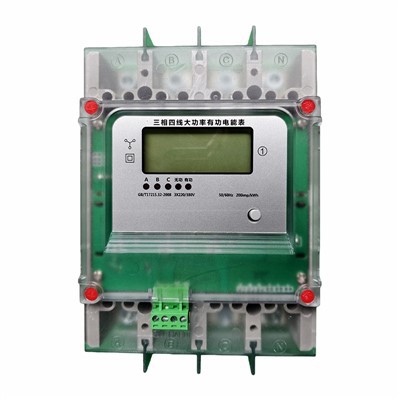
First, let’s keep it simple: EMC for any electronic device is basically two-way “people watching” (but way less creepy, I promise). On one hand, your meter can’t throw off other stuff around it—like it can’t be the reason your next-door neighbor’s baby monitor fizzes out or your office’s server glitches. On the other, every other loud electronic thing around your meter (think: a giant industrial air conditioner, a microwave that runs every minute in your break room, even your neighbor’s portable power station) can’t mess with the meter’s job of counting your power use accurately. For electronic energy meters, this isn’t just a “nice-to-have”—it’s the whole point of the meter doing its job right. If a meter gets interference, it might undercount your usage (so you overpay for power you didn’t use) or overcount (which is a pain for businesses with huge power bills), or even stop sending data entirely—try running a manufacturing plant without knowing how much power your machines are using, yeah? That’s a headache no one wants.
Let’s talk about why electronic energy meters are extra fussy when it comes to EMC, compared to, say, a TV or a lamp. First, they’re almost always wired right into your building’s main power line. That power line isn’t just carrying electricity to your meter—it’s also a giant antenna, picking up all kinds of random electromagnetic gunk from other devices nearby. A TV’s got a battery and little wires, so it’s not sitting there connected to the grid 24/7, acting like a sponge for stray signals. Meters are stuck to the main line, so they have to be way more careful about tuning out that noise. Also, most of our meters these days are smart—they send data over cellular, LoRa, or RF signals to the utility company. If that signal gets messed up, you might not get your power usage alerts, or the utility might think your meter is broken (which means someone has to come check it out, wasting time and money). No one likes a surprise visit from a meter tech, right?
Now, let’s get specific about the two sides of EMC for our meters, since that’s where most people mix it up. First: emissions (that’s our meter not messing with other stuff). A bad meter (the cheap one you find on Amazon for $20) might leak random radio signals. Let’s say you have a smart thermostat that talks to your Wi-Fi—if our meter is badly designed, its emissions could mix with the thermostat’s signal and make it stop adjusting the temperature correctly. For businesses, this is even bigger: if our meter is at a retail store, and its emissions mess with the security system’s sensors, that’s a lost sale when an alarm goes off for no reason. We test every single meter we send out to make sure its emissions are below strict limits—think of it like a volume knob that’s set so low, it never drowns out anyone else’s conversation.
Then there’s immunity (that’s the meter not getting messed up by other people’s junk). This is where the cheap meters really fall apart. Let’s take a common scenario: a café has a big espresso machine that kicks on every morning. That machine uses a huge burst of power to heat water, and that creates a big electromagnetic spike in the power line. If our meter is not immune to that spike, it might think that spike is actually power being used, count extra kWh, or even crash and have to reset. Imagine a café owner getting a $500 power bill over one month because their cheap meter counted a spike as extra power—they’d be furious, and so would we. We test for all kinds of weird interference: fast spikes from motors, low-frequency noise from power lines, even radio signals from nearby cell towers or walkie-talkies. Last year, we had a customer who works at a construction site—their site uses walkie-talkies all day, and before they switched to our meters, their old ones would glitch every time someone used a walkie-talkie 10 feet away. Ours? No problem. We design them to tune all that out.
Now, how do we actually make a meter have good EMC? It’s not like we use some top-secret magic trick (though I wish we did—those lab tests are expensive!). First, we shield the circuit boards inside the meter. Think of it like putting the electronics in a tiny metal box that keeps stray signals out and stops our own signals from getting out. But it’s not just a box—we have to make sure the holes for the power line or the data cable are sealed right, because if a signal can get in through a tiny gap, that whole shield is useless. Then, we use special filters on the power lines. These filters act like a sieve: they let the 50/60 Hz power signal through (the one that actually powers your home) and block all the random high-frequency noise that we don’t want. It’s like how a coffee filter lets the coffee through but keeps the grounds out.
Another big one: grounding. Wait, not just any grounding—proper, intentional grounding for the electronics. If the meter isn’t grounded right, stray signals can build up inside it and cause errors. We’ve run into this with some older buildings that have bad grounding—our meters still work because we’ve designed them to be forgiving, but the cheap meters die right there. Also, for our smart meters, we tune the data communication circuits specifically to avoid interfering with other devices’ signals. For example, our cellular meters use signals that don’t overlap with the ones your phone uses, so they can send data without messing with your texts or calls.
Now, let’s talk about real-world examples because numbers are boring, but actual stuff that happens is way more relatable. Last quarter, we had a small factory that had been using a competitor’s meters for two years. They came to us complaining that their old meters would undercount power during the night shift, when their big conveyor belts run. We tested their old meter and found that the conveyor belt’s motor was creating such a big electromagnetic spike that the cheap meter’s microprocessor would reset, and it wouldn’t count that power. Our meters? We built in a special circuit that ignores those temporary spikes, so even when the conveyor belt kicks on, it counts every kWh correctly. The factory saved almost $1,200 in one month after switching to our meters. That’s the stuff that matters.
Another example: a residential customer in a city neighborhood. Their old smart meter would stop sending data for a few hours every time their neighbor’s electric car charger would kick on to charge overnight. They’d call the utility, who’d send a tech, and everything would work again—until the neighbor charged their car the next night. We installed one of our residential meters for them, and a month later, they told us it never missed a beat, even when their neighbor was charging the car twice a night. That’s the EMC doing its job, without them even noticing.
Wait, but I know what some of you are thinking: “Does EMC really matter for regular homes?” Yeah, even if you don’t have a factory or an electric car, it matters for accuracy. If your meter is picking up random interference from your microwave, it might count the microwave’s power use as extra, so your bill is higher than it should be. Or if your meter is sending bad data to the utility, they might send someone to read it incorrectly and overcharge you. No one wants to pay more for power because a cheap meter has bad EMC, right?
And for industrial clients? It’s non-negotiable. We work with a lot of warehouses that use all kinds of heavy machinery—forklifts, big lighting systems, HVAC. If our meters didn’t have top-tier EMC, they’d be counting power wrong, which would throw off their entire budget. One of our big clients is a grocery chain with 50 locations across the country—they audit every single one’s power use monthly, and the consistency of our meters means they never have to adjust their numbers more than 1% from their actual bills. That’s because the EMC is keeping every meter accurate, no matter what’s going on at the location.
Now, let’s get real about the mistakes we see other suppliers make. A lot of cheap meters skip the EMC testing entirely to save money. They’ll stick a circuit board in a plastic box, throw it on the power line, and hope it works. That’s why those $20 meters are so cheap—they cut corners on EMC, and then when they get to a job site or a home, they glitch, and everyone blames the meter (or the power company). We don’t do that. Every single meter leaves our warehouse after being tested for EMC in three different ways: first, lab testing in our in-house EMC chamber (that’s the metal room where we blast it with all kinds of fake interference to make sure it holds up), then field testing at customer sites to make sure it works with real-world gear, and then a final check to make sure the emissions are low enough to not mess with anything else.
Wait, but what about future stuff? We’re building more meters for EV chargers and solar panels these days, and EMC is even more important there. If you have solar panels on your roof, your meter has to count both the power you use from the grid and the power you send back. If it’s not immune to the solar inverter’s signals, it’ll get those numbers wrong, which means you lose money on net metering. Or if you have an EV charger at home, your meter has to count that power correctly without interfering with your home Wi-Fi. We’re already updating our new lines to handle that, because EV adoption is booming, and EMC will be make-or-break for those meters.
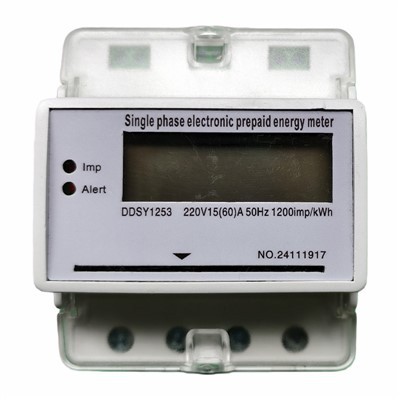
At the end of the day, when you’re choosing an electronic energy meter, EMC shouldn’t be an afterthought—it should be the first thing you look for. A meter might have a flashy “smart” feature or a cheap price, but if it has bad EMC, it’ll cost you more in the long run: overcharged bills, missed data, messed-up gear, or even having to replace the meter every couple of years. We’ve been supplying meters for over a decade now, and EMC is the core of how we build every single one. We don’t cut corners because we know our clients rely on these meters to work, every day, no matter what else is going on around them.
Prepaid Energy Meter If you’re a homeowner looking to replace your old meter, a business owner tired of surprise power bills, or an industrial manager needing meters that can handle heavy machinery, we can help you pick the right meter for your needs. We work with all types of clients, from residential to large-scale industrial projects, and we make sure every meter we send has the EMC to do the job right. Don’t waste money on cheap meters that will cause more headaches—reach out to our team to talk through your needs, and we’ll find the perfect meter for you.
References
- International Electrotechnical Commission. IEC 61000: Electromagnetic Compatibility Standards for Low-Voltage Electrical and Electronic Equipment, 2022.
- Federal Energy Regulatory Commission (FERC). Guidelines for Electromagnetic Compatibility in Smart Grid Devices, 2021.
- Institute of Electrical and Electronics Engineers (IEEE). Standard for Electromagnetic Compatibility for Metering Devices, 2020.
Zhejiang Qunte New Energy Technology Co., Ltd.
As one of the most professional electronic energy meter manufacturers in China, we’re featured by quality products and good price. Please rest assured to buy discount electronic energy meter made in China here from our factory. We also accept customized orders.
Address: No. 56, Fengxi Road, Tang’ao Yu Village, Liushi Town, Yueqing City, Wenzhou City, Zhejiang Province
E-mail: 251951196@qq.com
WebSite: https://www.zjqtmeter.com/
