Let me start by admitting something: when I first got into the industrial air movement business five years ago, I thought “blower” and “fan” were just two words for the same thing. I’d stand in our warehouse, yelling over a belt-driven unit one day and a squirrel cage the next, mixing up terms when I talked to clients. It took a month of on-site troubleshooting at a small parts fabrication shop to set me straight—their foreman, Joe, pointed out that a tiny blower was moving more metal shavings than a 4-foot industrial fan, even though the fan was twice as big. That’s when I realized this wasn’t just semantics; it was the core of what my team and I sell, and why every decision a manufacturing leader makes about air movement can make or break their efficiency, safety, or bottom line. Today, I want to break down which is more powerful—blower or fan—not with textbook jargon, but with real-world examples from the shops and factories I’ve worked with, because at the end of the day, “power” here doesn’t just mean motor specs. Blower Fan
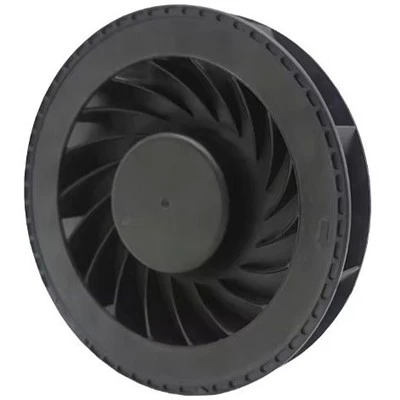
First, let’s ground this in basic science, but keep it simple. For decades, I’ve explained air movement two ways to clients who don’t have mechanical engineering degrees: think of air like water. A fan is like a garden hose left open at the end, or a regular garden sprinkler. It moves a lot of air, but that air is low-pressure—like water pouring out of a hose you’re just holding. It’s great for cooling a room, blowing leaves off a driveway, or circulating air in a warehouse where you don’t need to push that air far, or against any kind of resistance. A blower? That’s like a spray gun or a pressure washer nozzle. It moves air but builds high pressure, pushing that air through tight spaces, around obstacles, or over long distances. That’s the first big difference, and it’s why “power” means something totally different for each.
But wait, let’s get concrete. Last year, I worked with a food processing plant that was dealing with excess moisture in their packaging room. They had a 10-foot axial fan (big, industrial, runs on a 3-horsepower motor) that they’d used for six months. It cooled the room, but it couldn’t push air past the stack of cardboard boxes by the loading dock, so moisture got trapped there—mold started growing on 20 pallets of cereal before they noticed. We swapped that axial fan for a 2-horsepower centrifugal blower, sized to push air through the 6-inch ductwork leading to the loading dock. In 48 hours, the moisture levels dropped from 82% to 55%, and they saved $12,000 in spoiled product. That’s a case where a smaller, lower-rated blower was more “powerful” for their specific need, because it had the pressure to move air where it needed to go. Fans, even big ones, just don’t generate that kind of static pressure.
Static pressure is the technical term here, and it’s the make-or-break metric. Let’s define it: that’s the pressure the air movement device has to overcome to push air through a system—ducts, filters, vents, obstacles, tight spaces. Fans (most commonly axial or centrifugal fans, but usually low-pressure models) typically generate less than 1 inch of static pressure. Blowers (centrifugal blowers, the kind we supply) generate 1 to 20 inches of static pressure, sometimes even more for specialized industrial models. That’s a huge gap. Let’s use another real example: a metal stamping plant we work with regularly. They need to capture tiny metal shavings right at the press, so the shavings don’t get ground into the next part. A standard workshop fan could blow the shavings across the floor, making a bigger mess. A blower, with its high static pressure, can pull those shavings through a small, 4-inch hood at the press, through a filter, and into a collection bin 20 feet away—something no fan can do, because the resistance of the duct and the filter would stop the fan’s low-pressure air dead.
But here’s the catch: you can’t just say “blowers are more powerful” across the board. If your goal is to cool a 10,000-square-foot warehouse, a big 5-horsepower axial fan will move 50,000 cubic feet of air per minute (CFM) and use less energy than a 5-horsepower blower that only moves 10,000 CFM. In that case, the fan is more powerful for that specific application. The problem comes when people use the same definition of “power” for every job. I see it all the time: a small business owner buys a cheap 12-inch fan to vent a 500-square-foot garage that has a car running inside. The fan moves air, but it can’t pull the toxic fumes out through the tiny soffit vents, because the soffit vents create resistance the fan’s low pressure can’t overcome. By the time they come to us, they’ve spent $80 on a fan that does almost nothing, and they need to spend $300 on a compact blower that’s properly sized for that venting job. That’s where the confusion lives: it’s not about which is inherently more powerful, but about what kind of power you need for your task.
Let’s talk about the two main types of each, because that’s why there’s so much misinformation. Fans fall into two primary categories: axial and centrifugal (though low-pressure centrifugal fans are sometimes grouped with blowers, but not by our team). Axial fans are the ones you picture—box fans, ceiling fans, big warehouse fans, the ones where the blades spin parallel to the air flow, moving a lot of air fast, low pressure. Centrifugal fans (low-pressure) look similar to blowers, but their housing is smaller, and they’re built for low-resistance jobs. Blowers, on the other hand, are always centrifugal, with a wider housing that forces air to spin and build pressure before it exits through a narrow outlet. That narrow outlet is key—it’s what gives blowers their punch. If you have a wide opening, you get high volume, low pressure (fan); if you have a narrow opening, you get high pressure, lower volume (blower).
Another real story: a pharmaceutical client contacted us six months ago. They were updating their clean rooms, and they needed to replace old ventilation systems that kept failing air quality tests. The original system used a set of axial fans, but after running through 15 feet of HEPA filters (which create significant static pressure), the air flow dropped below the required rate. We installed medium-pressure blowers sized to compensate for the HEPA filter resistance. The motor on each blower was only 1.5 horsepower, compared to the 2 horsepower fans they’d had, but the static pressure rating was 5 inches, enough to push the required air flow through the filters and maintain compliance. Their air quality test results went from failing to 99.97% particle removal, right where the FDA requires it. For them, the blower was more powerful—precisely because it was built to handle the resistance of their system.
Now, let’s address a common myth: that blowers are always louder, or use more energy. In the past, that might have been true, but modern blower technology has changed that. The blowers we supply use variable speed drives (VSDs) that adjust the motor speed based on the air flow needed, so if you only need 50% of your blower’s capacity, it runs at 50% speed, using far less energy than a constant-speed fan that’s running at full power when you only need half. For example, a client in the auto parts industry uses our VSD-equipped blowers to paint car parts. When they’re running small jobs, the blowers run at low speed, using 20% less energy than the old constant-speed fans they replaced, and they still have enough pressure to push the paint mist through the booth and into the recovery system. That’s a big selling point—blowers don’t have to be energy hogs if they’re sized correctly for your load.
But let’s circle back to the original question: which is more powerful? To me, power isn’t just about motor horsepower or CFM—it’s about ability to do the job. If your job is to move a large volume of air short distances, no obstructions, no ductwork, a fan is more powerful. If your job is to move air through ducts, filters, hoods, or around obstacles, a blower is more powerful. That’s the line we draw every day in our business. I’ll give you a side-by-side comparison of a few common industrial uses to make this clear:
- Warehouse cooling: Fan wins. A 5ft axial fan pushes 48,000 CFM at 0.1 inches static pressure, perfect for circulating cool air. A blower pushing the same CFM would be overkill, more expensive, and use more energy.
- Dust collection at a woodshop: Blower wins. Dust collection requires pulling air through small ducts and a filter—static pressure around 3-5 inches. A fan would struggle to pull air that far, and would lose most of its CFM to the filter resistance.
- Vehicle exhaust venting in a repair bay: Blower wins. The exhaust pipe is a narrow, restricted outlet, so you need high static pressure to pull fumes out before they spread. A big fan above the lift can’t generate enough pressure to overcome the pipe’s resistance.
- Commercial grocery store ventilation: Fan wins. The loading docks need to move large volumes of outside air to balance the store’s cooling, with minimal ductwork. A low-pressure fan is more efficient here.
I’ve seen too many clients waste money by picking the wrong tool for the job. A bakery owner I met at a trade show a year ago bought a $200 18-inch fan to vent their bakery’s oven fumes. The oven’s exhaust pipe is 4 inches wide, 10 feet long, and has a grease filter—all of which create static pressure. The fan could move air on an open driveway, but on that restricted line, it barely pulled 50 CFM. By the time they called us, their kitchen had grease buildup on the walls, and they were at risk of a fire code violation. We installed a compact 1.5 horsepower blower, sized for their exhaust system, and it pulled 250 CFM through the pipe, removed the fumes in an hour, and they passed their next fire inspection with no issues. They told us they’d saved $3,000 in potential fines, all because they picked the wrong air mover.
One thing I always make sure my team explains to every client is that there’s a middle ground, too—low-pressure centrifugal fans, which are sometimes called “blowers” informally, but they’re not the heavy-duty industrial blowers we specialize in. Those are great for light ventilation jobs where you need a bit more pressure than an axial fan, but not enough for high-resistance systems. But for 80% of the industrial, commercial, or even residential venting jobs we get asked about, the choice comes down to static pressure: if you’ve got resistance, you need a blower; if you’re moving air unobstructed, a fan is fine.
Now, let’s talk about what “power” really means for air movement, because that’s the root of all the confusion. The Air Movement and Control Association (AMCA), the industry group that sets the standards for these products, defines power as the total pressure (static plus velocity) multiplied by CFM, divided by a constant that accounts for motor efficiency. So a fan might have a high CFM but low static pressure, so its total power for moving air through a system is low. A blower might have a lower CFM but high static pressure, so its total power is higher when resistance is present. That’s the scientific way to measure it, but for everyday users, it’s simpler: if your air movement job has any kind of restriction (ducts, filters, pipes, hoods, tight spaces), a blower is going to do the job better, faster, and more reliably.
I’ll end with a note from my own experience, because at the end of the day, I’m not a textbook writer—I’m a guy who’s spent thousands of hours talking to shop foremen, plant managers, small business owners, figuring out what they actually need. Early on, I tried to sell blowers to everyone, because that’s what my company makes. I lost a lot of clients because I didn’t listen to what they were actually trying to do. Now, we spend the first 15 minutes of every call asking questions: How far do you need to move the air? Are there ducts or filters in the way? Is it for cooling, venting, or removing fumes? Only then do we make a recommendation.
So to answer the question that brought you here: neither is inherently more powerful, but when you account for real-world performance—for what your job actually requires—blowers are more powerful for the vast majority of tasks that most people need them for. Fans have their place, for sure, but if you’re dealing with any kind of restricted space, any length of ductwork, or any obstacle that air has to push around, a blower is going to get the job done where a fan will fall short.
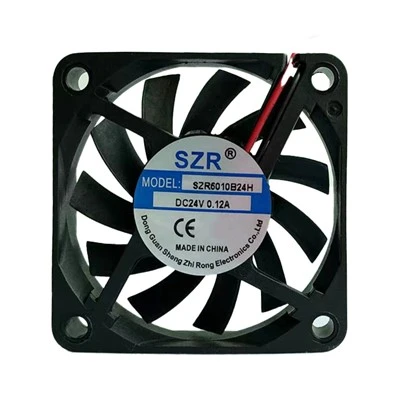
If you’re trying to solve an air movement problem at your shop, factory, or facility and you’re not sure which is right for you, reach out to our team. We don’t do hard sales pitches—we do assessments, help you figure out what you need, and make sure you don’t waste money on equipment that’s too big, too small, or the wrong type. Air movement is a critical part of keeping workplaces safe, products intact, and operations running smoothly, and picking the right tool makes all the difference.
Cooling Fan References
- Air Movement and Control Association International, Inc. (AMCA). (2022). Industrial Fan and Blower Performance Standards.
- McGuinness, J. (2021). Applied Air Movement for Industrial Facilities. Industrial Press.
- Occupational Safety and Health Administration (OSHA). (2020). Ventilation Guidelines for Manufacturing Workplaces.
- Food and Drug Administration (FDA). (2019). Ventilation Requirements for Pharmaceutical Clean Rooms.
- Energy Star. (2022). Efficient Air Movement Solutions for Commercial Facilities.
Dongguan Shengzhirong Electronics Co., Ltd.
As one of the most professional blower fan manufacturers and suppliers in China, our products have good reputation in the market. Please rest assured to wholesale high quality blower fan made in China here from our factory. Customized orders are welcome.
Address: 6/F, Building 2, No.68, Shunxing 2nd Road, Dajingtou 2nd Industrial Zone, Dalang Town, Dongguan City, Guangdong, China
E-mail: szr_coolingfan@163.com
WebSite: https://www.szrfan.com/
