Hey there! I’m a supplier of Duct Optical Fiber Cable, and I often get asked about how to test the splicing quality of these cables. It’s a crucial process, and I’m gonna share some tips and methods that I’ve learned over the years in this business. Duct Optical Fiber Cable

Why Testing Splicing Quality Matters
Before we jump into the testing methods, let me quickly explain why testing the splicing quality of Duct Optical Fiber Cable is so important. You see, when we splice optical fibers, we’re essentially joining two separate fibers together. A poor – quality splice can lead to signal loss. Think about it – if you’re using these cables for high – speed internet, data transmission, or telecommunications, even a small amount of signal loss can cause slow speeds, dropped connections, or even complete network failures. So, ensuring high – quality splicing is key to providing a reliable service.
Visual Inspection
The first and simplest way to test the splicing quality is through visual inspection. All you need for this is a fiber optic microscope. It doesn’t require any fancy equipment or technical knowledge.
First off, you need to clean the spliced area. Dirt, dust, or debris can make it hard to get a clear view. I usually use a lint – free wipe and some isopropyl alcohol to clean the fibers.
Once they’re clean, place the spliced fiber under the microscope. You’re looking for a few key things. One, the alignment of the two fibers. They should be as straight as possible. If they’re off – center or misaligned, it can cause signal loss. You should also check for any bubbles, cracks, or gaps at the splice point. Bubbles can act like little obstacles for the light signals passing through the fiber, and cracks or gaps are obvious places where the signal can leak out.
Visual inspection won’t give you exact numbers on signal loss, but it’s a great first step. It can help you quickly identify any major problems with the splice.
Optical Time – Domain Reflectometer (OTDR)
The OTDR is like the Swiss Army knife of fiber optic testing. It’s a powerful tool that can give you a ton of information about the splicing quality.
How does it work? Well, the OTDR sends a short pulse of light into the fiber. As the light travels through the fiber, some of it gets reflected back to the OTDR. The OTDR then measures the time it takes for the reflected light to come back and the intensity of the reflection.
When it comes to testing splices, the OTDR can show you the location of the splice and the amount of signal loss at that point. You’ll get a graph that plots the signal loss along the length of the fiber. A sharp drop in the signal at the splice location indicates a significant loss.
To use the OTDR effectively, you need to set it up correctly. First, connect the OTDR to the fiber using the right connectors. Make sure the connections are tight and clean. Then, set the right parameters on the OTDR, like the pulse width and the range. This usually takes a bit of trial and error, but once you get the hang of it, it’s pretty straightforward.
One thing to keep in mind is that the OTDR can sometimes give false readings due to things like bend loss or connector issues near the splice. So, you need to be able to interpret the results and look for other signs of problems.
Power Meter and Light Source
The power meter and light source combo is another common way to test splicing quality. It’s a bit more basic than the OTDR but can still give you accurate results.
Here’s how it works. The light source sends a constant stream of light through one end of the fiber. The power meter is then connected to the other end of the fiber to measure the amount of light that comes through. By comparing the amount of light sent by the source with the amount received by the meter, you can calculate the signal loss at the splice.
To use this method, first, you need to calibrate the power meter. This involves connecting the power meter directly to the light source and taking a reference reading. Then, disconnect the power meter from the light source and connect it to the fiber end. Measure the power of the light that comes through the fiber.
The difference between the reference reading and the reading from the fiber gives you the signal loss. If the loss is within an acceptable range, then the splice is good. If it’s too high, you may need to redo the splice.
Splice Loss Calculation
No matter which testing method you use, you’ll need to calculate the splice loss. The formula for calculating splice loss is pretty simple. Splice loss (in dB) = 10 * log10 (Pi / Po), where Pi is the input power (the power of the light going into the splice) and Po is the output power (the power of the light coming out of the splice).
Let’s say you have an input power of 1 mW and an output power of 0.5 mW. First, calculate the ratio Pi / Po, which is 1 / 0.5 = 2. Then, take the logarithm (base 10) of 2, which is approximately 0.3. Multiply that by 10, and you get a splice loss of 3 dB.
In general, for single – mode fibers, a splice loss of less than 0.3 dB is considered good. For multi – mode fibers, a loss of less than 0.5 dB is usually acceptable.
Factors Affecting Splicing Quality
There are several factors that can affect the splicing quality of Duct Optical Fiber Cable. One of the biggest ones is the environment. If you’re splicing in a dirty or dusty area, there’s a higher chance of contaminants getting onto the fibers, which can lead to a poor splice. Humidity can also be a problem. High humidity can cause water condensation on the fibers, which can interfere with the splicing process.
The quality of the splicing equipment also matters. Old or poorly maintained equipment may not be able to make accurate splices. For example, if the fusion splicer’s electrodes are worn out, it may not be able to provide enough heat to properly fuse the fibers together.
The skills of the technician doing the splicing are crucial too. A trained and experienced technician is more likely to make high – quality splices. They know how to properly cleave the fibers, align them correctly, and operate the splicing equipment.
Best Practices for Splicing
To ensure good splicing quality, there are some best practices that you should follow. First, always use high – quality fibers and splicing materials. Cheap or low – quality fibers may have more impurities or structural defects, which can affect the splicing and signal transmission.
Before splicing, make sure the fibers are clean. As I mentioned earlier, use a lint – free wipe and isopropyl alcohol to clean the fibers. Cleave the fibers properly using a good quality fiber cleaver. A clean and straight cleave is essential for a good splice.
When operating the splicing equipment, follow the manufacturer’s instructions carefully. Set the right parameters for the type of fibers you’re using. After the splice is made, protect it. Use a splice protector to prevent the splice from being damaged by mechanical stress or environmental factors.
Wrapping It Up
Testing the splicing quality of Duct Optical Fiber Cable is an important part of ensuring reliable communication. Whether you use visual inspection, an OTDR, or a power meter and light source, each method has its own advantages and can help you identify and fix splicing problems.
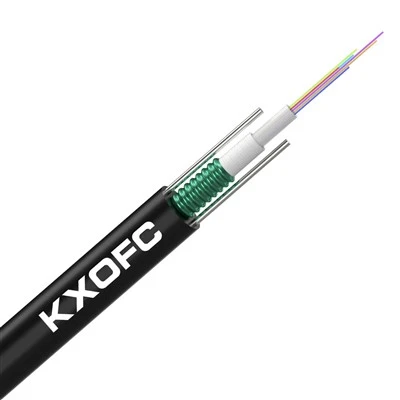
By following the best practices for splicing and being aware of the factors that can affect splicing quality, you can make sure that your Duct Optical Fiber Cable provides the best possible performance.
Direct Burial Optical Fiber Cable If you’re in the market for high – quality Duct Optical Fiber Cable or have any questions about splicing and testing, don’t hesitate to reach out to me. I’m here to help you with all your fiber optic needs, and we can have a chat to see how I can meet your specific requirements.
References
- "Fiber Optic Testing Handbook" by Various Authors
- "Optical Fiber Communications: Principles and Practice" by John M. Senior.
Hangzhou Lin’an Kexin Optical Cable Co., Ltd.
As one of the most professional duct optical fiber cable manufacturers and suppliers in China, we’re featured by quality products and good price. Please rest assured to wholesale discount duct optical fiber cable made in China here and get pricelist from our factory. Customized orders are welcome.
Address: No. 28 Linglong Street,Lin’an Area, Hangzhou City, Zhejiang Province, China
E-mail: sales@kexincable.com
WebSite: https://www.kexincable.com/
