Hey there! I’m in the business of supplying Bucket Elevator Chains, and I often get asked how these nifty pieces of equipment work. So, today, I’m gonna break it down for you and give you a clear picture of what goes on inside a bucket elevator chain system. Bucket Elevator Chain

Let’s start with the basics. A bucket elevator chain is a crucial part of a bucket elevator, which is a machine used to transport bulk materials vertically. You’ll find these in all sorts of industries, like agriculture, mining, and manufacturing. Whether it’s moving grains, coal, or even cement, bucket elevators get the job done.
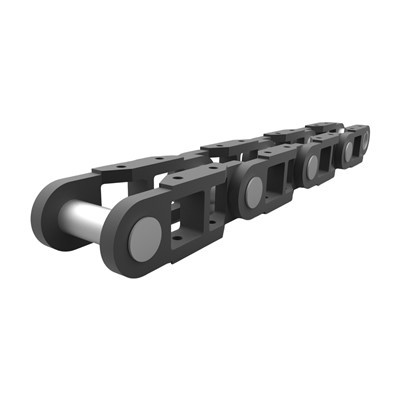
Now, the heart of the system is the chain itself. It’s a durable, robust piece of equipment that’s designed to handle heavy loads. The chain is made up of a series of links that are connected together. These links are usually made from high – strength steel to ensure they can withstand the wear and tear of continuous operation.
At regular intervals along the chain, there are buckets attached. These buckets are what grab and carry the material. The size and shape of the buckets can vary depending on the type of material being transported. For example, if you’re moving something like sand, you might use smaller, more shallow buckets. But if you’re dealing with larger chunks of coal, you’ll need bigger, deeper buckets.
So, how does the whole thing get moving? Well, there are two main components: the drive sprocket and the tail sprocket. The drive sprocket is connected to a motor. When the motor is turned on, it rotates the drive sprocket. This rotation then causes the chain to start moving. The chain is looped around the drive sprocket at the top and the tail sprocket at the bottom of the elevator.
As the chain moves, the buckets pass through the material at the bottom of the elevator. The design of the buckets allows them to scoop up the material as they go. This is called the "loading" phase. Once the buckets are filled, they continue to move up the elevator, following the path of the chain.
When the buckets reach the top of the elevator, they go over the drive sprocket. The shape of this movement causes the buckets to tip, and the material inside is emptied out at the discharge point. This is the "unloading" phase. After the material is emptied, the now – empty buckets continue their journey back down the elevator to the bottom, where they’ll scoop up more material and start the cycle all over again.
One of the key things about a bucket elevator chain is its speed. The speed of the chain needs to be carefully controlled. If it’s too fast, the material might spill out of the buckets before they reach the discharge point. If it’s too slow, the elevator won’t be very efficient, and it might not be able to move enough material to meet the demands of the operation.
Another important factor is tension. The chain needs to be kept at the right level of tension. If it’s too loose, it might slip off the sprockets, which can lead to a breakdown. On the other hand, if it’s too tight, it can put extra stress on the chain, the sprockets, and the motor, which can also cause problems and reduce the lifespan of the equipment.
We as a supplier, make sure that the chains we provide are of the highest quality. We use advanced manufacturing techniques to ensure that each link is strong and that the overall chain is durable. We also offer different types of chains to suit different applications. For example, we have chains with different pitch sizes (the distance between the centers of adjacent links). A smaller pitch chain is generally more flexible and can be used in applications where the elevator has a smaller diameter sprocket or where a smoother operation is required. A larger pitch chain, on the other hand, can handle heavier loads.
We also pay close attention to the design of the buckets. We offer a variety of bucket designs, each carefully crafted to optimize the loading and unloading process. Some buckets have a special lip or shape that helps prevent material from spilling during the upward journey. Others are designed to empty quickly and completely at the discharge point.
Maintenance is also a big part of keeping a bucket elevator chain system running smoothly. Regular inspections are necessary to check for any signs of wear or damage. This includes looking at the chain links for cracks or excessive wear, checking the sprockets for teeth damage, and making sure the buckets are still securely attached to the chain. Lubrication is also important to reduce friction and extend the life of the chain.
If you do run into any problems with your bucket elevator chain, don’t worry. We’re here to help. We have a team of experts who can provide technical support and advice. Whether it’s a simple adjustment or a more complex repair, we can guide you through the process.
In conclusion, a bucket elevator chain is a vital part of a bucket elevator system. It’s responsible for moving the buckets that carry the bulk material from the bottom to the top of the elevator. With proper design, installation, and maintenance, it can provide reliable and efficient operation for a long time.
If you’re in the market for a bucket elevator chain, or if you have questions about how to improve the performance of your existing system, don’t hesitate to reach out. We’re always happy to have a chat and discuss how we can meet your needs. Whether you’re a small – scale operator or a large – scale industrial facility, we’ve got the right solution for you.
Conveyor Chain References
- Handbook of Bulk Solids Handling and Transport
- Industrial Conveying Equipment Manual
Zhejiang Hangte Chain Transmission Co., Ltd.
We are one of the most experienced bucket elevator chain manufacturers and suppliers in China since 1999. Please rest assured to buy high quality bucket elevator chain made in China here from our factory. If you have any enquiry about cooperation, please feel free to email us.
Address: No. 195 Qinglin East Street, Qingshan Lake Subdistrict, Lin’an District, Hangzhou City, Zhejiang Province
E-mail: hangtechain@gmail.com
WebSite: https://www.chinahtchain.com/
