Hey there! I’m a supplier of tetrahydroquinoline, and you know, one of the most common questions I get asked is about the distillation methods for purifying this stuff. Tetrahydroquinoline is an important chemical compound used in a bunch of industries, like pharmaceuticals, agrochemicals, and dyes. And getting it pure is super important for these applications. So, let’s dive into the different distillation methods we can use to purify tetrahydroquinoline. Tetrahydroquinoline

Simple Distillation
First up, we’ve got simple distillation. This is the most basic form of distillation, and it’s pretty straightforward. The idea behind it is that different substances have different boiling points. When you heat up a mixture of liquids, the one with the lower boiling point will turn into vapor first. You then collect and cool this vapor, turning it back into a liquid.
For tetrahydroquinoline, if the impurities have significantly different boiling points, simple distillation can be a good option. Let’s say we’ve got a mixture of tetrahydroquinoline and some other stuff with a much lower boiling point. When we heat the mixture, the low – boiling – point impurities will vaporize and can be collected separately.
But there’s a catch. Simple distillation isn’t great when the boiling points of the substances in the mixture are close to each other. In the case of tetrahydroquinoline, if there are impurities with boiling points just a few degrees off from it, simple distillation won’t be able to separate them effectively.
Fractional Distillation
Now, fractional distillation is a step up from simple distillation. It’s a bit more complex, but it’s also way more effective when dealing with mixtures where the components have similar boiling points.
In fractional distillation, we use a fractionating column. This column is filled with some kind of packing material, like glass beads or metal rings. When the vapor rises through the column, it condenses on the packing material and then re – evaporates multiple times. This repeated condensation and evaporation process allows for a better separation of the components based on their boiling points.
For purifying tetrahydroquinoline, fractional distillation is often the go – to method. There are usually some impurities in the crude tetrahydroquinoline that have boiling points close to it. The fractionating column helps to separate these impurities by providing more surface area for the vapor – liquid equilibrium to occur. As the vapor rises through the column, the components with higher boiling points tend to condense and fall back down, while the components with lower boiling points continue to rise and are collected at the top.
Vacuum Distillation
Another important method is vacuum distillation. Tetrahydroquinoline has a relatively high boiling point, and when you heat it at normal atmospheric pressure, it can start to decompose before it boils. That’s where vacuum distillation comes in.
In vacuum distillation, we lower the pressure inside the distillation apparatus. According to the principles of physics, the boiling point of a liquid decreases as the pressure decreases. So, by creating a vacuum, we can make tetrahydroquinoline boil at a much lower temperature. This reduces the risk of decomposition and allows for a more efficient purification process.
We use a vacuum pump to create the low – pressure environment. The lower the pressure, the lower the boiling point of tetrahydroquinoline will be. This method is especially useful when dealing with heat – sensitive substances, like some of the tetrahydroquinoline derivatives that might be present in the mixture.
Steam Distillation
Steam distillation is a unique method that can also be used for tetrahydroquinoline purification in certain cases. This method is based on the fact that some organic compounds can be distilled with steam even if they have high boiling points.
In steam distillation, we pass steam through the mixture containing tetrahydroquinoline. The steam and the tetrahydroquinoline vaporize together, and the resulting vapor mixture is then condensed. The water and the tetrahydroquinoline are immiscible, so they separate after condensation.
This method is useful when we want to isolate tetrahydroquinoline from a mixture that contains non – volatile impurities. The non – volatile impurities stay behind in the distillation flask, while the tetrahydroquinoline is carried away with the steam. And since we’re using steam, the temperature of the process is relatively low, which helps to prevent decomposition of tetrahydroquinoline.
Choosing the Right Method
So, how do we choose the right distillation method for purifying tetrahydroquinoline? Well, it depends on a few factors. First of all, we need to know the composition of the crude tetrahydroquinoline. What are the impurities present? And what are their boiling points compared to tetrahydroquinoline?
If the impurities have very different boiling points, simple distillation might be enough. But if the boiling points are close, fractional distillation is probably the better option. If tetrahydroquinoline is heat – sensitive or has a very high boiling point, vacuum distillation should be considered. And if we’re dealing with non – volatile impurities, steam distillation could be a good choice.
Another factor to consider is the scale of production. For small – scale purification in a laboratory, simple distillation or fractional distillation setups can be used. But for large – scale industrial production, more complex and efficient methods like continuous fractional distillation or vacuum distillation on an industrial scale are needed.
Why Our Purified Tetrahydroquinoline Rocks
As a supplier of tetrahydroquinoline, we take purification seriously. We use state – of – the – art distillation equipment and highly trained technicians to ensure that our tetrahydroquinoline is of the highest purity. By carefully choosing the right distillation method based on the specific characteristics of each batch of crude tetrahydroquinoline, we can produce a product that meets the strictest quality standards.
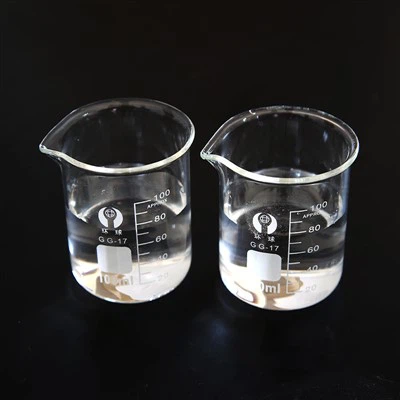
Our purified tetrahydroquinoline is used by some of the biggest names in the pharmaceutical, agrochemical, and dye industries. They trust us because they know that our product is consistent in quality and free from harmful impurities. Whether you need a small amount for research purposes or a large quantity for industrial production, we’ve got you covered.
Let’s Do Business
Ester If you’re in the market for high – quality purified tetrahydroquinoline, I’d love to talk to you. We’re always looking for new customers to work with, and we’re confident that our product will meet your needs. Whether you want to know more about our purification process or are ready to place an order, just reach out. We’ll be more than happy to have a chat and see how we can do business together.
References
- Perry, R. H., & Green, D. W. (Eds.). (1997). Perry’s Chemical Engineers’ Handbook. McGraw – Hill.
- Treptow, R. S. (2010). Distillation. In Encyclopedia of Analytical Chemistry. John Wiley & Sons, Ltd.
Handan Huajun Chemicals Co., Ltd.
We’re well-known as one of the most experienced tetrahydroquinoline manufacturers in China, featured by quality products and good service. Please rest assured to wholesale bulk customized tetrahydroquinoline at competitive price from our factory. For quotation and free sample, contact us now.
Address: East Side of Ziyang Avenue, New Material Industrial Park, Shoushansi Township, Guantao County, Handan City, Hebei Province
E-mail: sales@huajunchem.com
WebSite: https://www.huajunchemhd.com/
