Hey there! I’m a supplier of Ball Flange Linear Guides, and I often get asked about how to determine the right ball material for these guides. It’s a crucial decision because the ball material can significantly impact the performance, durability, and overall quality of the linear guide. In this blog, I’ll share some insights based on my experience in the industry to help you make an informed choice. Ball Flange Linear Guide
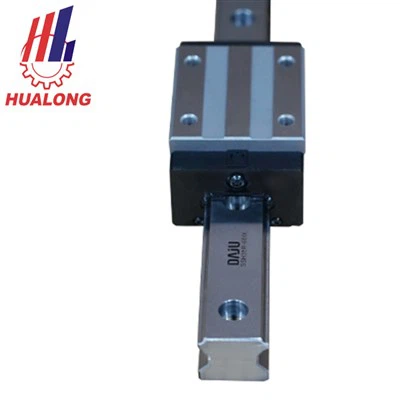
Understanding the Role of Balls in Ball Flange Linear Guides
First off, let’s quickly go over what balls do in Ball Flange Linear Guides. These balls act as the rolling elements that enable smooth and precise linear motion. They reduce friction between the guide rail and the slider, allowing for efficient movement under various loads and operating conditions. Different ball materials have different properties, and choosing the right one can make or break the functionality of your linear guide.
Factors to Consider When Choosing Ball Material
1. Load Capacity
The amount of load your linear guide needs to handle is a major factor. If you’re dealing with heavy loads, you’ll need balls made from a material that can withstand high stress without deforming. Steel balls, for example, are known for their high load – carrying capacity. They’re strong and durable, making them a popular choice for industrial applications where heavy machinery requires precise linear movement under substantial loads.
On the other hand, if the load is relatively light, you might have more flexibility in your material choice. Plastics or ceramic balls could be considered as they can still provide smooth movement without the need for excessive strength.
2. Friction and Wear
Friction can cause heat, wear, and energy loss in a linear guide system. Minimizing friction is essential for efficient operation and long – term durability. Ceramic balls have a very low coefficient of friction compared to steel balls. This means they generate less heat during operation, which can extend the life of the guide and reduce the need for lubrication in some cases.
Steel balls, while durable, can experience more wear over time, especially in high – speed or high – load applications. However, proper lubrication can significantly reduce this wear and improve the performance of steel balls.
3. Corrosion Resistance
If your linear guide is going to be used in a corrosive environment, such as in a chemical plant or near the ocean, corrosion resistance becomes a top priority. Stainless steel balls are a great option as they have a high resistance to rust and corrosion. They can maintain their integrity and performance even when exposed to harsh chemicals or saltwater.
Ceramic balls are also highly corrosion – resistant. They don’t react with most chemicals, making them suitable for extremely corrosive environments where other materials would quickly deteriorate.
4. Operating Temperature
The temperature at which your linear guide will operate can also influence your ball material choice. Steel balls can handle a wide range of temperatures, but at extremely high or low temperatures, their performance may be affected. For example, at very low temperatures, steel can become brittle.
Ceramic balls, on the other hand, have excellent thermal stability. They can maintain their mechanical properties at both high and low temperatures, making them ideal for applications in extreme environments, such as in aerospace or cryogenic industries.
5. Cost
Let’s face it, cost matters. Steel balls are generally more affordable than ceramic balls. If your application doesn’t require the high – end properties of ceramic balls, such as extreme corrosion resistance or very low friction, then steel balls can be a cost – effective choice.
However, if the performance benefits of ceramic balls, like longer lifespan and better efficiency, outweigh the higher initial cost, then it might be worth investing in them.
Common Ball Materials and Their Applications
1. Steel Balls
- Chrome Steel (AISI 52100): This is one of the most commonly used materials for balls in linear guides. Chrome steel balls have high hardness, good wear resistance, and a relatively high load – carrying capacity. They’re suitable for a wide range of applications, from light – duty machinery to heavy – duty industrial equipment. For example, in CNC machining centers, chrome steel balls are often used in the linear guides to ensure precise movement of the cutting tools.
- Stainless Steel (AISI 440C): As mentioned earlier, stainless steel balls are great for corrosion – resistant applications. They’re used in food processing equipment, medical devices, and marine applications where the guide is exposed to moisture or chemicals.
2. Ceramic Balls
- Silicon Nitride (Si3N4): Silicon nitride ceramic balls are known for their high strength, low density, and excellent thermal stability. They’re often used in high – speed applications, such as in machine tool spindles, where low inertia and high – speed performance are crucial. Their low coefficient of friction also makes them ideal for reducing energy consumption in the system.
- Zirconia (ZrO2): Zirconia ceramic balls have good toughness and wear resistance. They’re used in applications where a combination of strength and corrosion resistance is required, such as in some chemical processing equipment.
3. Plastic Balls
- Nylon: Nylon balls are lightweight and have a low coefficient of friction. They’re often used in applications where noise reduction and low – cost are important, such as in some consumer products or light – duty automation equipment.
Making the Final Decision
So, how do you put all this information together to choose the right ball material? Start by clearly defining your application requirements. Consider the load, speed, operating environment (temperature, corrosion), and budget. Make a list of the most important factors for your specific application.
If you’re still unsure, don’t hesitate to reach out for advice. As a Ball Flange Linear Guide supplier, I’ve helped many customers make the right choice. I can provide samples of different ball materials so you can test them in your actual application.
Conclusion

Determining the ball material for Ball Flange Linear Guides is a multi – faceted decision that requires careful consideration of various factors. By understanding the properties of different ball materials and how they relate to your application requirements, you can select the material that will provide the best performance, durability, and cost – effectiveness.
Roller Linear Guide If you’re in the market for Ball Flange Linear Guides and need help choosing the right ball material or have any other questions, feel free to get in touch. I’d be happy to discuss your needs and help you find the perfect solution for your application.
References
- "Handbook of Linear Motion Technology"
- "Materials Science and Engineering: An Introduction" by William D. Callister Jr. and David G. Rethwisch
- Industry whitepapers on linear guide technology
Fujian Province Hualong Machinery Co., Ltd.
As one of the leading ball flange linear guide manufacturers and suppliers in China, our products have good reputation in the market. Please rest assured to wholesale bulk ball flange linear guide made in China here from our factory. Welcome to view our website for more information.
Address: Huangshi Industrial Park, Putian city, Fujian Province, China
E-mail: jenkin@hualongm.com
WebSite: https://www.guidelinear.com/
