If you’ve ever walked into a manufacturing plant, auto body shop, or even a commercial bakery where compressed air powers tools, you’ve probably seen a refrigerated air dryer tucked quietly next to the air compressor. Most people don’t give it much thought—until it fails, that is. A blown air line, rusted tool, or spoiled batch of baked goods can all trace back to a dryer that stopped doing its job. As a supplier who’s worked with hundreds of customers over the last decade, the most common question I get isn’t “How does a refrigerated air dryer work?” It’s “How long will mine last?” Refrigerated Air Dryer
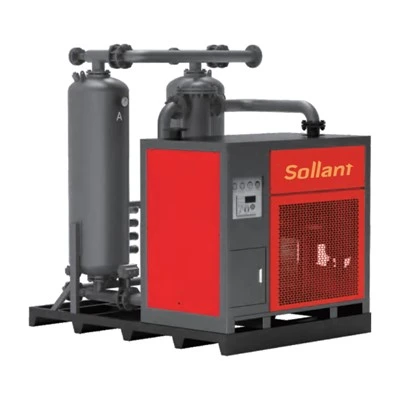
There’s no one-size-fits-all answer, but after seeing dozens of dryers that ran for 12 years and others that gave out in 3, I can tell you it’s not just about the brand stamped on the side. It’s a mix of design, how you use it, and how well you maintain it. Let’s break it down, because when you’re investing in equipment that keeps your compressed air dry and your operations running, knowing its lifespan helps you plan for replacements instead of scrambling when it breaks.
First, let’s start with the basics: what a refrigerated air dryer actually does. Compressed air, by nature, holds water vapor. When you squeeze air into a compressor, the temperature spikes, and that moisture turns into liquid. If you don’t remove it, that liquid will corrode your air lines, clog your pneumatic tools, and even damage products that need dry air—like pharmaceutical packaging or food-grade ingredients. A refrigerated air dryer works by cooling the compressed air to around 35 to 40 degrees Fahrenheit. That cold air can’t hold as much moisture, so the water condenses into liquid, which drains out of the system. The now-dry air is reheated slightly before it goes to your tools, so it doesn’t cause condensation in your lines later.
Now, the average lifespan of a well-built refrigerated air dryer. Most manufacturers will tell you to expect 10 to 15 years of service. That’s not a random number—it’s based on the design of the core components: the compressor in the dryer, the heat exchangers, and the refrigerant circuit. A quality refrigerated dryer uses a hermetic refrigerant compressor, which is sealed to keep dirt and moisture out, and copper heat exchangers that resist corrosion. Cheaper models, often marketed as “budget” options, might use steel heat exchangers or open compressors that are more prone to wear, and those can cut the lifespan by half, sometimes even less.
But here’s where it gets personal: your dryer’s actual lifespan depends on how you use it. Let’s talk about common use cases I see as a supplier. If you’re running a small shop with a 5-horsepower air compressor that only runs 8 hours a day, 5 days a week, your dryer will almost certainly hit that 10 to 15 year mark. These applications are low-stress—loads are consistent, temperatures don’t swing wildly, and maintenance is easy. On the other end of the spectrum, a 100-horsepower dryer in a 24/7 manufacturing plant, operating in a dusty, hot warehouse, will wear out much faster. I’ve seen heavy-use dryers fail after 5 to 7 years, not because they’re bad quality, but because they’re working overtime, 24 hours a day, 7 days a week.
Another big factor: overloading. A lot of customers buy a dryer that’s sized for their current compressor, then later upgrade to a larger compressor without swapping out the dryer. If your dryer is designed to handle 100 cfm (cubic feet per minute) but your compressor is pushing 150 cfm, the dryer has to run nonstop to keep up. That extra strain shortens its life dramatically. I had a customer a few years back who doubled his air tool fleet, upgraded his compressor, and didn’t adjust his dryer. His dryer died 3 years later, when it should have lasted 12. He ended up purchasing a properly sized unit from us, and 4 years later it’s still running strong.
Then there’s the issue of installation and environmental conditions. A dryer installed in a garage with perfect ventilation, away from direct sunlight and extreme temperatures, will last longer than one tucked in a corner of a hot, dusty warehouse. Dirt and dust clog the condenser coils, making the dryer work harder to cool the air. High ambient temperatures mean the dryer has to run longer to reach that 35-degree dew point, putting extra stress on the compressor and refrigerant system. I once worked with a food processing plant where they installed their dryer right next to a steam boiler. The constant heat and moisture from the boiler meant the dryer’s compressor ran at 10% higher load every single day—it died in 4 years. Moving it to a cooler, well-ventilated space added 6 years to its life for a customer with a nearly identical dryer.
Now, let’s talk about maintenance, because this is the single biggest thing you can do to extend your dryer’s lifespan. I’ve seen two identical dryers: one that gets a $50 annual service, and one that runs for 15 years without any maintenance. The well-maintained one was still running like new, with only minor component replacements (like drain valves) after a decade. The neglected one failed at 7 years, needing a full compressor rebuild.
What does proper maintenance for a refrigerated air dryer look like? Let’s break it down by the numbers:
- Every 3 months: Check and clean the condenser coils. Dust and debris here reduce cooling efficiency by 20% or more, according to ASHRAE (American Society of Heating, Refrigerating and Air-Conditioning Engineers), and that extra work adds up over time.
- Every 6 months: Test the automatic drain valves. These valves are what remove condensed water from the system, and if they’re clogged or leaky, water can get into your compressed air, which means the dryer isn’t doing its job. It’s a simple check—blow out the drain line and make sure it opens and closes correctly.
- Every 12 months: Check the refrigerant level. Too much or too little refrigerant will cause the compressor to work harder, leading to premature failure. A certified technician can do this in 15 minutes, and it’s way cheaper than replacing a $1,000 compressor.
- Annually: Inspect the compressor and the heat exchanger for corrosion. If you see rust on steel components, it’s a sign of moisture damage—catching that early can prevent a full system failure.
I can’t stress enough how big a difference this makes. One of my long-term customers, a custom woodworking shop, has the same dryer he bought from me 14 years ago. He does his own maintenance, cleans the coils every 3 months, and replaces the drain valve once a year. He called me last month to ask about a replacement, not because it’s broken, but because he’s expanding his shop and needs a larger unit. That’s the kind of customer story that sticks with me—proper care turning a 10-year lifespan into 14, with no breakdowns to cost him money in lost production.
Now, what about when a dryer is nearing the end of its life? How do you know when it’s time to replace it, instead of sinking more money into repairs? Let’s go over the warning signs I see as a supplier, because catching this early avoids headaches. The most common red flag is water in your compressed air lines. If your pneumatic tools are rusting, your paint jobs have bubbles, or your product batches are getting ruined, the dryer isn’t removing moisture anymore. That could be a simple clog or a faulty drain valve, but if it’s happening repeatedly even after you fix those parts, it’s a sign the core components (the compressor or heat exchanger) are worn out.
Another sign is higher energy bills. A dryer working harder than it should uses more electricity. If your energy costs have gone up 15% or more in a year with no other changes (like new equipment), have a technician check the dryer’s efficiency. If it’s running at 70% or less of its original efficiency, it’s probably time to replace it—newer models are much more energy-efficient, and the savings on electricity will offset the cost of a new dryer in 2 to 3 years.
Strange noises are another warning. Your dryer should make a low, steady humming noise. If you hear rattling, hissing, or a loud grinding sound coming from the compressor, that’s a sign of worn bearings or internal damage. Ignoring that will lead to a total failure, often at the worst possible time—like during a 24-hour production run.
I get asked all the time: is it worth repairing an old dryer, or should I just replace it? The rule of thumb I tell customers is: if the repair costs more than 50% of a new dryer, replace it. If it’s a minor part like a drain valve or a filter, fix it. But if you need a new compressor or a heat exchanger, that’s usually a total rebuild that costs nearly as much as a new unit. I had a customer last year who spent $1,800 repairing a 8-year-old dryer, only for it to fail 6 months later. If he’d spent $3,200 on a new, energy-efficient model, he would have saved money in the long run, plus he would have avoided the downtime when the old one broke.
Now, let’s address a common myth: higher price always means longer lifespan. That’s not entirely true. There are budget models out there made with quality components, and premium models that are overpriced for the features. But as a general rule, dryers that are designed for continuous use (labeled “24/7 operation”) will last longer than ones made for light, intermittent use. A dryer rated for 100% duty cycle is built to run every hour of every day, so its components are thicker, the compressor is more robust, and the heat exchanger is larger. If you’re running multiple shifts, always opt for a model with 100% duty cycle, regardless of brand—it will pay off in longer life.
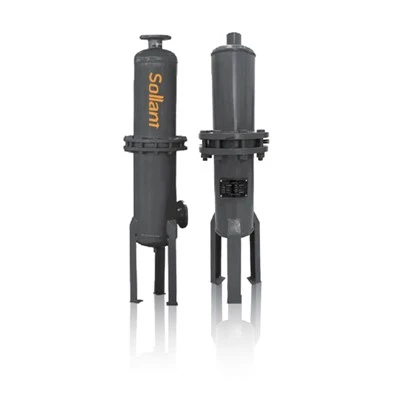
Another myth: refrigerated air dryers are all the same. I’ve seen cheap units that use a single small heat exchanger, which has to work twice as hard to cool the air, leading to faster wear. Quality dryers use a dual heat exchanger: one that cools the incoming hot compressed air, and another that cools it further to remove moisture. This reduces the load on the compressor and extends its life. That small design difference can add 5 years to the lifespan of the dryer.
So, putting it all together: the lifespan of a refrigerated air dryer is not a fixed number. It’s a range of 5 to 15 years, depending on three things: the quality of the unit, how you size it for your operation, and how well you maintain it. If you invest in a quality, properly sized dryer for your use case, and do regular maintenance, you’re looking at 10 to 15 years of reliable service. If you overload it, skimp on maintenance, or put it in a harsh environment, you might be looking at 5 to 7 years.
Refrigerated Air Dryer At the end of the day, a refrigerated air dryer is a small part of your operation, but it’s a critical one. When it fails, it stops production, costs you money, and can damage your products or equipment. That’s why it’s worth planning for its lifespan instead of waiting for it to break. If you’re wondering if your dryer is nearing the end of its life, or if you need to size a new one for your expanding operations, our team is here to help. We don’t just sell dryers—we work with you to assess your usage, recommend the right unit, and even share a simple maintenance schedule to help you get the most out of your investment.
Shanghai Sollant Energy Saving Technology Co., Ltd.
As one of the most professional refrigerated air dryer manufacturers and suppliers in China, we’re featured by quality products and good service. We warmly welcome you to buy bulk advanced refrigerated air dryer from our factory. If you have any enquiry about cooperation, please feel free to email us.
Address: No.215, Songri Center, Beihongqiao, Jiading District, Shanghai, China
E-mail: info4@sollant.com
WebSite: https://www.sollanttreatment.com/
