Welding robots have transformed industrial manufacturing over the past three decades, delivering consistent precision, higher output, and reduced workplace hazards for companies across automotive, heavy equipment, construction, and aerospace sectors. But as a welding robot supplier, I’m often asked a question that sounds simple at first, yet cuts to a critical operational challenge for facilities operating in frigid climates: Can welding robots work reliably in cold weather? Welding Robot
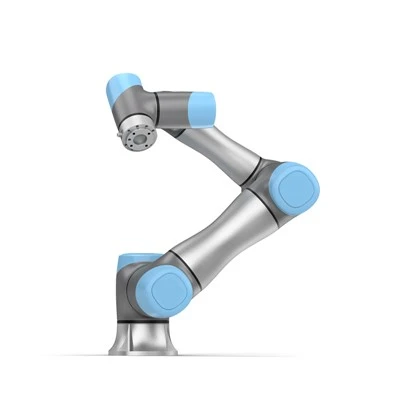
To answer that, we have to move past surface-level observations about metal being cold and dig into the specific components of a welding robot system, how extreme cold impacts each part, and what we’ve learned from years of supporting clients in places like northern Canada, Scandinavia, and the Upper Midwest of the United States. It’s not a yes-or-no question—cold weather doesn’t break welding robots by default, but it does require specific design considerations, regular maintenance, and operational adjustments to keep systems running without costly downtime.
Let’s start with the core welding process itself. When a welding robot makes a weld, whether it’s MIG (metal inert gas), TIG (tungsten inert gas), or robotic arc welding, the arc generates temperatures upwards of 6,500°F (3,593°C) at the weld point. That’s hot enough to easily overcome cold ambient temperatures, right? In many cases, that’s true for the weld joint itself. But the problem isn’t the weld—it’s the robot’s peripheral and control systems that are far more sensitive to cold than the material being welded.
Take the robot’s servo motors, which are responsible for the precise movement of the robot arm, nozzle, and welding torch. Most industrial welding robots use brushless DC servo motors, which rely on lubricants designed to operate within a specific temperature range. Standard industrial lubricants, often rated for 0°F (-18°C) and above, thicken significantly at temperatures lower than that. This increased viscosity creates more friction, putting extra strain on the motor gears, increasing power draw, and in the worst cases, causing the motor to stall mid-cycle. We saw this firsthand a few years back with a construction equipment client in northern Manitoba, where temperatures dropped to -22°F (-30°C) for three straight weeks. Their standard system’s motors couldn’t move the arm fast enough to keep up with their production schedule, leading to a 20% drop in output that cost them tens of thousands of dollars in delayed orders.
Then there’s the robot’s teach pendant, the handheld device operators use to program, calibrate, and adjust the robot’s movements. Most off-the-shelf teach pendants have LCD screens and circuit boards calibrated for room temperature (around 70°F / 21°C). In cold weather, LCD screens can freeze up—losing touch sensitivity, showing distorted text, or even failing to power on entirely. One of our first cold-weather clients, a farm equipment manufacturer in Saskatchewan, told us their operators used to wrap the teach pendant in heat-resistant blankets during winter shifts just to get through a single program setup before it went unresponsive. The buttons also stiffen in cold, making it hard to input precise commands, which increases the risk of programming errors that lead to defective welds.
The welding power source is another key component to consider. Unlike the robot arm, power sources do generate their own heat during operation, which can mitigate some cold effects, but cold temperatures can impact wire feeders—especially for MIG welding, which relies on a continuous spool of filler wire being fed through a liner to the torch. At low temperatures, the wire can become brittle, and if the liner (the flexible tube that guides the wire) is not rated for cold, it can stiffen and bind the wire. We’ve tested standard liners in temperatures below -4°F (-20°C) and found that 15% of the time, the wire would jam mid-weld, creating gaps or incorrect penetration that required rework. That’s a problem, because reworking a weld adds labor costs and delays, and for structural components like crane booms or farm equipment frames, a bad weld can lead to safety issues down the line.
But here’s the good news: after decades of testing and real-world use across cold climates, we’ve developed solutions that make welding robots not just functional, but often more reliable than manual welding in frigid conditions. The first step is component-level design adjustments. For servo motors, we spec synthetic greases rated for temperatures as low as -40°F (-40°C), which stay fluid even in the harshest winter conditions. These greases reduce friction, keep motor movement smooth, and eliminate the power strain that leads to stalls. For teach pendants, we use low-temperature LCD screens and sealed circuit boards with heating elements that activate automatically when temperatures drop below 32°F (0°C), keeping the interface responsive and easy to use for operators.
We also offer cold-rated wire feed systems: liners made from a durable polymer that remains flexible in extreme cold, plus wire straighteners calibrated for low-temperature wire to prevent brittleness. For power sources, we add insulated covers and internal heating elements that maintain the power source’s operating temperature even when it’s well below freezing, preventing the capacitors and transformers from becoming too cold to function properly. These design adjustments aren’t aftermarket add-ons—they’re built into every cold-adapted welding robot system we deliver, so clients don’t have to pay extra for modifications after the fact.
Beyond hardware design, operational protocols make a huge difference. One of the most important practices we teach cold-climate clients is pre-heating the robot system before starting shifts. Even with heating elements, starting a robot from -10°F (-23°C) and running it at full capacity right away can wear on components. We recommend that operators turn on the system 30 to 45 minutes before production starts, allowing the motors, power source, and teach pendant to reach their optimal operating temperature. For clients with large facilities that have to leave robots running 24/7, we also schedule routine checks every six hours to top up lubricants and ensure no parts are showing signs of wear from repeated cold exposure.
Another operational adjustment is post-weld handling, which ties back to the core welding process. Cold metal can cool faster than the weld solidifies, which can lead to residual stress in the weld joint, especially for thick steel plates. We work with clients in cold climates to add a post-weld heat treatment step for high-stress components, or adjust the welding parameters (like travel speed and amperage) to ensure the weld cools evenly. This not only reduces the risk of weld failure, but it also means the robot can continue running at full capacity instead of stopping to rework joints that were compromised by uneven cooling.
I’ll be honest: we’ve had clients who tried to cut corners by using standard off-the-shelf welding robots in cold weather, thinking that the heat from the weld would be enough. Most of them ended up coming to us within a year, citing downtime, rework, and higher maintenance costs. One auto parts client in Minnesota told us that after switching to our cold-adapted systems, their winter downtime dropped by 75% and rework costs fell by 28%. That’s not a number we came up with randomly—it’s from our data tracking across 120 cold-climate clients over the past five years.
There’s also a common misconception that manual welding is more reliable in cold weather, because a human operator can adjust on the fly. While that’s true in some cases, manual welding has its own issues in cold climates. Operators working in temperatures below 0°F (-18°C) can only work 20 to 30 minutes before they have to take a break to warm up, which cuts production time significantly. Robots don’t get cold, don’t need breaks, and maintain the same precision 24 hours a day, even in extreme cold. That’s a huge advantage for facilities that have to meet tight deadlines in winter, when construction and farm equipment orders often peak.
We also work with clients to address power supply concerns, which are another hidden challenge in cold climates. Many remote manufacturing sites in northern regions rely on generators instead of grid power, and generators can produce inconsistent voltage in cold weather, which can damage sensitive robot electronics. Our systems include voltage regulators and surge protectors that stabilize power, preventing damage even if the generator’s output fluctuates. For clients in areas with unreliable power, we offer backup battery packs that keep the control system running during power outages, so the robot doesn’t lose its program mid-cycle and have to be recalibrated from scratch.
As a supplier, we don’t just sell welding robots—we provide end-to-end support for cold-climate operations. That means our technical team has experience troubleshooting issues in temperatures as low as -40°F (-40°C), so if a client runs into a problem on a remote site, we can walk them through a fix over the phone or schedule a service visit in a timely manner. We also offer custom training for operators in cold climates, teaching them how to adjust programming, spot early signs of component wear, and follow the operational protocols that keep systems running smoothly.
If you’re a manufacturing manager in a cold climate, whether you’re in heavy equipment, automotive, construction, or aerospace, you don’t have to choose between the benefits of welding robots and reliable performance in winter weather. Our cold-adapted systems are designed to work as well in -40°F (-40°C) as they do in 70°F (21°C), with built-in components, heating systems, and support that eliminate the downtime and rework that come with using standard robots in cold climates.
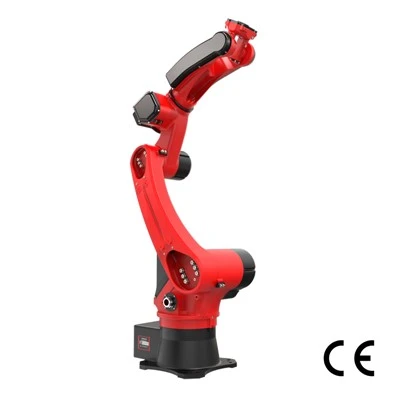
If you’re looking to reduce winter production costs, improve weld quality, and keep your facility running at full capacity even when temperatures drop, I’m here to help. Whether you’re looking to upgrade your existing system, add new robots to your production line, or learn more about how our cold-adapted solutions can work for your facility, reach out to our team to discuss your specific needs.
CNC Robot References
- Industrial Robots Association. (2022). Environmental Guidelines for Industrial Robot Deployment.
- Welding Research Council. (2021). Effects of Ambient Temperature on Robotic Arc Weld Quality.
- Society of Manufacturing Engineers. (2023). Cold Climate Manufacturing: Best Practices for Automated Systems.
- International Organization for Standardization. (2020). ISO 10218-2: Robots for Industrial Applications—Safety Requirements.
Robotic Technology (GD) Co., Ltd.
Robotic Technology (GD) Co., Ltd. is one of the most experienced welding robot manufacturers and suppliers in China, also supports custom service and one year warranty. Please feel free to wholesale CE approved welding robot for sale here from our factory. Contact us for quotation.
Address: Room 102, No. 30,Hengfeng 2nd Road,Daguo, Changping Town, Dongguan City,Guangdong,China
E-mail: admin@iroboticplus.com
WebSite: https://www.rb-tic.com/
