Hey there, if you’re reading this, chances are you’ve been dealing with head-scratching issues with your resin fickert abrasive—and trust me, I get it. I’ve been in the abrasive game for over a decade, supplying these little workhorses to everything from metal fabricators to stone countertop shops, and I’ve seen every single problem under the sun. Resin fickerts are supposed to grind, shape, and finish materials smoothly, right? So when they start acting up—loading, glazing, wearing out way too fast, or not cutting straight—your whole workflow gets thrown off. No one has time for that, especially when you’re on a deadline for a big order. Resin Fickert Abrasive
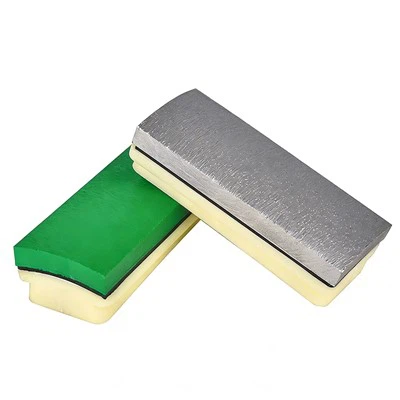
First, let’s make sure we’re all on the same page. A resin fickert is that flexible, wheel-like abrasive you mount on your grinder or polisher, made with resin as the bonding agent. It’s designed for contour work, like shaping curved stone edges or blending welds on metal. The resin binder holds the abrasive grains (usually silicon carbide or aluminum oxide) in place, so when the fickert spins, those grains do the cutting. But here’s the thing: if the mix isn’t right, or you’re using it wrong, even a top-shelf fickert can turn into a dud. I’ve worked with customers who blamed the fickert for a mess, when actually it was something as simple as the grit size or their grinding speed. Let’s dive into the most common issues and how to fix ’em—no stuffy jargon, just real-world fixes I’ve tested with my own customers.
Starting with the big one: loading. Loading is when the abrasive’s surface gets clogged up with swarf (the tiny chips of material you’re cutting) and buildup, so it stops cutting and starts smearing instead. I see this all the time with stone fabricators, especially when they’re polishing granite, which has those hard, dense mineral grains that shed and stick to the fickert’s pores. A lot of folks think “more pressure = faster results” here, but that’s the opposite of what you need. Let’s break it down. Why does loading happen? Usually three reasons: wrong grit size for the material, too much downward pressure, or not letting the fickert cool down enough. If you’re using a 60-grit fickert (coarse, for shaping) on a soft stone like marble, the marble dust packs into the fickert’s gaps instead of being flushed away. Or if you’re pressing way too hard, the swarf can’t escape through the pores—just gets mashed in.
The fix? First, check your grit match. For marble or soft limestone, go with a slightly coarser grit, around 40-60, because the material’s softer, so you need more space between grains for dust to clear. For hard granite or concrete, stick to 80-120 grit so the grains are dense enough to cut without clogging. Then, lighten up on the pressure. I tell my customers to treat it like you’re gluing a paper to a wall—gentle, consistent pressure, not a slam. Too much force just compresses the fickert’s surface, closing off those pores where swarf goes. Also, if you’re dry grinding, invest in a wire brush (a stiff brass one, not steel, to avoid scratching your workpiece) to clean the fickert every 5-10 minutes of use. Run the brush along the spinning fickert to dislodge buildup. If you’re wet grinding, make sure your water flow is strong enough—aim for 1-2 gallons per minute—to wash away swarf before it sticks. I had a guy last year who was loading his 100-grit fickert on quartz all the time; turns out his water line was clogged, so he was essentially dry grinding without realizing it. Once he unclogged the line, the problem vanished. Easy win.
Next up: glazing. Glazing is almost the opposite of loading—instead of being clogged, the fickert’s surface gets polished over, so the abrasive grains get worn down flat instead of fracturing to expose new sharp edges. Think of it like a dull knife: it can’t cut, it just slides across the surface. This happens way more with hard metals, like stainless steel or titanium, where the abrasive grains are too soft to hold up. Or if you’re running the fickert too fast, the heat from friction melts the resin binder a little, rounding off the grains instead of letting them break. I saw a metal shop last month using a 3M aluminum oxide fickert at 10,000 RPM—way too high for their angle grinder. The resin softened, the grains glazed, and they had to throw away a $200 fickert after 2 hours of use. Ouch.
How to fix glazing? First, check your RPM. Your angle grinder should be set to the fickert’s recommended speed—most resin fickerts are rated for 3,000-6,000 RPM for handheld grinders, 1,500-3,000 for floor polishers. If your grinder goes faster than that, you’re asking for trouble. Next, grain hardness match. For hard metals like titanium, go with a higher-purity abrasive, like fused aluminum oxide or silicon carbide, which are harder and won’t glaze as easily. For softer materials, regular aluminum oxide works fine. Also, if you do see glazing happening, don’t keep grinding—stop, take a sharp dresser (a diamond-tipped tool) and lightly brush the fickert’s surface while it’s spinning at slow speed. This will knock off the glazed layer and expose new sharp grains. I keep a small diamond dresser in my truck for service calls, and it’s saved more fickerts than I can count. Last trick: alternate your grinding direction. If you always grind back and forth, the grains get worn in the same spot. Mix it up—sometimes cross-grind, sometimes circular—to distribute the wear evenly.
Another common issue: excessive wear. If your fickert is wearing out after half the time it’s supposed to, that’s a red flag. A good resin fickert should last for weeks of regular use, not days. Why is this happening? Could be too high a speed, wrong bond strength, or pressure that’s too high. Wait, pressure—we talked about it for loading, but too much pressure also makes the abrasive grains break off too fast before they can do any work. Like, imagine if you’re pulling a nail with a hammer instead of a claw bar—you break the nail before you use it. That’s your fickert: grains snapping off too soon. Also, if you got a cheap no-name fickert (you know the ones, $5 instead of $15) with a weak resin bond, the binder might not hold the grains tight, so they fall out after a few passes. I’ve had customers switch from those cheapies to the brand I supply them with, and their fickert life went from 2 days to 2 weeks. Not a coincidence.
Fixing excessive wear: First, check your bond strength. Resin fickerts come in different grades—soft, medium, hard. Soft bonds are for hard materials (they release grains easy to keep cool), hard bonds are for soft materials (hold grains tight for longer). If you’re using a hard bond fickert on hard granite, the resin is too strong, so grains don’t wear evenly and break off too fast. If you’re using a soft bond on soft wood, grains fall out before they can shape the wood. Pick the right bond for your material: medium is a safe bet for most, but adjust from there. Next, adjust your pressure—back off, I mean it. I tell my customers to count how many times they press the grinder into the workpiece: if you’re digging in hard every time, stop. Light, steady motion is key. Also, make sure you’re not using a fickert meant for bench grinders on a handheld angle grinder—bench grinder fickerts are thicker and tougher, but handheld ones are thinner for precision. Using the wrong type will make it wear out way faster. And if you’re tempted to buy those super cheap ones? Don’t. I’ve seen too many customers lose money on “deal” fickerts that wear out twice as fast—$5 for a fickert that lasts an hour is worse than $15 for one that lasts 8 hours.
Wait, what about when the fickert doesn’t cut straight? Like, you’re grinding a weld bead and it’s leaving uneven marks, or shaping a stone edge and it’s bumpy. That’s usually not the fickert itself—it’s how you’re mounting it or moving it. But sometimes it’s the grit size being inconsistent. If your fickert has uneven grit distribution, some areas have more grains, some have less, so the cutting is spotty. How to avoid that? Stick to reputable suppliers, not random eBay sellers who just mix grains with cheap resin. I test every batch of fickerts I supply, checking the grit consistency across the entire surface. If you’re dealing with uneven cuts, first make sure your fickert is mounted correctly—no wobble. If it’s spinning off-center, it’ll cut unevenly every time. Tighten the nut snugly, but not too tight—you can warp the fickert if you over-torque it. Then, move the grinder in a consistent pattern: for flat work, side to side, overlapping each pass by half the fickert’s width. For contour work, follow the curve slowly, no sudden movements. If you’re still getting uneven cuts, it might be time to replace the fickert—old, worn fickerts get out of shape, so they can’t cut straight anymore.
I want to throw in a quick pro tip I’ve learned over the years: always break in a new fickert properly. A lot of folks grab a new one and go straight to work, but that’s a recipe for it wearing out fast. Break it in by running it on a soft material like a piece of old wood for 5 minutes at low speed, light pressure. This smooths out any rough edges on the new grains and ensures they’re evenly bonded. I had a customer who was breaking in his new metal fickert on stainless steel—total waste. Once he switched to wood, his fickert life doubled. Another thing: store your fickerts correctly. Keep them in a cool, dry place, not leaning against a wall or in a box with other tools. Extreme heat (like a garage in summer) can soften the resin, making it hold grains too tight. Moisture can cause the metal core to rust, making the fickert unbalanced. I keep my stock in a climate-controlled closet, and I tell my customers to do the same.
Let’s wrap this up. At the end of the day, troubleshooting resin fickert issues comes down to matching the fickert to your work, adjusting your technique, and not cutting corners on quality. I’ve been there when a customer calls panicking because their entire production line is down, and a quick check reveals they were using a 80-grit stone fickert on 1/4-inch titanium, running at 8,000 RPM. Easy fixes once you know what to look for.
If you’re dealing with any of these issues and want to chat through it—whether you’re a fabricator, metal worker, or just someone who needs consistent results from their abrasives—reach out to us. We’ve got the right resin fickerts for every job, and we’re happy to help you figure out what’s going wrong without the runaround. No sales pitches, just real advice from someone who’s worked in the trenches.
Disc-shape Abrasive Brush References:1. Abrasive Technology. "Resin Bonded Abrasives: Fundamentals of Bonding and Grain Performance." Industrial Abrasive Journal, vol. 42, no. 3, 2021, pp. 18-25.
2. Stone Fabrication & Grinding Association. "Best Practices for Resin Fickert Usage and Maintenance." SFGA Technical Bulletin, no. 17, 2022, pp. 9-14.
3. Metal Finishing Society. "Abrasive Wear and Fickert Performance in Metal Contour Grinding." Metal Finishing Journal, vol. 59, no. 2, 2020, pp. 31-37.
Quanzhou Cheefung New Materials Co., Ltd.
As one of the most experienced resin fickert abrasive enterprises in China, we are able to meet the needs of the majority of our customers. Please feel free to wholesale advanced resin fickert abrasive made in China here from our factory. For price consultation, contact us.
Address: Jinshan Community, Licheng District, Quanzhou City, Fujian, China
E-mail: info@prostonetools.com
WebSite: https://www.prostonetools.com/
