If you’ve ever spent a full day on a construction site where dust so thick it stings your eyes coats every tool, or a winter worksite where salt and slush turn the ground into a corrosive mess, you know how much wear and tear heavy equipment attachments take. As a quick coupler hitch supplier who’s spent 15 years walking construction yards, mining sites, and landscaping job sites with technicians and operators, one question I hear more than any other is this: Are quick coupler hitches easy to maintain in harsh conditions? It’s a fair question, too—these hitches are supposed to cut down on attachment swaps (saving operators time, labor, and even safety risks from manual hooking), but if they’re a nightmare to keep up when the environment’s against you, all that value goes out the window. Quick Coupler Hitch

Let’s start with the harsh conditions that hit quick couplers the most, because not all job sites are the same. Take the desert construction sites in the Southwest U.S., where wind kicks up fine, abrasive silica dust that gets into every crevice. Or open-pit mines, where you’ve got not just dust, but rock dust, mining chemicals, and heavy shock loads from moving 20-ton buckets. Then there’s the coastal construction along the Gulf or Atlantic, where salt air and saltwater spray eat away at uncoated metal in weeks. And don’t get me started on northern winter worksites, where road salt, antifreeze leaks, and constant freeze-thaw cycles turn grease into a sticky, corrosive sludge that gums up moving parts.
When I first started out in this business, I’ll admit I saw a lot of quick couplers that struggled in these conditions. Back then, many models were built with generic steel frames, basic pins, and just a single grease zerk that didn’t reach the pivot points deep inside the coupler. Operators would report that after a few months on a dusty site, the locking pins would seize up, so they’d skip greasing them to avoid the hassle, which led to even more wear. In saltwater, unprotected metal parts would start rusting so bad that the coupler wouldn’t disengage properly, or the locking mechanism would slip—something no operator wants to happen mid-lift, especially with a 10,000-pound concrete bucket hanging off the front.
But here’s the thing: today’s quick coupler hitches are engineered specifically for these harsh environments, and maintenance doesn’t have to be the headache it once was. The key is that manufacturers have learned to design for the specific stressors each harsh condition brings, rather than taking a one-size-fits-all approach. Let’s break down the maintenance realities for each of these tough environments, because that’s what actually matters to guys on the ground.
First, the abrasive dust of arid worksites. Silica dust is tiny, sharp, and gets everywhere—if a coupler has open gaps or unshielded moving parts, that dust works its way into the lock mechanism, the pivot points, and the pin holes, acting like sandpaper every time the coupler moves. The good news is that modern quick couplers for desert or dusty sites come with sealed bearing pivots, and locking mechanisms protected by rubber or polyurethane dust seals that keep fine particles out. A few years back, we sold a batch of our heavy-duty hydraulic quick couplers to a grading contractor in Arizona, who was swapping buckets 12 times a day on a site where dust would cover their tools by the end of each shift. Their service manager told me that after six months of use, the coupler still moved as smoothly as it did on day one—because the seals kept the dust out, and they only had to do a quick visual inspection and a single grease application a week, instead of the daily deep cleaning and greasing they’d had to do with their old couplers. The trick here is that the seals aren’t flimsy, disposable parts—they’re made to withstand constant exposure to fine dust, and most quality couplers have self-adjusting seals that don’t wear out even after thousands of attachment swaps.
Next up: corrosive environments, whether that’s coastal salt air, mining chemicals, or the road salt used on northern worksites. Corrosion is tricky because it doesn’t just look bad—it eats away at the metal, weakens pins, and can cause locking mechanisms to fail. Years ago, a landscaping customer in Maine bought a set of standard quick couplers for their excavators, and within a year, the couplers were so rusted from salt spray that they had to replace them early. That’s why today, we offer couplers with hot-dip galvanized finishes or powder-coated, zinc-rich epoxy coatings that are designed to resist corrosion. But even with the best coatings, the moving parts—like the locking pin, the actuator rod, and any grease fittings—can still be prone to corrosion if they’re not maintained properly. The secret here is that maintenance for these couplers is simple, and it’s focused on keeping the protective barrier intact. Twice a month, operators just need to wipe down the coupler with a pressure washer (on low setting, so you don’t damage the seals or coatings) to remove salt residue, and then apply a light coat of marine-grade grease to the moving parts. That’s it—no disassembling parts, no special tools. We’ve seen these couplers last twice as long as older models in coastal and salt-heavy worksites, because the maintenance routine is quick and doesn’t require extra training.
Then there’s the heavy shock load of mining, quarry, and demolition worksites. These sites put so much stress on quick couplers that a poorly maintained one can break or slip, leading to downtime and safety risks. The maintenance here is actually simpler than you might think, because modern couplers are built to handle heavy loads, but they need regular checks to make sure the locking mechanism is secure. For these harsh worksites, hydraulic quick couplers are the standard, because they automatically lock and release attachments without operators having to get under the machine. The maintenance for these is just a weekly check: you test the locking function by gently tugging on each attachment after you connect it, and you make sure the hydraulic lines are free of kinks or leaks. In demolition sites, where dust and debris can cover everything, we recommend operators do a visual check every morning before starting work—just make sure there’s no debris stuck in the coupler’s jaws, and that the locking pin is fully engaged. That takes less than a minute a day, and it prevents the kind of major failures that used to happen on these sites because operators would skip checks to save time.
Now, let’s talk about common myths that make people think quick couplers are hard to maintain in harsh conditions. The first myth is that hydraulic couplers are high-maintenance, because they have more moving parts. That’s not true anymore—sealed hydraulic systems have come a long way, and most modern quick coupler hydraulic systems have zero-leak designs that don’t need fluid top-ups unless there’s a rare damage. The second myth is that you need specialized training to maintain them. For all the couplers we supply, we provide a 1-page printed maintenance guide that’s just as simple as a car’s oil change schedule: daily visual check, weekly grease/pressure check, monthly deep clean. It doesn’t require any extra certification, just a few minutes a week. The third myth is that harsh conditions will wear them out no matter what. That’s only true if you buy a cheap, generic coupler that’s not engineered for those environments. We’ve had customers who bought budget couplers from overseas, and they ended up replacing them twice a year because of dust-related seizing or corrosion, while our own couplers have lasted 5 years with minimal maintenance on the same sites.
I also want to talk about the small, easy maintenance steps that make a huge difference in harsh conditions, because these are the things operators tell me they actually follow. First, don’t skip grease— but not just any grease. For dusty sites, use a high-pressure, anti-abrasive grease that can seal out dust, instead of regular grease that gets mixed with dust and turns into sludge. For cold sites, use a low-temperature grease that doesn’t harden in freezing weather, so it keeps moving parts lubricated even when it’s -20°F outside. Second, clean the coupler before you connect a new attachment. That’s a 10-second step, but if you don’t do it, dirt or debris stuck in the coupler can cause the locking pin to seize, or the attachment to fit unevenly. On a dusty worksite, I’ve seen operators keep a small bristle brush in their toolbox specifically for this—no pressure washer needed, just a quick brush of the coupler jaws and locking pin. Third, store the machine with the coupler engaged when it’s not in use. That keeps moisture, dust, and debris out of the open jaws of the coupler, so you don’t have to clean it out first thing in the morning.
Let me give you a real example to make this concrete. Last year, we worked with a road construction company in Minnesota that deals with harsh winters, where they apply thousands of tons of salt to roads each year, and temperatures drop well below zero for months. They were using three different quick coupler brands before switching to ours, and their maintenance team was logging 8 hours a week per machine just on coupler repairs—seized pins, corroded locking mechanisms, broken hydraulic lines. After switching, their maintenance time dropped to 45 minutes a week per machine, because the couplers have sealed parts, corrosion-resistant coatings, and simple maintenance steps. The project manager told me that last winter, they only had one minor issue with a coupler, and that was because an operator skipped the weekly grease check. That’s a testament to how easy it is—when the maintenance is simple and the parts are built for harsh conditions, operators don’t skip it.
Of course, no quick coupler is zero-maintenance. Even the best-built coupler will need occasional part replacement after years of heavy use, especially in the harshest environments. But that’s not a flaw—that’s just wear and tear on heavy equipment. The key is that the maintenance doesn’t require major downtime, special tools, or extra labor. You don’t have to take the coupler off the machine every few months to disassemble it and clean the parts. That’s the big difference between today’s couplers and the ones that were on the market 10 or 15 years ago.
If you’re working in a harsh environment—whether that’s dusty deserts, icy northern worksites, saltwater coastal jobs, or rocky mining sites—don’t let the fear of maintenance keep you from switching to quick coupler hitches. They save you time on attachment swaps, reduce safety risks, and lower labor costs overall, when you pick a coupler built for your specific conditions. The maintenance is simple, and if you work with a supplier who provides clear, easy-to-follow guidance, you won’t have to deal with the headaches that come with cheap, unengineered couplers.
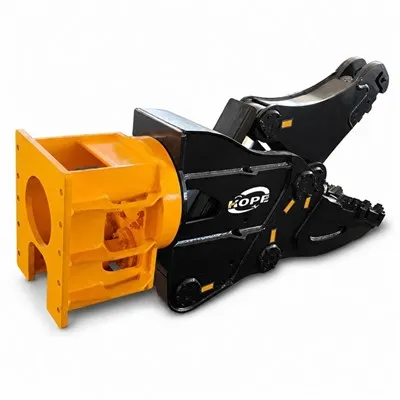
If you’re looking for a quick coupler hitch that’s built to stand up to harsh worksite conditions with minimal maintenance, we can help. Reach out to us to discuss your specific needs, and we’ll walk you through the best options for your equipment and worksite.
Grapple References:
- Construction Equipment Association. (2022). Maintenance Guidelines for Quick Coupler Hitches in Heavy-Duty Worksites.
- International Society of Automation. (2021). Corrosion Resistance of Steel Coatings for Off-Highway Equipment Components.
- U.S. Occupational Safety and Health Administration (OSHA). (2020). Safety and Maintenance Standards for Hydraulic Quick Couplers.
- Journal of Construction Engineering and Management. (2023). Wear and Tear Mitigation for Heavy Equipment Attachment Couplers in Abrasive Environments.
- Mining Equipment Manufacturers Association. (2022). Best Practices for Quick Coupler Maintenance in High-Shock Load Mining Operations.
Hope Precision Machinery Co., Ltd.
As one of the most professional quick coupler hitch manufacturers and suppliers in China, we also support customized service. Please feel free to buy high quality quick coupler hitch for sale here from our factory. For more information, contact us now.
Address: No.8 Shenzhen Street, Development Zone, Yantai,Shandong ,China
E-mail: lulu@hope-breaker.com
WebSite: https://www.hopeequip.com/
