If you’ve ever driven down a highway and seen the endless lines of steel and glass cables stretching toward the horizon, you might not realize there’s a quiet workhorse hidden inside those lines: Optical Ground Wire, or OPGW. For nearly 50 years, OPGW has done double duty: it keeps power lines safe by grounding them to protect workers from lightning strikes, and it carries fiber-optic data that powers everything from cell service to smart grid monitoring. For our team, as an OPGW supplier, we’ve watched this technology evolve from a basic add-on to power infrastructure into a specialized, high-performance product that addresses the growing pains of a digital-first world. The past five years alone have brought breakthroughs that would have seemed impossible a decade ago, and I want to walk you through what’s changing, why it matters, and how these innovations are reshaping what OPGW can do for utilities and network operators. OPGW
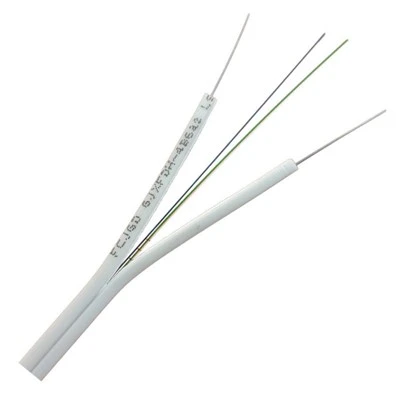
Let’s start with the core of what makes OPGW work: the fiber optic cables inside the steel or aluminum ground wire. Traditionally, most OPGW used single-mode fibers, the kind that carry long-distance, high-speed data with minimal signal loss. But as demand for more data has skyrocketed—think 5G rollouts, the Internet of Things (IoT), and smart city sensors—even single-mode fibers were hitting limits. That’s where the first big shift comes in: multi-core fibers. Unlike traditional fibers, which carry one signal path per strand, multi-core fibers split a single fiber into multiple independent cores, like having several lanes on a highway instead of one. For utilities, this is a game-changer because it lets them expand network capacity without having to string new cables. That’s a huge cost saver—stringing new overhead lines or burying fiber is expensive, disruptive, and can take months or even years to approve. We’ve been testing multi-core OPGW for a few pilot projects lately, and the feedback from grid operators has been consistent: it’s cut their need for additional cable deployments by almost 40% in some cases. Plus, these fibers are designed to withstand the harsh conditions of overhead lines—extreme temperatures, wind, ice, and even minor impacts from wildlife or construction equipment. That durability is non-negotiable; OPGW isn’t sitting in a climate-controlled data center, it’s 100 feet up in the air, so every innovation has to balance performance with ruggedness.
Another area where we’ve seen major progress is in the materials used for the cable itself. Old-school OPGW relied on steel cores for strength, but steel is heavy, which adds stress to power line towers and increases installation costs. About three years ago, we started seeing widespread adoption of aluminum conductor steel reinforced (ACSR) composites with carbon fiber cores, a material that’s 50% lighter than steel but just as strong. That might sound like a small change, but it has ripple effects: lighter cables mean utilities don’t need to reinforce their existing towers as often, cutting installation time by up to 25% and reducing the risk of tower failure in high-wind areas. We also worked with a utility in the Pacific Northwest last year to install this new lightweight OPGW along a stretch of line prone to ice storms—they told us the reduced cable weight meant less ice accumulation stress, and they haven’t had a single ground line outage in the 12 months since installation. It’s not just about strength and weight, either; new polymer coatings are making OPGW more resistant to corrosion, a big issue in coastal or industrial areas where salt and chemicals eat away at metal components. Traditional coatings would last 15 to 20 years, but these new hydrophobic polymers can extend that lifespan to 30 years, which means lower maintenance costs for utilities over time.
Wait, but OPGW’s primary job isn’t just data—it’s grounding. If a lightning strike hits a power line, OPGW is the path that carries that electricity safely to the ground instead of through the main lines, which could cause outages or damage equipment. For decades, grounding systems were a afterthought; they were designed to work with basic cables, not with high-performance fiber. Now, new smart grounding technologies are integrating directly with OPGW, letting utilities monitor the health of the ground line in real time. That’s a huge shift from the old model, where you’d only find out a ground line was damaged after a lightning strike caused an outage. These smart systems use small sensors embedded in the OPGW cable to track temperature, current flow, and even minor physical damage like cuts or abrasions. The data is sent back to a utility’s control center, so they can spot issues before they become problems. We’ve installed these smart systems in a few projects across the Midwest, and operators report that unplanned ground line outages have dropped by 60% compared to their older systems. What’s more, these sensors are low-power—they don’t need a separate battery, they draw energy from the current in the power line itself, which means no need for frequent battery replacements up in the towers.
I should also mention 5G, because it’s one of the biggest drivers of OPGW innovation right now. As carriers roll out 5G small cells every 500 to 1,000 feet along highways and urban areas, they need a way to backhaul that data quickly and reliably. OPGW is the perfect solution here because it’s already strung along millions of miles of existing power lines—no need to dig up streets or string new fiber. But 5G demands lower latency than previous networks, which means OPGW fibers need to carry data faster. That’s where new low-latency fiber designs come in. We’ve been offering OPGW with "zero water peak" fibers, which eliminate the small amount of water that used to form inside fiber strands and cause signal delay. The result? Data travels through the fiber almost as fast as light itself, which is exactly what 5G and IoT applications need. We had a mobile carrier in Texas test this for their 5G rollout along a major interstate, and they reported a 30% reduction in latency compared to standard OPGW. That’s a big deal for things like autonomous vehicles, remote surgery, and smart grid devices that need to communicate in real time.
Of course, none of these innovations matter if they can’t work within existing power infrastructure. Utilities have thousands of miles of old OPGW that’s still functional, so one of the most exciting developments in OPGW right now is retrofit technology. Instead of stringing entirely new OPGW, we can replace the fiber inside existing ground lines with newer, higher-capacity fiber. That means utilities don’t have to shut down entire stretches of power lines for installation—retrofits can be done line by line, with minimal disruption to power service. We completed a retrofit project in Ohio last year, where a utility had 200 miles of 15-year-old OPGW that could barely support their existing data load. The retrofit let them upgrade the fiber without removing the ground line, and they were able to add 10 Gbps of capacity per mile at a fraction of the cost of installing new cable. For smaller utilities that don’t have huge budgets, this is a game-changer; it lets them keep up with demand without breaking the bank.
As an OPGW supplier, we’ve seen the industry shift from seeing OPGW as a secondary component of power lines to a critical part of digital infrastructure. The innovations I’ve talked about aren’t just incremental upgrades—they’re transforming OPGW from a ground wire with a side of data into a high-performance cable that can support 5G, smart grids, and IoT for decades to come. But here’s the thing: every innovation only works if it’s tailored to the needs of the people using it. That’s why we don’t sell one-size-fits-all OPGW. We work closely with each utility and carrier to understand their specific challenges—whether that’s navigating extreme weather, rolling out 5G, or upgrading an aging grid—and design a custom OPGW solution that fits their needs.

If you’re a utility engineer, network manager, or anyone looking to upgrade your infrastructure and learn more about how these new OPGW technologies can work for you, we’d be happy to walk through your project, answer any questions, and help you find the right solution.
GJFJV References
- International Electrotechnical Commission. (2022). IEC 61300-3-36: Fibre optic interconnecting devices and passive components – Basic test and measurement procedures – Part 3-36: Examinations and measurements – Attenuation change due to longitudinal stress.
- Edison Electric Institute. (2023). Smart Grid Infrastructure: OPGW as a Foundation for 5G and IoT Deployments.
- Telecommunications Industry Association. (2021). TIA-568-C.3: Optical Fiber Cabling Standard for Premises and Outside Plant Applications.
- Global Smart Grid Federation. (2022). Overhead Ground Wire Technologies for Resilient Digital Infrastructure.
- Fiber Optic Association. (2023). Multi-Core Fiber Applications in Overhead Power Line Communication Systems.
Guangdong Shengtang Optical Cable Communication Equipment Co., Ltd.
As one of the most professional opgw manufacturers and suppliers in China, we’re featured by quality products and good price. Please rest assured to buy bulk durable opgw in stock here from our factory. Customized orders are welcome.
Address: The 6th floor of Building B3, located on the south side of Jingyi Road, Shiwan Town, Boluo County, Huizhou City, Guangdong Province.
E-mail: gdshengtang@gmail.com
WebSite: https://www.gdstcable.com/
