If you’ve ever stood in a kitchen after stir-frying a spicy stir-fry, simmering a rich tomato sauce on the stovetop, or baking a tray of smoky bacon, you’ve probably breathed in that mix of steam, cooking fumes, and tiny particles that linger long after the meal is done. For years, I’ve heard customers ask me the same question: is a kitchen range hood fan just a fancy appliance to clear out cooking smells, or does it actually do something meaningful for indoor air quality? As a supplier of kitchen range hood fans, I’m not here to oversell a product—instead, let’s break down the science, what these fans actually do, and why they matter for your home. Kitchen Range Hood Fan

First, it helps to understand what’s in the air of a typical kitchen. When you cook, you’re not just heating food—you’re releasing a cocktail of pollutants, some of which you can see, and some you can’t. There are particulate matter (PM), tiny solid or liquid particles that come from burning gas, searing meat, or frying oil. These can be as small as 2.5 micrometers, called PM2.5, which is small enough to slip past your lungs’ natural defenses and enter your bloodstream. Then there are volatile organic compounds (VOCs), gases like benzene and formaldehyde, which come from burning natural gas, especially in older stovetops, and from oils breaking down at high heat. Even steam might seem harmless, but in excess, it can lead to mold growth on walls, cabinets, and countertops over time—mold spores are another indoor air quality (IAQ) hazard.
Now, a lot of people mistakenly think opening a window is enough to fix this. But here’s the thing: kitchens generate pollutants faster than many ventilation systems can handle them, especially in homes that are tightly sealed for energy efficiency. A 2022 study from the Environmental Working Group found that homes with gas stovetops have 30 to 50 percent higher levels of nitrogen dioxide (a harmful gas) than homes without, and that level jumps to 200 percent while cooking, even when the stovetop is vented to the outside with a range hood. That same study found that using a range hood while cooking reduced nitrogen dioxide levels by 50 percent in most cases, and PM2.5 levels by up to 80 percent, because it captures these pollutants right at the source, before they can spread throughout your home.
Wait, not all range hoods are created equal, right? That’s a point I make to every customer who reaches out to our team. There are ducted range hoods, which vent air outside the home, and ductless (recirculating) range hoods, which filter air and push it back into the kitchen. Let’s get real here: ductless models are fine for mild cooking, like boiling water or making oatmeal, but if you’re searing steaks, stir-frying, or using a gas stovetop, ducted hoods are way more effective for IAQ. Ductless hoods rely on charcoal filters, which only capture odors and some larger particles—they don’t trap PM2.5 or toxic gases, so those still linger in your home. That’s why a lot of professional chefs and IAQ experts recommend ducted hoods as the gold standard for removing cooking pollutants.
I’ve seen this play out firsthand with customers. Last year, a family from Chicago reached out to us saying their 7-year-old had been having persistent asthma flare-ups, and their doctor suggested checking home air quality. They had a basic range hood that just recirculated air, and after testing, their indoor PM2.5 levels while cooking were three times the World Health Organization’s (WHO) recommended limit. When they installed one of our ducted range hoods, their post-cooking PM2.5 levels dropped to within WHO guidelines within 10 minutes. That’s the kind of tangible improvement that makes the investment worth it, in my opinion.
Another common myth: range hoods are just for grease and smells. While capturing grease is important (it keeps your cabinets and walls from getting sticky), the real IAQ impact comes from those smaller, invisible pollutants. Gas stoves are a big one here—even with a sealed burner, there’s still some leakage of nitrogen dioxide, which the WHO links to respiratory issues, especially in children and older adults. A 2021 study published in the Journal of the American Medical Association found that children growing up in homes with gas stoves have a 42 percent higher risk of asthma than those in homes with electric stoves, and the use of a range hood cut that risk by almost half. That’s a huge stat—this isn’t just about comfort, it’s about long-term health.
But what about if you don’t have the option to vent a hood outside, like in a rental home or a small apartment? That’s where high-quality ductless hoods with HEPA filters come in. Most people don’t know that not all ductless hoods use the same filters—charcoal filters are standard, but adding a HEPA filter can capture up to 99.97 percent of PM2.5 and other fine particles. A 2023 study from the American Society of Heating, Refrigerating and Air-Conditioning Engineers (ASHRAE) found that ductless hoods with both charcoal and HEPA filters reduced indoor VOC levels by 60 percent, which is better than just a window alone in a tight apartment. It’s not as good as a ducted hood, but it’s way better than no ventilation at all.
I also get asked about how to use a range hood correctly, because even the best hood won’t work if you use it wrong. A lot of people turn it on only after they start cooking, or turn it off right after. The right way is to turn it on before you start heating the pan, let it run while you cook, and then run it for 10 to 15 minutes after you’re done. That gives it time to capture all the pollutants that might have lingered, and clear out any remaining steam or odors. Another tip: choose the right CFM (cubic feet per minute) rating for your stove. A general rule is 100 CFM for every linear foot of your stovetop. If your stovetop is 30 inches, that’s about 250 CFM—too low, and it won’t pull in enough air; too high, and it’s noisy and wastes energy.
Now, let’s talk about maintenance, because a range hood is only as good as its upkeep. Grease buildup in the hood or duct not only makes the fan less efficient (it has to work harder to pull air), it’s a fire hazard too. We recommend cleaning the grease filters every one to two months, depending on how much you cook, and having the duct professionally cleaned every one to three years. For ductless hoods, replacing the filters every six to 12 months is key—old, clogged filters can’t capture pollutants, so you’re wasting your money on the hood itself. I’ve had customers tell me their hood “stopped working” only to find out they hadn’t replaced the filters in two years, and they were full of grease and grime.
I know some people worry about the cost of a good range hood, and I get it—kitchen renovations add up. But when you compare the cost to the potential health savings, it’s a small investment. Think about it: the average person spends around 30 minutes a day in the kitchen, more if you’re cooking for a family. Poor IAQ leads to more doctor visits for respiratory issues, missed work or school, and long-term health costs. A quality range hood is a way to protect your family without making major changes to your home’s structure.
Let’s also address a common counterpoint: some people say that modern stoves are more efficient, so they don’t generate as many pollutants. While it’s true that newer gas stoves have lower leakage rates, they still release harmful gases when in use, especially at high heat. Electric stoves and induction stoves don’t release combustion gases, but they still release VOCs from heating oils and food, so a range hood is still useful for them too. Induction stoves, in particular, heat up fast, so you get a lot of pollutants quickly, and a good range hood can clear them out before they spread.
At the end of the day, the question isn’t “do range hoods improve indoor air quality?”—it’s “how well do they do it, and which one is right for your kitchen?” For most homes, a ducted range hood is the most effective way to reduce cooking-related pollutants, lower your risk of respiratory issues, and keep your home’s air clean. For those who can’t do ducted, a ductless hood with HEPA and charcoal filters is a solid alternative.
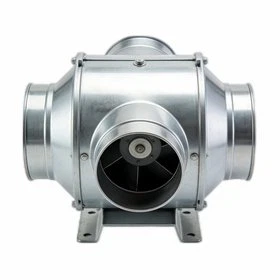
If you’re ready to upgrade your kitchen ventilation to improve your home’s indoor air quality, or you have questions about which range hood is right for your space, our team is here to help. We work with homeowners, contractors, and designers to find the right solution for every kitchen, whether you’re cooking for one or a large family, have a small apartment or a custom home.
High Speed Fan References
- Environmental Working Group. (2022). Gas Stovetops and Indoor Air Pollution: A National Study. EWG Research Reports.
- Weiss, S. T., et al. (2021). Gas Stoves and Childhood Asthma: A Population-Based Cohort Study. Journal of the American Medical Association Pediatrics.
- American Society of Heating, Refrigerating and Air-Conditioning Engineers (ASHRAE). (2023). Residential Kitchen Ventilation Guidelines. ASHRAE Journal.
- World Health Organization. (2020). Guidelines for Indoor Air Quality: Household Combustion Pollutants. WHO Press.
- National Fire Protection Association (NFPA). (2022). Kitchen Range Hood Fire Safety Best Practices. NFPA Technical Reports.
Shengzhou Geeking Electric Appliance Technology Co., Ltd.
Address: No. 19, Putian Avenue, Pukou Subdistrict, Shengzhou City
E-mail: 13588516010@163.com
WebSite: https://www.geekingfan.com/
