Hey there, thanks for swinging by my corner of the web. I’m Jake—been selling NCM lithium batteries for over eight years now, and let’s be real, I get tons of questions from electric bike builders, solar system newbies, and even small-scale electric van operators that all boil down to one thing: “Can NCM lithium battery be overdischarged?” Man, that’s such a common one, and it’s easy to brush it off or give a vague answer if you don’t know the ins and outs. But after troubleshooting so many bad battery installs and fielding support calls at 9 PM from a guy whose solar setup died mid-road trip, I’ve got a real, no-BS take on this. NCM Lithium Battery
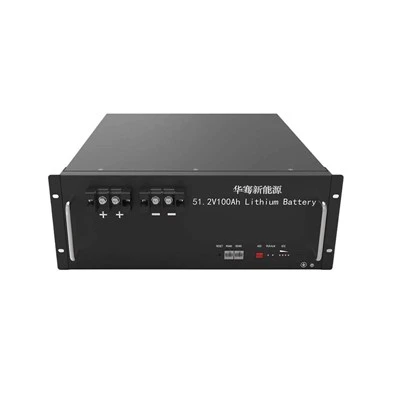
First off, let’s cut the jargon. NCM stands for Nickel-Cobalt-Manganese, right? It’s the workhorse battery chemistry for a lot of stuff these days—power tools, e-bikes, backup power, even some electric golf carts. We sell these because they hit that sweet spot between energy density, cost, and cycle life that most customers actually care about. But like every lithium-based battery, they’ve got rules. None of them are indestructible, even though people sometimes treat them like magic power bricks.
Overdischarging, for anyone who’s not deep into battery specs, is when you drain the battery below its minimum recommended voltage per cell. Most NCM cells are set to 2.5 volts per cell, right? So if you’ve got a 10-cell NCM battery pack, that’s a 25-volt floor. If you let it drop below that—say, your e-bike’s display glitches and runs the battery down to 22 volts overnight—that’s overdischarging. I’ve seen it happen so many times, it’s not even funny. Last year, a guy came to us with a $1,200 solar battery pack he’d had for six months, swearing it was dead. Turns out he’d hooked it up wrong, left the fridge running off it for three days while he was on vacation, and drained it way below that 2.5V threshold. When he tested it, it wouldn’t take a charge at all. That’s not a defect—that’s overdischarging.
Now, why does that happen? Most of the time, it’s not even the battery’s fault. It’s either the battery management system (BMS) being garbage, or the user not knowing their gear. A lot of cheap off-brand batteries skip the BMS to cut costs, and that’s a ticking time bomb. The BMS is the guardian of the battery—it stops overcharging, overheating, and yeah, overdischarging by cutting power when voltage gets too low. If your battery doesn’t have a solid BMS, you’re basically letting the battery do whatever it wants, and that’s how you end up with a dead pack.
But here’s the thing I tell every customer: NCM batteries can absolutely be damaged if you overdischarge them, and the damage isn’t just “won’t hold a charge” stuff. Deep overdischarge (like way below 2.5V) messes up the anode and cathode materials inside the cell. NCM’s chemistry is stable when it’s within its safe voltage window, but push it too low, and you start getting lithium plating, right? Not the cool kind you put on a dinner plate—lithium plating is when lithium metal builds up on the anode instead of inserting into it. That causes internal shorts, and in worst case scenarios, thermal issues. I’ve had a couple of customers call me super panicked after their old e-bike battery got so low it started swelling—turns out that’s the plating reacting with the electrolyte inside. That’s not something you mess with.
Wait, but what about “shallow overdischarging”? Like, if you drain it just a little below 2.5V, say to 2.4V? Is that okay? From what I’ve seen in the field and the data we get from testing labs we work with, one or two times dropping just a hair below won’t kill it. But do it repeatedly, and you’re shaving off cycle life big time. A lot of people don’t realize that every time you push a battery past its limits, even slightly, you’re taking years off its lifespan. I’ve seen NCM packs that were cycled to 2.3V every night die at 500 cycles, while a identical pack we installed with a good BMS hitting 80% of original capacity at 2,000 cycles. That’s the difference between knowing your battery’s limits and guessing.
Now, let’s talk about myths, because there are so many. Some guys will tell you “all lithium batteries handle overdischarge fine” and sell cheap no-name packs. Another myth is “you should drain your battery completely every time to calibrate it”—that’s for old lead-acid batteries, not NCM. Calibrating a lithium battery isn’t about draining it to zero, it’s about not letting it sit at full or empty for months. I can’t tell you how many people ask that last one, by the way.
Here’s the kicker: at the end of the day, whether an NCM battery is overdischarged to the point of failure depends on three things: the cell quality, the BMS, and how you use it. We use high-grade NCM cells from reputable manufacturers in our packs, and we pair every single one with a BMS that has over-discharge protection set to 2.5V per cell. That means our packs won’t let you drain them below that threshold, even if you forget to turn off your load. But if someone buys a $50 no-name pack off Amazon that has a fake BMS or no BMS at all, then yeah—they’re taking a huge risk.
Last month, I had a small business owner who runs a food delivery fleet come to me. He’d bought cheap NCM packs for his vans, and after three months, half of them were dying early. Turns out he was pushing them hard—doing 100-mile shifts every day, often running the batteries almost all the way down. His cheap packs had BMS that cut out at like 2.2V, so even though he thought he was being safe, he was overdischarging every single pack, killing them fast. We swapped him over to our packs, and he’s now telling me they’re lasting twice as long. That’s the real impact of this stuff.
So, to circle back to the original question: Can NCM lithium battery be overdischarged? The short answer is yes, and it will damage them, sometimes permanently. The longer, more honest answer is: don’t push it. Stay above that 2.5V per cell, use a battery with a proper BMS, and don’t leave it hooked to a load when it’s not in use. That’s the easiest way to keep your NCM batteries running for thousands of cycles, not just a few months.
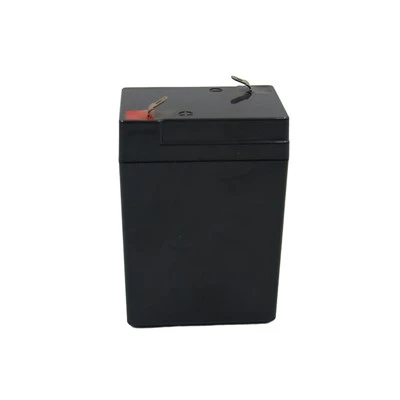
If you’re shopping for NCM lithium batteries for your e-bike, solar setup, power tools, whatever—don’t guess. Reach out. We’ve got packs for every use case, all with solid protection and been tested for thousands of cycles to make sure they hold up. No jargon, no fine print, just real support for whatever your power needs are. Hit us up if you want to chat specs, ask more questions, or get a quote.
Semi-solid Lithium-ion Battery References:
- Lithium-Ion Batteries: Basics, Status, and Perspective, Journal of The Electrochemical Society, 2019
- Nickel-Cobalt-Manganese (NCM) Cathode Materials for Lithium-Ion Batteries, Nature Energy, 2021
- Battery Management System (BMS) Functions and Failures: A Review, IEEE Transactions on Power Electronics, 2020
Suzhou Huaqian Contemporary New Energy Technology Co., Ltd.
As one of the most professional ncm lithium battery manufacturers and suppliers in China, we warmly welcome you to wholesale bulk customized ncm lithium battery at competitive price from our factory. If you have any enquiry about cooperation, please feel free to email us.
Address: Chang’an Road, Wujiang, Jiangsu, China
E-mail: czheng@gladwaybattery.com
WebSite: https://www.gladwaybattery.com/
