If you’ve ever unboxed a pallet of products that arrived squished, tilted, or with empty carton gaps eating up space, you know how much packing density matters. As a supplier of carton packing machines, I get asked this question at least once a week: “What packing density can your equipment actually achieve?” It’s not a one-size-fits-all answer, and anyone who tells you a specific number off the top of their head either doesn’t understand how carton packing works or is overselling their machine to hit a sales quota. Let’s break this down the way we do it for our customers, no fluff, just real data and context. Carton Packing Machine

First, let’s define what we mean by packing density here, because it’s a term that gets thrown around loosely in our industry. For carton packing machines, packing density isn’t just how many boxes fit on a pallet—it’s the ratio of the actual volume of the products inside the carton to the total internal volume of the carton, multiplied by 100 to get a percentage. For example, if you have a 1 cubic foot carton and you fill it with products that take up 0.8 cubic feet, your internal packing density is 80%. There’s also overall pallet packing density, which adds in gaps between cartons and pallet space, but most customers refer to the internal density when asking about machine performance, so that’s what we’ll focus on here.
Now, what’s the baseline for manual packing? If you’re having your team fold cartons by hand, drop products in, and seal them, you’re probably looking at a 60–70% internal packing density. Why the low number? Manual packing is fast, but humans make small, inconsistent mistakes: you’ll leave a 1-inch gap between a bottle and the carton wall “just to be safe,” you’ll stack a taller jar on top of smaller ones without adjusting, or you’ll squeeze a flexible product into a spot that leaves wasted space. It’s not that manual packing is bad—for small, low-volume operations, it’s often the only option—but density is sacrificed for speed and flexibility.
So how do carton packing machines raise that bar? Let’s talk about the factors that drive achievable density, because that’s what answers the core question. The first big one is the type of machine you’re using. Let’s go through the most common carton packing machine categories and their typical density ranges, based on years of customer data from our installations:
-
Random Case Packers: These are the workhorses for operations with mixed product sizes—think a snack factory packing granola bars, chips, and small drinks into the same master carton. Random case packers are designed to handle inconsistent product sizes automatically. Their average packing density lands between 75% and 85%. The sweet spot here is that they can adjust to fill gaps without damaging products; for example, if you have three 5-inch bottles and a 2-inch cup to fit into a 15-inch cart, the machine will nest the cup into the space next to the bottles instead of leaving a gap or forcing the carton to be too big. We’ve seen random case packers hit up to 88% for uniform products like canned sodas, because there’s almost no wasted space.
-
Fixed Case Packers: These machines are for when you pack identical products every time—like a pharmaceutical plant packing 12 identical pill bottles into a standard carton. Fixed case packers use pre-programmed patterns (row upon row, layers) to place products exactly where they need to be. Their density is the highest of the common types, usually between 80% and 90%. The reason they top out here is that you’re limited by the exact dimensions of the products and carton, plus you have to leave a tiny gap (usually ¼ to ½ inch) for forklift access and to prevent products from shifting during shipping. For example, if your product is a perfect 4x4x4 inch cube and your carton is sized exactly to fit 10 cubes with ¼ inch gaps on all sides, you’re looking at a theoretical maximum density of ~95%, but in real operation, we don’t go that high—too much risk of carton tearing or product damage during transport. One recent customer, a craft beer brewery, hit 89% density with their fixed packer for 12oz cans, and they cut their shipping costs by 12% because they could fit 10 more cartons per pallet.
-
Automated Case Erectors and Sealers: Wait, these aren’t packing machines, right? Most people separate them, but when paired with a packing system, they impact density too. If your carton is cut to the exact size needed for your product (instead of using a one-size-fits-all carton for everything), that’s a 5–10% density gain just by eliminating excess carton space. We always encourage customers to use custom-sized cartons with their automated systems, and that’s a big reason we see density jump from manual levels.
Now, what are the hidden factors that can make a machine hit a lower density than advertised? I see this all the time: a customer buys a machine from a competitor that says it achieves 90% density, but they end up with 78%. Here’s why: product fragility. If you’re packing glass jars or electronics that can’t be squeezed or nudged, the machine has to leave bigger gaps to avoid damage. I once had a customer with a candle company—their products are fragile, so even with a fixed case packer, we had to adjust the gap between candles to ¾ inch, dropping their density to 76%, which was a compromise between safety and efficiency. Then there’s product shape: irregular items like clothing or baked goods (think loaves of bread, not cookies) can’t be packed tight without squishing, so density drops to 65–75%, even with a top-tier machine. Finally, speed. If you run a machine at maximum capacity (100 cartons per minute, for example), the robot or pick-and-place arm might make small alignment errors, leading to gaps. Slow the speed down to 60 cartons per minute, and density goes up 3–5% almost every time.
Let’s also clear up a common myth: higher density isn’t always better. I’ve had a few customers who came to me bragging that they hit 92% density, only to have 15% of their cartons tear during shipping because there was no room for the products to shift. The sweet spot for most operations is 80–85% density. That’s where you’re maximizing space, cutting shipping and packaging costs, and still keeping products safe. For reference, a 2023 study on e-commerce packaging efficiency found that operations hitting 80–85% density reduced their pallet count per full truckload by 18% compared to manual packing, and reduced product damage claims by 9% because cartons were more secure.
Now, how do you actually test a machine’s packing density before you buy it? Any reputable carton packing machine supplier will offer a test run with your actual products in our facility—don’t skip this step. Bring 50–100 of your products, and we’ll run them through the machine, measure the actual volume filled versus the carton volume, and calculate your exact density. We also adjust the carton size for free during these tests, because a lot of customers use cartons that are too big, which is the single biggest drain on density. Last year, a snack company came to us thinking their manual packing density was 70%, but after a test with a custom carton and our random case packer, we hit 82%—that’s a 17% jump just from better carton sizing and automated placement.
If you’re wondering how this translates to your business, let’s do a quick example. Say you ship 10,000 cartons a month, each with a total volume of 2 cubic feet. Manual packing at 70% density means you’re using 20,400 cubic feet of space total. A carton packing machine at 82% density uses 16,800 cubic feet— that’s almost 3,600 cubic feet of space you’re not paying for in shipping. For a full truckload, that could mean 15% fewer trucks needed, or the same number of trucks holding more products, which adds up to thousands of dollars a year in savings.
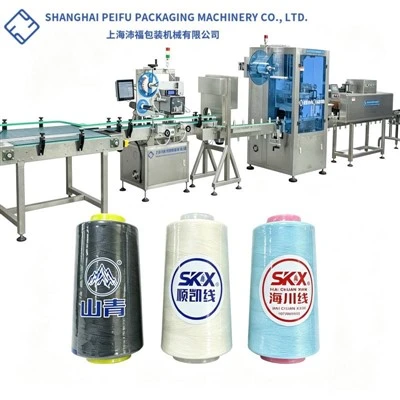
At the end of the day, the packing density a carton packing machine can achieve isn’t a fixed number—it’s a balance of your product specs, machine type, and operational needs. The key is working with a supplier that doesn’t just quote a 90% number to win a sale, but walks through your specific use case, tests your products, and gives you a realistic density target that fits your goals. If you’re tired of wasting space on shipping, dealing with inconsistent manual packing, or looking to cut your packaging costs, let’s connect to walk through your needs, run a test, and find the right solution for you.
Labeling Machine References:
- Packaging World. (2023). "2023 State of Automated Packaging Report: Efficiency and Density Trends."
- Journal of Manufacturing Systems. (2022). "Packing Density Optimization for Case Packing Machines: Balancing Product Safety and Space Utilization."
- Smith, L. (2021). "E-Commerce Packaging Efficiency: The Impact of Automated Case Packing on Logistics Costs." Supply Chain Digest.
Shanghai Peifu Packaging Machinery Co., Ltd.
We are one of the leading manufacturers and suppliers of multiple pieces packaging line in China. With a professional production team, we are able to meet the needs of the majority of our customers. Please rest assured to buy customized multiple pieces packaging line from our factory.
Address: No.1111, Xinlin Road, Fengxian District, Shanghai, China
E-mail: cathychensupplier@gmail.com
WebSite: https://www.peifupackaging.com/
