If you’ve ever stood inside a process plant at 2 a.m., watching pressure gauges creep toward redline while everyone around you waits for the safety valve to do its job, you know there’s a lot more to these small, unassuming devices than just opening when pressure gets too high. For the 12 years I’ve been selling safety valves, I’ve sat through enough troubleshooting calls with maintenance crews and process engineers to know that performance isn’t just a matter of “did it open?” It’s a matter of “did it open at the right pressure, close tight, and hold up day after day when the plant needs it most?” Over that time, I’ve learned that a safety valve is only as good as the decisions made before it’s installed, the way it’s treated after it’s put to work, and even the fluids it’s built to control. Let me break down the factors I see every day that make or break a safety valve’s performance. Safety Valve
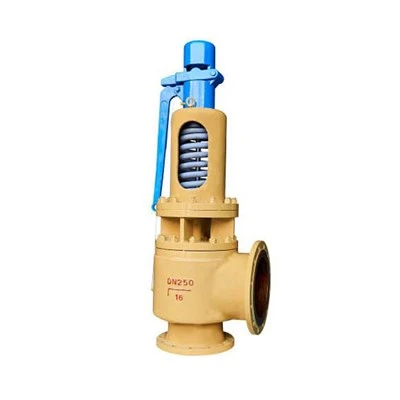
First, and most foundational, is pressure set point accuracy. I’ve seen valves set off by as much as 10% from their stamped set point, and let me tell you, that’s a recipe for either wasted energy or a blown process vessel. When I meet with a new customer, the first question I ask isn’t about size or material—it’s about their required set point tolerance. A refinery handling high-pressure hydrogen might need ±0.5% tolerance, while a municipal water treatment plant can often work with ±2%. The problem comes when someone cuts corners on calibration during manufacturing, or when field testing is done improperly. Last year, I worked with a power plant that had a safety valve that opened 15 psi above its set point. When we pulled the valve apart, we found the calibration spring had been compressed too much during assembly. That spring is the backbone of the valve’s opening pressure; if its tension is off, nothing else about the valve’s performance will matter. I always tell customers that calibrating on a test rig with the actual fluid they’ll be using is non-negotiable—air doesn’t behave like liquefied propane, and testing with the wrong medium gives false readings that bite you later.
Next, fluid properties are a factor most people overlook until it’s too late. Not all process fluids are the same, and each one stresses a safety valve differently. I once had a food and beverage client who installed a stainless steel safety valve for a line carrying chocolate syrup. The valve worked fine for a week, then started leaking badly. When we inspected it, we found that the thick, sticky syrup had built up on the valve’s disc and seat, preventing them from sealing tightly when the pressure dropped. We swapped in a valve with a slightly larger disc clearance and polished seat surfaces, and that fixed the problem immediately. Corrosive fluids are even trickier. A chemical plant I worked with installed a brass safety valve for a hydrochloric acid line, and within three months, the valve’s body was pitted, leading to set point drift. We recommended valves made from Hastelloy C-276, which resists that specific corrosion, and the failure rate dropped to zero. Viscosity, abrasiveness, and even temperature all play a role here. High-temperature gases, like those in a furnace exhaust line, can weaken spring tension over time, making the valve open later and later. Abrasive fluids, like slurry in a mining plant, wear down the disc and seat, so you need harder materials like Stellite to extend the valve’s life. I always advise customers to bring their fluid data sheets to our first meeting—we don’t just sell a standard valve; we build one for their specific process fluid.
Installation and piping arrangement are two more factors that trip up even experienced teams. A safety valve only works as well as the pipes around it, and bad installation is the number one cause of field performance issues I see. For example, if the inlet pipe to the safety valve is too narrow, it creates pressure drop before the fluid even reaches the valve. That means the valve won’t see the true process pressure, so it will open at a higher set point than it should. I had a petrochemical customer learn this the hard way: they installed a 2-inch safety valve on a 3-inch inlet line, and the valve’s set point was off by 20 psi because of the restriction. We had to rework the piping to match the valve’s inlet size, and the performance went back to normal. Backpressure is another big one. When the valve opens, the fluid it releases creates a pressure on the outlet side of the valve—backpressure. There are two types: constant backpressure, which doesn’t change, and variable backpressure, which shifts as the process flows. If a valve isn’t designed to handle variable backpressure, it might not close properly after opening, or it could chatter, which wears out the disc and seat in months. Last year, we installed balanced bellows safety valves at a natural gas processing plant because their outlet piping created variable backpressure. Before that, their old unbalanced valves were chattering so badly that they had to replace them every six months. Proper installation also means leaving enough space around the valve for maintenance. If you can’t pull the valve out of the piping without cutting pipes, you’re going to skip routine checks, and small issues turn into big failures.
Then there’s routine maintenance and operational practices, which I can’t stress enough. A safety valve isn’t a “set it and forget it” part—it needs regular attention. I’ve seen customers install a valve, then forget it exists for five years, only to have it fail during an overpressure event. Routine testing is key. Some plants do a “pop test” every year, where they manually open the valve to check if it works. But I always warn that manual testing can cause wear on the disc and seat, especially if it’s done too often. That’s why we recommend a balance: for critical valves, use non-intrusive test methods, like acoustic sensors, to monitor set point without opening the valve. For non-critical valves, a controlled manual test every two or three years is enough. Maintenance also includes cleaning the valve regularly, especially for sticky or dirty fluids like the chocolate syrup I mentioned earlier. I keep a maintenance checklist handy for every customer, and it’s simple: check set point quarterly, inspect disc and seat for wear annually, clean the valve body and outlet piping semi-annually. Even small things, like not replacing the valve’s gasket after a repair, can lead to leaks and inaccurate pressure readings. I’ve seen maintenance teams reuse gaskets to save time, only to have the valve lose its seat seal and fail during an overpressure event.
Material selection, while I touched on it with fluids, deserves its own section because it’s the foundation of all other performance factors. The valve’s body, disc, seat, and spring all need to be matched to the process conditions. For cryogenic applications, like liquefied natural gas, standard carbon steel valves will become brittle at low temperatures, so you need alloy steels like 304 or 316 stainless steel. For high-temperature steam lines, the spring needs to be made from a material that won’t lose tension at 1,000 degrees Fahrenheit—something like Inconel, not standard steel. I once had a power plant install valves with carbon steel springs on a superheated steam line. After six months, the springs had softened, and the set point had dropped so much that the valve was opening unnecessarily, wasting steam and energy. Swapping the springs for Inconel fixed that. Even the seat material matters. Soft seats, like PTFE, provide a perfect seal for low-pressure, non-abrasive fluids, but they’ll melt at high temperatures or get scratched by abrasive materials, leading to leaks. Metal seats, on the other hand, hold up to high heat and abrasion but can’t seal as tightly as soft seats for low-pressure applications. Choosing the right material isn’t about picking the most expensive option—it’s about picking the one that balances performance and cost for the specific process.
Environmental factors are the final piece of the puzzle, and they’re often underestimated. A safety valve installed outdoors in a cold climate has different performance challenges than one inside a heated plant building. In sub-zero temperatures, ice can build up on the valve’s disc and stem, preventing it from opening when pressure rises. I worked with a food processing plant in Minnesota that had a safety valve on an outdoor water line. Every winter, ice would freeze around the stem, and the valve wouldn’t open during a pressure spike. We installed heat trace cable around the valve and added insulation, and that solved the problem. Humidity and salt air in coastal areas cause corrosion, even on stainless steel valves. I had a refinery in Texas that was having premature seat failure on valves near the Gulf Coast. The salt in the air was causing crevice corrosion between the disc and seat, leading to leaks. We sandblasted and coated the valves to protect them, and the failure rate dropped by 70%. Even vibration from nearby pumps or compressors can affect performance. Excessive vibration can loosen the calibration of the spring, leading to set point drift, or cause the valve’s disc to vibrate against the seat, wearing it down over time. I always recommend installing vibration isolators near safety valves in high-vibration areas to reduce that stress.
At the end of the day, a safety valve’s performance is a chain—only as strong as its weakest link. It starts with accurate set point calibration and matching materials to your process fluid, continues with proper piping installation to avoid pressure drop or backpressure, and is maintained through regular checks and attention to environmental conditions. After 12 years in this business, I’ve learned that the best safety valve isn’t the most expensive one—it’s the one that’s chosen and installed with your specific process needs in mind.
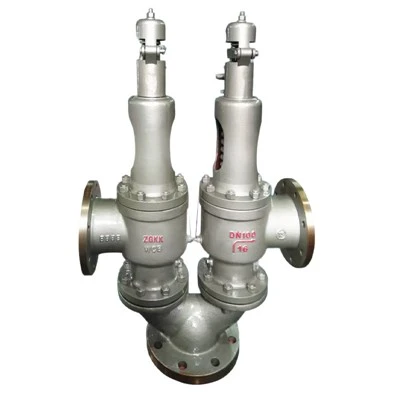
If you’re dealing with underperforming safety valves, frequent failures, or just want to make sure your next valve is built to last, I’m here to help. Whether you’re a process plant engineer, maintenance manager, or plant owner, I can walk you through material selection, calibration, installation best practices, and maintenance schedules tailored to your operation. Reach out to our team to discuss your safety valve needs and get a customized solution that keeps your process safe and running smoothly.
Butterfly Valve References:
- American Petroleum Institute. (2020). API Standard 520: Sizing, Selection, and Installation of Pressure-Relieving Devices in Refineries, Part I – Sizing and Selection.
- Occupational Safety and Health Administration. (2018). Process Safety Management of Highly Hazardous Chemicals, 29 CFR 1910.119.
- International Organization for Standardization. (2019). ISO 4126: Safety Devices for Protection Against Excessive Pressure.
- Mannan, S. (Ed.). (2020). Lees’ Loss Prevention in the Process Industries (4th ed.). Elsevier.
Wenzhou Starry Valve Co., Ltd.
Wenzhou Starry Valve Co., Ltd. is one of the most professional safety valve manufacturers and suppliers in China, also supports customized service with low price. Please feel free to buy the newest safety valve made in China here from our factory. Welcome to contact us for pricelist.
Address: No.4900, 3rd Road, Binhai Industrial Park, Wenzhou Economic & Technological Development Zone, Wenzhou City
E-mail: starryvalves@163.com
WebSite: https://www.starryvalves.com/
