When I started as an optical eyewear supplier a decade ago, I had no idea how much the conversation around children’s vision would shift—especially when it comes to optical eyewear. Back then, parents would often bring their kids in, hesitant to even mention glasses for a 7-year-old, assuming they’d grow out of it or that “kids just hate wearing things on their faces.” Today, that narrative has flipped: more than ever, parents are asking, “Are there optical eyewear made specifically for children, not just tiny versions of adult frames?” The answer isn’t just a yes—it’s a carefully crafted, science-backed yes, one that’s reshaping how we design and deliver eyewear for the youngest members of our communities. Let’s break down what that means, from the science of growing eyes to the real challenges kids face, and why our job as suppliers isn’t just selling glasses—it’s building eyewear that works for their lives. Optical Eyewear

First, let’s ground this in the science. Children’s eyes aren’t just small adult eyes. A 6-year-old’s eye is still 80% of its adult length, and it’s growing at a rapid pace—about 0.2 millimeters per year through adolescence, according to the American Academy of Ophthalmology (AAO). That growth isn’t uniform, and it directly impacts vision. My team and I work with pediatric optometrists regularly, and one of the first things they’ll tell parents is that pediatric refractive errors—nearsightedness (myopia), farsightedness (hyperopia), astigmatism—often progress differently than in adults. For kids with myopia, for example, the eye can keep elongating faster than normal, leading to higher prescriptions and increasing the risk of eye health issues later in life, like retinal detachment or glaucoma. That’s not a trivial detail; it’s why standard adult optical lenses don’t always cut it for kids. Lenses for children need to adapt to that growing eye, but also to how a kid uses their eyes throughout the day—staring at tablets across the dinner table, leaning in to color, running around on the playground, or squinting during a soccer game.
For years, the “children’s eyewear” market was a joke in our industry. Manufacturers would take a $50 adult plastic frame, shrink it to 4 inches wide, slap a cartoon logo on it, and call it “kid-sized.” The lenses were the same generic CR-39 plastic used in adult value packs, with no consideration for impact resistance, lightweighting, or even how the frame would sit on a kid’s face. I remember a mom coming into our shop five years ago, crying, because her 8-year-old’s first pair of glasses broke when he jumped off a curb. The frame’s temple snapped at the hinge, and the lens popped out when it hit the sidewalk. She told me he’d been so proud of his Spider-Man glasses, and he’d refused to wear his backup pair—so he’d gone to school the next day squinting. That story stuck with me. It’s not just about style; it’s about durability that’s built for kid chaos, and optics that meet their unique vision needs.
Today, that’s all changed. We now have optical eyewear designed specifically for children’s facial anatomy, not just scaled-down adult frames. Kids have smaller noses with less defined bridges, shorter temple lengths, and softer facial bones that are still growing. A frame that sits perfectly on an adult’s nose will slide down a kindergartener’s face mid-recess, or pinch their cheeks uncomfortably after an hour of reading. Modern pediatric optical frames use adjustable nose pads, flexible TR-90 or Grilamid frames (materials that are lightweight, shatter-resistant, and bend without breaking), and curved temples that wrap gently around a child’s ears—features no adult frame would need. We test every frame we source to withstand 10,000 bends (that’s roughly equivalent to a kid twisting their frames 10 times a day for three years) and impact resistance that meets the FDA’s safety standards for pediatric eyewear, because a frame that breaks isn’t just a hassle—it’s a safety hazard.
But the real game-changer for children’s optical eyewear is lens technology tailored to their vision development. For decades, the only options for kids were single-vision lenses, which correct distance vision but don’t do anything to slow myopia progression—a problem that’s become a global public health crisis. The AAO reports that myopia rates have jumped from 25% of U.S. children in 1970 to nearly 41% today, and in East Asian countries, that number is over 70% by age 18. That’s where specialized myopia control lenses come in, which are now widely available for pediatric patients. These lenses work by targeting the peripheral vision, which is where myopia progression often happens. Unlike adult progressive lenses, which are designed for presbyopia (age-related near vision loss), myopia control lenses for kids have multiple power zones that redirect light to the back of the eye’s retina, rather than in front of it, slowing elongation. My team has worked with hundreds of optometrists to fit these lenses for kids as young as 6, and the results are clear: on average, we see a 40-60% reduction in myopia progression compared to standard single-vision lenses. That’s not just better vision now—it’s protecting their eye health 20, 30 years down the line.
Of course, no amount of science matters if kids refuse to wear their glasses. That’s another area where modern children’s optical eyewear has improved dramatically. Gone are the days of bulky, unattractive frames that make kids feel self-conscious. We work with independent designers to create frames that appeal to kids’ interests—from space-themed frames with glow-in-the-dark details for astronomy-loving 10-year-olds, to slim, colorful rectangular frames for teens who don’t want to feel like they’re “wearing kid glasses.” We also offer interchangeable temple tips and frame accents, so kids can customize their eyewear to match their mood or outfit. A study from the American Optometric Association (AOA) found that when kids have a say in choosing their frames, they wear them 60% more often than when parents pick for them. That’s a stat that drives every decision we make as a supplier: if a kid is happy with their glasses, they’ll wear them, and that’s the most important factor in successful vision correction.
I want to be clear: there’s no “one size fits all” when it comes to children’s optical eyewear. A 5-year-old who’s still learning to tie their shoes needs a different frame than a 14-year-old who plays varsity basketball. The 5-year-old needs extra-wide temples that won’t slip during play, and a frame made of flexible material that won’t hurt if it’s stepped on. The teen needs a slimmer, more discreet frame that fits under their sports helmet, and lenses that are scratch-resistant to hold up to daily use. We also work with optometrists to adjust prescriptions regularly—kids’ vision changes so quickly that a prescription that works for a 7-year-old might not work for them at 9, so we offer affordable replacement programs that make it easy for parents to update their eyewear without breaking the bank.
There’s still a lot of misinformation out there, and that’s why we invest so much time in educating parents. I often get questions like, “Will glasses make my kid’s vision worse?” or “It’s just nearsightedness, they’ll outgrow it.” The answer to the first is no—glasses don’t cause vision to deteriorate; they correct it so kids can see clearly, which is critical for learning, social development, and sports. The answer to the second is also no: most refractive errors in kids don’t go away on their own, and myopia only gets worse without intervention. As a supplier, we don’t just sell frames and lenses—we provide parents with accurate, evidence-based information, and we partner with local schools to host vision screenings and workshops for families, because vision care shouldn’t be a luxury.
Looking ahead, the future of children’s optical eyewear is even more exciting. We’re starting to work with smart lens technologies that can adjust for light levels—making lenses clear indoors and dark outdoors, all while maintaining the myopia control benefits. We’re also exploring 3D-printed frames that are custom-molded to a child’s exact facial dimensions, which would eliminate fit issues entirely. But no matter how technology advances, the core of what we do remains the same: we build eyewear that’s safe, effective, and empowering for kids. Because when a kid puts on a pair of glasses and can finally read the board at school, or see the ball coming at them during a game, their confidence skyrockets. That’s the impact we care about, not just the sales numbers.
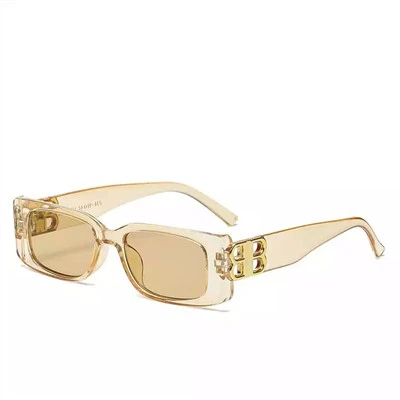
If you’re an optometrist, school administrator, or retailer looking to partner with a supplier that prioritizes quality, safety, and kid-centric design, we’d love to connect. We offer bulk pricing for practices and schools, custom labeling options, and ongoing support to help you serve your pediatric patients better. Let’s work together to make sure every child has access to optical eyewear that works for their growing eyes and their unique lives.
Kids Eyeglasses Frames References
American Academy of Ophthalmology. (2023). Pediatric Refractive Errors and Myopia Management. AAO Clinical Guidelines.
American Optometric Association. (2022). Children’s Eyewear Adherence and Patient Preference Study. AOA Research & Data Center.
National Eye Institute. (2021). Myopia Progression in Children: Global Trends and Clinical Interventions. NIH Publication No. 21-5051.
Yiwu Finewell Eyewear Co., Ltd.
Yiwu Finewell Eyewear Co., Ltd. one of the leading optical eyewear manufacturers and suppliers in China. We warmly welcome you to buy or wholesale discount optical eyewear from our factory. All customized products are with high quality and competitive price. Contact us for more details.
Address: Yiwu Wangshang Chuangye Building, No.407, Yongjun Road, Beiyuan Street, Yiwu City, Jinhua City, Zhejiang Province.
E-mail: Mariayang@ywfinewell.com
WebSite: https://www.finewelleyewear.com/
