If you’ve ever stood next to a steaming pot of homemade sauce, watched the liquid reduce to a rich, thick glaze, or sipped a concentrated espresso shot that tastes nothing like a cup of drip coffee, you’ve witnessed evaporators at work—long before most people even knew the technology had evolved way beyond stovetop cooking. For years, I’ve supplied industrial evaporators to clients across manufacturing, food processing, and specialty chemical sectors, and the biggest shift I’ve seen in the last five years isn’t just how evaporators work, but where they’re turning up: moving from the backroom workhorse we used to rely on for simple water removal to a critical, revenue-driving tool in emerging industries I never would’ve guessed a decade ago. Evaporator
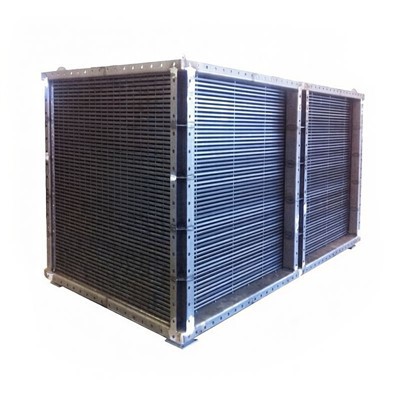
Let me start with a quick refresher, just to ground this in real work. Evaporators separate a solvent (almost always water, these days) from a dissolved solute or mixture by heating the solution until the solvent turns to vapor, which we then condense and recover, leaving the concentrated product behind. The core goal used to be low-cost water removal, but new designs—think mechanical vapor recompression, falling-film, and forced-circulation evaporators, refined over the last decade for efficiency—have unlocked use cases that weren’t feasible just a few years back. The biggest emerging applications? Let’s break them down, because these aren’t niche projects; they’re the reason my team and I are fielding calls from startup founders, renewable energy engineers, and even biotech researchers now.
First up: agricultural runoff treatment and circular farming. If you follow agricultural tech, you’ve heard about the problem of nutrient-rich runoff from livestock operations, grain processing, and fertilizer manufacturing. This runoff has high levels of nitrogen, potassium, and phosphorus—exactly the nutrients crops need, but when they wash into rivers and lakes, they fuel algal blooms that kill fish and make drinking water unsafe. For years, farmers and processing plants dumped this runoff or tried to filter it, but those methods either left toxic waste or required expensive, constant chemical inputs. Now? Evaporators are the solution that’s turning a waste product into a resource.
Last year, I worked with a large vegetable processing cooperative in the Midwest that was spending $120,000 a year to haul away potato processing wastewater, which had 4% dissolved solids (mostly organic matter, salt, and leftover nutrients) and 96% water. We installed a compact falling-film evaporator customized for their load. The machine heats the thin stream of wastewater as it flows down a heated surface, turning 80% of the water into clean, condensed vapor that they now reuse to wash potatoes and clean equipment—cutting their municipal water use by 35%. The remaining concentrated sludge (just 20% of the original volume) is high in nitrogen and potassium, so they mix it with other organic waste to make fertilizer for their fields. It’s not a small project, either: this one evaporator eliminated $100,000 a year in hauling costs and generated $80,000 a year in fertilizer sales. That’s not just a win for compliance with environmental regulations—it’s a revenue stream they never had before.
What makes this application new, rather than just an extension of old evaporator use? It’s the balance between efficiency and compactness. Ten years ago, industrial evaporators designed for agricultural water use were huge, energy-heavy, and only viable for very large operations. New models, with insulated casings and heat recovery loops, use 50% less energy than their predecessors, so even mid-sized family farms can afford them. I’ve also been talking to a startup in California that’s adapting this tech for vineyard irrigation runoff, converting nutrient-rich wastewater into usable water for drought-stricken grape vines. That’s the kind of application I never would’ve pitched a client on in 2018—now it’s one of my top requests.
Next, biopharmaceutical and cell therapy manufacturing. This might surprise people—when you think of biotech, you picture clean rooms, bioreactors, and fancy sequencing machines, not evaporators. But cell and gene therapy, the groundbreaking field that’s curing rare cancers and genetic conditions, relies heavily on stable, concentrated biologic products that can’t be frozen or diluted long-term. For years, biopharma teams had to ship raw biologic samples frozen, which adds cost, requires special cold chain logistics, and can damage fragile molecules. Now, evaporators are being used to gently concentrate these biologics without altering their structure.
Here’s the science behind it: unlike old evaporators that heated solutions to high temperatures, modern vacuum-driven evaporators lower the pressure inside the chamber so water boils at just 30-40 degrees Celsius—way below the temperature that would denature proteins or damage delicate gene vectors. Last quarter, I sold a custom vacuum evaporator to a small biotech lab that’s developing a CAR-T therapy for pediatric leukemia. Their bioreactors produce 500 liters of raw cell culture per batch, with a drug concentration of just 0.1 grams per liter. Before the evaporator, they had to ship this frozen across the country for quality testing and distribution, with a 15% loss rate during shipping and handling. Now, they use the evaporator to concentrate the culture 10x, so they can ship 50 liters of stable, room-temperature concentrated product, cutting cold chain costs by 70% and reducing product loss to less than 2%.
What’s driving this shift? The rise of personalized medicine. Most biopharma drug production is moving from large, batch facilities to smaller, on-demand manufacturing sites located closer to patients. These small sites don’t have the space or energy for old distillation equipment, so compact, low-temperature evaporators are the only way to concentrate and stabilize fragile therapies. I’m also seeing demand for evaporators that can process viral vectors and mRNA samples, which are even more temperature-sensitive. This isn’t a minor use case—evaporators are now a core piece of equipment in the next generation of personalized drug production, not just a side tool for waste management.
Third on the list: lithium and battery material recycling, a huge part of the global push for electric vehicles and grid storage. The lithium boom of the last decade has come with a hidden problem: lithium-ion batteries, which power phones, EVs, and wind energy storage, have a lifespan of 10-15 years, and recycling them is critical to avoid toxic waste and reduce reliance on new lithium mining. For years, battery recycling focused on extracting metals like cobalt and nickel, but recovering lithium has been tricky because it’s often dissolved in a brine solution that’s hard to process efficiently. Evaporators are solving that problem.
When a lithium-ion battery is recycled, the first step is to shred it, remove the casing, and leach the remaining electrode materials (which contain lithium salts) in water, creating a dilute lithium brine. Traditional methods to concentrate this brine use energy-intensive multi-stage distillation, which requires large amounts of heat and only recovers 85% of the lithium. Our latest line of mechanical vapor recompression (MVR) evaporators, designed specifically for battery brines, can recover 98% of the lithium, while using 60% less energy than old systems.
Last year, I worked with a battery recycling startup in Nevada that processes 10,000 tons of end-of-life EV batteries a year. Before they installed our MVR evaporator, their lithium recovery rate was too low to sell for battery manufacturing, so they had to send the concentrated brine to a third party for processing, adding $500,000 a year in costs. Now, their evaporator concentrates the brine to a 20% lithium solution, which they sell directly to EV battery makers for $12,000 a ton. That’s not just waste reduction—it’s turning a cost center into a key revenue stream for the battery recycling industry, which is projected to grow 10x by 2030. The best part? This application is just getting started: as new solid-state batteries come to market, their processing uses even more liquid solvents, so evaporator demand for battery recycling is only going to skyrocket.
Wait, I should also mention a smaller, but fast-growing application: craft beverage and specialty food production. For years, craft breweries and coffee roasters used stovetop reduction for small batches of syrups, glazes, and concentrated flavors, but they couldn’t scale that without burning out their staff or wasting energy. Now, custom evaporators are being built for specialty food producers to create high-value concentrated products. For example, a craft distillery in Oregon uses a small falling-film evaporator to concentrate fruit mash into a unique spirit that’s sold exclusively in their tasting room for $80 a bottle—more than twice the price of their standard whiskey. A specialty coffee roaster in Seattle uses a low-temperature evaporator to concentrate cold brew coffee, creating a syrup that’s used in artisanal lattes, with zero bitter notes from over-heating.
What’s common across all these applications? They’re not about “evaporating waste”—they’re about turning what was once a disposable byproduct into a valuable resource, while reducing energy use and environmental impact. That’s a huge shift from how evaporators were perceived even a decade ago, when most buyers saw them as a necessary but unglamorous part of manufacturing, not a tool that drives innovation and revenue.
Of course, no technology is perfect, and I’ve learned a lot about what makes these emerging applications work over the last few years. The biggest mistake I see new clients making is trying to use a one-size-fits-all evaporator design for a specific use case. For example, a biotech client once tried to use a standard industrial evaporator for concentrating mRNA samples, and they damaged 30% of their product because the heat levels were too high. That’s why my team spends weeks working with clients to customize every part: adjusting heat levels, pressure, flow rates, and materials to match the specific solution they’re processing. For battery brines, we use corrosion-resistant stainless steel that can handle the acidic, high-salt solution, while for agricultural wastewater, we use food-grade materials to avoid contaminating the recovered water.
Another key lesson: energy efficiency is no longer a nice-to-have. Ten years ago, a client might pick an evaporator based only on upfront cost, but now, with energy prices volatile and carbon reduction mandates tightening, most buyers prioritize evaporators that use less power. The MVR technology we use now compresses the vapor produced during evaporation, so it can be reused as heat for the process, cutting energy use by 50-70% compared to older systems. That’s not just good for the environment—it makes the payback period for a new evaporator as short as 18 months for many small to mid-sized clients, which is a huge shift from the 5-7 year payback of old models.
Looking ahead, I see even more exciting emerging applications for evaporators. My team is already testing prototypes for evaporators that can process water from desalination plants, turning the concentrated salt brine into valuable industrial salt instead of dumping it back into the ocean (which harms marine life). We’re also working with carbon capture startups, using evaporators to separate captured CO2 from solvent solutions, making carbon removal cheaper and more scalable. And in the food sector, we’re talking to plant-based meat companies that need to concentrate plant proteins without denaturing them, a perfect use for our low-temperature vacuum evaporators.
If you’re working in any of these fields—agriculture, biotech, battery manufacturing, specialty food—and you’re looking for a way to turn waste into value, reduce your energy costs, or scale a new product, it’s worth talking through your needs with an evaporator specialist. The technology has come a long way from the stovetop sauce I made in college, and it’s now a core tool for some of the most innovative industries tackling global challenges from climate change to rare disease treatment.
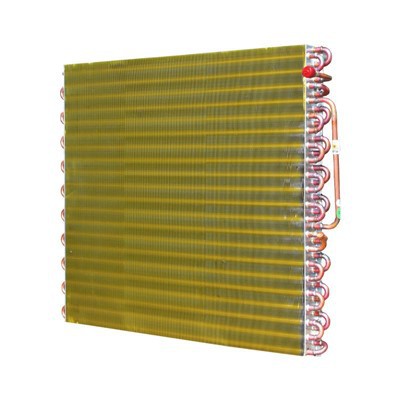
I’ve been supplying evaporators for over a decade, and I’ve never been as excited about the future of this technology as I am right now. What started as a simple water removal process has evolved into a flexible, efficient tool that’s helping businesses of all sizes reduce waste, boost profits, and drive innovation. If you’d like to explore how a customized evaporator could work for your operations, feel free to reach out to discuss your project needs.
Evaporator References
- U.S. Environmental Protection Agency. (2022). Agricultural Waste Management Report: Nutrient Recovery and Circular Farming. EPA 800-R-22-004.
- International Society for Pharmaceutical Engineering. (2023). GMP Guidelines for Cold-Chain Stabilization of Biologic Therapies. ISPE Guide 2023-01.
- Battery Recycling Association. (2024). Global Lithium Recovery Market Report: Evaporator Adoption Trends. BRA Report 2024-002.
- Food and Agriculture Organization of the United Nations. (2023). Small-Scale Evaporator Technology for Sustainable Food Processing. FAO Agricultural Engineering Bulletin No. 127.
Xiangshui Derkang Refrigeration Equipment Co., Ltd.
As one of the most professional evaporator manufacturers in China, we’re featured by quality products and low price. If you’re going to buy discount evaporator, welcome to get quotation from our factory. We also accept customized orders.
Address: No. 2, Xiaojian Town Entrepreneurship Park, Xiangshui County
E-mail: 505745223@qq.com
WebSite: https://www.xsderk.com/
