If you’ve ever walked into a dark office, retail store, or warehouse during a power outage, you know how critical emergency ceiling lights are—they’re the difference between a smooth, safe exit and a chaotic, dangerous scramble. As someone who’s been supplying emergency ceiling lights for over a decade, I get tons of questions from installers, facilities managers, and even small business owners, but one I hear more than any other is: “Can emergency ceiling lights be dimmed?” Emergency Ceiling Lights
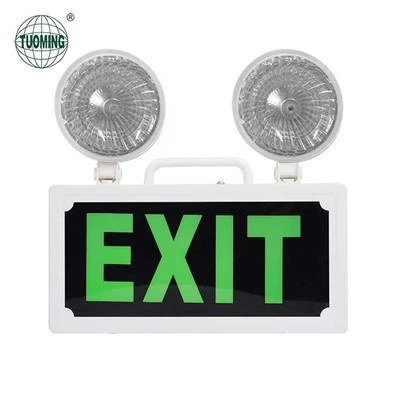
At first glance, it makes total sense. Most regular ceiling lights are dimmable, so why wouldn’t emergency models work the same way? But here’s the thing: emergency lighting isn’t your average light. It’s built for one specific, high-stakes scenario—total darkness when the power cuts out. So the short answer isn’t a simple “yes” or “no”… it’s way more nuanced, and it ties directly to how these lights are engineered, tested, and regulated. Let’s break this down like I would over a coffee with a new client, no jargon, no stuffy manuals.
First, let’s recap how emergency ceiling lights work for anyone who’s a little foggy. Normally, they’re plugged into your building’s main electrical grid, which also powers the regular lights. When the power is on, the emergency unit is charging its internal battery—usually a lead-acid or lithium-ion pack. That battery is the backup, so when the grid dies, the emergency light switches over automatically (that’s called the transfer switch, and it’s not a simple toggle—we test ours to trigger in less than a second, no exceptions). The whole point of that switch is to flood the space with enough light for safe egress, full stop.
Now, regular dimmable lights work by adjusting the voltage or current going to the bulb, right? LED dimmers, for example, cut the power in waves to lower brightness, which works for everyday use. But emergency ceiling lights aren’t wired to have that kind of adjustable power input. Their entire system is designed to run at full output when triggered—there’s no built-in dimmer circuit, no way to dial back the brightness on demand, even if you wanted to. Wait, but hold on—some people ask, “Can’t I just use a dimmer switch on the regular power side?” Yeah, you could… but that defeats the entire purpose of emergency lighting, and here’s why that’s a bad idea.
Let’s talk regulations, because I can’t skip this part—facilities managers have to follow codes, and cutting corners here gets expensive (and unsafe). In most places, building codes (like the NEC in the U.S., or BS EN standards in the U.K.) set minimum brightness requirements for emergency egress lighting. For most spaces, that’s at least 1 lux along exit paths, and 0.5 lux in other areas—way dimmer than a regular office light, but not so dim that you can’t tell where a door or stairwell is. The key here is that emergency lights have to meet that minimum, but they also have to maintain consistent, reliable output when they activate. If you dim them on the regular power side, even when the grid’s out, the light might not hit that minimum requirement. Worse, if the dimmer is old or faulty, it could drop the brightness even more when you need it most. I’ve seen this happen once at a small retail shop—they added dimmer switches to their emergency lights to save energy during slow nights, and when the power went out, the dimmer glitched, and the lights were only half bright. The inspector flagged them, and they had to replace the entire setup, which cost them way more than if they’d just left the lights alone.
But wait—what about “maintained” vs. “non-maintained” emergency lights? That’s another term I get asked about a lot. Maintained lights are always on, even when the power’s working, so you can see if they’re working at all times. Non-maintained lights only turn on when the power cuts out. For non-maintained models (which are the most common, since they save energy), the only time the bulb is active is during an outage, so dimming them there isn’t just unnecessary—it’s a hazard. For maintained lights, some people might think, “If they’re always on, can I dim them when the building’s open?” Again, technically you could, but here’s the catch: when the power goes out, maintained lights switch over to battery power, and the output doesn’t change. So even if you dim them during normal use, they’ll jump back to full brightness when you need them. It’s a weird quirk of the engineering—those battery circuits are calibrated for maximum output to make sure they never underperform, no matter what.
Now, are there any exceptions? I don’t want to say “never,” because there are niche cases where people have to work with lower brightness, but even then, it’s not dimming the standard emergency ceiling light. For example, some healthcare facilities or residential care homes have lower-level emergency lighting for areas where people need to navigate without being blinded during the night. But those aren’t your standard off-the-shelf emergency ceiling lights—they’re custom units, built to meet specific brightness requirements for those spaces. I supply those custom models to a few long-term care facilities, but they’re not the ones you’d buy at a hardware store for a small office. And even then, those custom units don’t let you dim them on the fly—they’re set to a specific, consistent brightness that’s approved for their use case.
Another thing people overlook: battery life. Emergency ceiling lights run on that internal battery, which has to last a minimum of 90 minutes (that’s the standard for most commercial spaces, some require 3 hours, especially in high-rise buildings). If you dim the light, does that extend battery life? Maybe a little, but not enough to matter for most applications. And even if it did, there’s no way to adjust it reliably. The battery’s output is tied directly to the light’s bulb, so if you start messing with that, you risk cutting the battery’s life short. I had a client try this a while back—they installed dimmers on their emergency lights to “make the battery last longer,” and after a year, the batteries were dying 20 minutes into a test outage. Turns out, the dimmer was pulling extra power even when the light was on battery, so the battery couldn’t hold a charge. We had to replace all the batteries and adjust their setup, which cost them more than just leaving the lights at full brightness.
So let’s sum this up, like I would to a client who’s trying to figure out their project:
- Standard off-the-shelf emergency ceiling lights cannot be dimmed—they have no built-in dimmer circuits, and their entire design is built for full, reliable output during outages.
- Trying to dim them via a regular dimmer switch defeats code requirements and is a safety hazard—you risk insufficient brightness, which can lead to fines or worse.
- If you need lower brightness for a specific use case (like a care home), you’ll need a custom, code-approved emergency light, not a standard model.
- Dimming doesn’t meaningfully extend battery life, and can actually shorten it if done wrong.
Now, if you’re a facilities manager, electrician, or building owner looking to update your emergency lighting setup—whether you need standard units for a retail space, custom models for a healthcare facility, or just want to make sure your current setup meets local codes—we’ve got you covered. We test every emergency ceiling light we supply to make sure they meet all industry standards, and we can help you pick the right model for your space, no guesswork, no cutting corners.

If you’ve got questions about your specific project, or want to chat about upgrading your emergency lighting, just reach out and we can walk through your options. Don’t take chances with safety—emergency lighting isn’t something to mess around with, and we’re here to make sure you’ve got the right setup for your needs.
Emergency Ceiling Lights References
National Electrical Code (NEC) 2023, Article 700: Emergency Systems
BS EN 1838:2013, Lighting Applications — Emergency Lighting
Underwriters Laboratories (UL) 924, Standard for Emergency Lighting and Power Equipment
Fire Protection Association (FPA) Guidelines for Emergency Lighting Installations
Zhongshan Tuoming Lighting Technology Co., Ltd.
As one of the leading emergency ceiling lights manufacturers and suppliers in China, we warmly welcome you to buy advanced emergency ceiling lights in stock here from our factory. All customized products are with high quality and low price.
Address: No.1, 10th Floor, No.17, Tongfu South Road, Guzhen Town, Zhongshan City, Guangdong Province
E-mail: tm002@tuominglight.com
WebSite: https://www.tuominglight.com/
