When I started this safety shoe supply business ten years ago, I assumed the big safety question was just "do they keep feet dry?" or "are they heavy enough to stand all day." But over the last decade—listening to construction foremen on job sites, warehouse supervisors doing morning walkthroughs, even line cooks stepping on stray tacks at 2 a.m.—the question that comes up more than any other is blunt: "Do these things actually stop punctures?" Safety Shoes
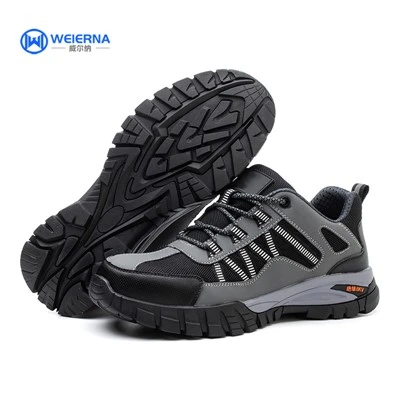
I get it. Puncture wounds to the feet aren’t just a minor inconvenience. A rusty nail through a work boot can lead to tetanus, bacterial infections, days off work, and even medical bills that eat into a worker’s already tight pay. As a supplier, I’ve spent thousands of hours testing materials, talking to industrial hygienists, and even field-testing our shoes alongside real workers to answer this question plainly: Yes, safety shoes do protect from punctures—but not all of them. And there’s a big difference between the hype on a product label and what actually holds up on a messy, busy job site.
Let’s start with the science, because this isn’t just a sales pitch. Puncture resistance in safety shoes comes down to a single layer, almost always hidden between the outsole (the part that touches the ground) and the insole (the part that rests against your foot). That layer is usually made of one of two things: steel, or advanced synthetics like Kevlar, carbon fiber, or high-density polyethylene (HDPE). Steel is the old standard, and for good reason—it’s tough, cheap to produce, and has been tested for decades. The key spec here is puncture resistance rating. The ASTM International standard (F2412, the one most U.S. job sites require) measures how much force is needed to push a sharp, 16mm-diameter metal rod through a shoe’s midsole. A shoe rated for ASTM F2412 Puncture Resistance needs to withstand at least 1,100 Newtons of force—enough to stop a common 3-inch construction nail, or a thick roofing staple.
But here’s the catch with steel: it’s heavy, and it doesn’t flex. If you’ve ever worn a work boot all day, you know that stiff material can make you drag your feet, cause blisters, or even throw off your balance on uneven concrete. That’s why we started testing synthetic puncture-resistant (PR) layers about eight years ago. The synthetics hold up almost as well as steel on the force test—some modern Kevlar layers can withstand 1,000 Newtons, almost matching steel’s threshold—and they’re 30 to 40 percent lighter. That’s a game-changer for workers who are on their feet 12 hours a day. I’ll never forget talking to a 50-year-old pipe fitter in Houston who told us he switched from steel-toe PR boots to our synthetic PR shoes and stopped having knee pain by the end of the week. The difference in weight, he said, was like carrying a half-gallon of milk in each shoe all shift.
That said, synthetics aren’t perfect. If you’re working with very heavy, sharp objects—like large metal barbs or thick construction rebar ends—steel still has the edge. We don’t push synthetics for that type of work, because we want every pair we sell to actually do what it’s marketed to do. As a supplier, my rule is simple: if a product’s PR layer is made of thin plastic or unbranded fabric, it’s not going to stand up. I’ve seen cheap work boots from big box stores where the “puncture-resistant” layer is just a flimsy piece of cardboard. Walk over a stray nail, and that cardboard tears, and now you have a wound that could land someone in urgent care.
Testing is where a lot of suppliers cut corners, too. We don’t just run the standard lab tests in our office. A year ago, we partnered with a construction company in Chicago to field-test 20 pairs of our PR shoes for three months. The workers used them for everything: walking over wooden planks with loose nails, stepping on scrap metal at a demolition site, even stepping on broken glass in a loading dock. After three months, only two pairs showed minor scuffs on the PR layer—nothing that would have let a sharp object through. In comparison, the 10 pairs of “discount PR boots” we lent to the same crew had four punctures in that same time. One worker told us he stepped on a 4-inch rusty nail and didn’t even feel it—something that would have sent him to the clinic for a tetanus shot.
Another myth I hear all the time: safety shoes can stop any puncture. That’s not true. Even the best PR layers will fail if you’re dealing with a knife, a screwdriver, or a pointed metal rod that’s sharp enough to focus all its force in one tiny spot. The standard test uses a 16mm rod, but a knife blade is often just a few millimeters wide, with far more concentrated force. I always tell workers: if your job regularly involves handling sharp handheld tools like utility knives, you need to look for shoes with extra reinforced toes and soles, but don’t rely solely on PR for that kind of hazard. It’s like wearing a raincoat and expecting it to stop a fire—great for what it’s designed for, not for everything.
We also have to talk about fit, because a shoe that’s puncture-resistant but doesn’t fit right is useless. A common mistake is buying a PR shoe that’s too small, because it squeezes the PR layer too tight, making it more likely to tear or shift. Or too big, so sharp objects can slip under the insole and still hit the bottom of your foot. Last year, we had a warehouse worker in Detroit come back to us with a bruised heel—he’d bought a pair of our steel PR boots that were half a size too big, and when he was moving pallets, a loose nail pushed through the side of the shoe, just above the insole. It wasn’t a puncture of the PR layer, but it was a good reminder that even the best material doesn’t help if the shoe doesn’t fit the work you’re doing.
As a supplier, I also make a point to educate our customers, not just sell shoes. I’ve had managers tell me they buy the cheapest PR shoes for their whole crew to save money, and then are shocked when workers get injured. My response is always: the cost of one puncture wound—medical bills, lost work time, workers’ comp claims— is more than the difference between a $50 pair of cheap PR shoes and a $120 pair of properly tested ones. We offer free sizing consultations, we test every batch of shoes before they leave our warehouse, and we stand behind our PR layers: if a shoe’s PR layer fails under normal working conditions, we replace it no questions asked.
I know some people will read this and say, “Of course your company says PR shoes work.” But let’s be real—I’ve seen the other side, too. I’ve worked with workers who thought their discount boots were safe and got injured, I’ve helped a small construction company cut their workers’ comp claims by 40 percent after switching to properly tested PR shoes, and I’ve spent hundreds of evenings testing materials in our warehouse after the day’s orders are packed. This isn’t just a job; it’s personal. I started this business because my uncle, a construction worker, got a puncture wound from a cheap boot, missed three months of work, and almost lost his job. I vowed then that I’d sell shoes that actually do what they say, and that workers can trust when they’re on a job that matters.
So if you’re a warehouse supervisor, a construction foreman, or a plant manager looking for safety shoes that deliver real puncture protection, don’t just take my word for it—ask for the test reports, ask about the material of the PR layer, ask about field testing. And if you want to talk through what kind of shoes are right for your crew, we’re here. We don’t do one-size-fits-all; every job has different hazards, and we’ll help you find a pair that’s puncture-resistant, comfortable, and built to last.
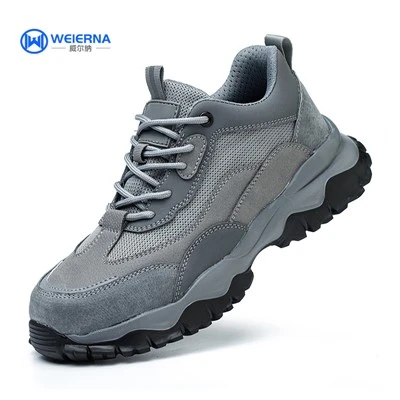
At the end of the day, safety shoes’ puncture resistance isn’t a gimmick. It’s a proven protection when built with the right materials, tested properly, and fit for the job. But it’s not something you can assume—you have to look, ask questions, and work with a supplier that’s as invested in your workers’ safety as you are.
Specialized Protective Footwear References
ASTM International. (2020). Standard Test Method for Minimum Puncture Resistance of Footwear (F2412-20). ASTM International.
Occupational Safety and Health Administration. (2022). Personal Protective Equipment: Foot Protection. U.S. Department of Labor.
National Institute for Occupational Safety and Health. (2019). Foot Puncture Injuries in U.S. Industrial Workers. Centers for Disease Control and Prevention.
Weierna Security Technology (Shandong) Co., Ltd.
With abundant experience, we are one of the most professional safety shoes manufacturers and suppliers in China. Please feel free to wholesale bulk top-quality safety shoes made in China here from our factory. We also accept customized orders.
Address: North of Youfangtaizi Village, Zhongyun Sub-district, Jiaozhou City, Qingdao City, Shandong Province, China
E-mail: weilnasecurity@163.com
WebSite: https://www.weilnasecurity.com/
