If you’ve ever stood next to a brand-new car on a bright, mid-summer day, you know that plastics on and inside vehicles look almost identical to the day they rolled off the assembly line—no faded dashboard, no brittle side mirror cap, no cracked trim. For someone like me, who’s spent the last 12 years running an automotive plastic injection moulding shop, that finish isn’t luck. It’s non-negotiable engineering. Today, I want to pull back the curtain on the UV-resistance rules that every one of our injection-moulded automotive parts has to meet, because this isn’t just about keeping a car looking good—it’s about safety, durability, and the trust our clients (major automakers and their tier-1 suppliers) put in us every single day. Automotive Plastic Injection Moulding
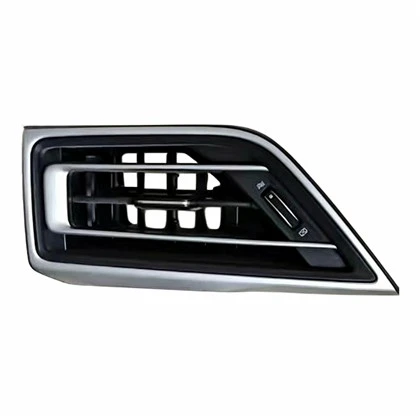
First, let’s get one thing straight: not all automotive plastics see the same amount of sun. A plastic part under the hood, like an engine cover or a coolant reservoir, is exposed to a different type of UV radiation than a part on the exterior, like a door handle or a tail light housing, or an interior part like a dashboard trim or a cup holder bin. UV radiation from the sun isn’t just one thing—it’s split into UVA and UVB, and for automotive purposes, UVA is the bigger long-term threat. It penetrates deeper into plastic molecular structures, breaks down polymer chains, and that’s what causes fading, brittleness, cracking, or warp. Our shop works with hundreds of part types, so the UV requirements aren’t one-size-fits-all—they’re tailored to exactly where the part lives on the vehicle. That’s the first non-negotiable I drill into every team member here: location dictates requirement.
Let’s start with exterior automotive parts, because those are the ones that take the full brunt of unfiltered sun, rain, snow, and temperature swings. Take a side mirror cap, for example. It’s mounted on the door, 5 feet off the ground, exposed to sun 8-10 hours a day in most climates, and it’s a visible part—so fading is not allowed. For exterior trim and closure parts (door handles, window surrounds, fender flares), the standard we’ve used for over a decade is SAE J1960, specifically the 1,000-hour Xenon Arc Test for exterior parts. Wait, let’s break that down: the Xenon Arc Test is essentially a controlled, accelerated way to simulate years of sun exposure. We run these tests in our in-house lab (we’ve had it for 7 years, it’s worth every penny) where we blast moulded test coupons with light that matches the solar spectrum, control temperature, humidity, and even moisture spray to mimic real-world conditions. For most exterior closure parts, the requirement is a Delta E (color change) of less than 2.0 after 1,000 hours. Delta E is the universal color scale—0 is no change, up to 5 is noticeable to the human eye. If a part can’t keep Delta E under 2.0 after 1,000 hours, it’s going to fade within 2-3 years in places like Arizona or Southern California, and our clients can’t have that—recalls over faded trim aren’t feasible, both cost-wise and brand-wise.
But wait, some exterior parts are harsher. A roof rack crossbar, for example, sits on top of the car, hotter, more exposed. Or a tail light housing—exposed to sun, but also has to resist discoloration that would block light transmission. For those, we bump the test up to SAE J1885, 1,500 hours, and also add a gloss retention requirement—usually 85% or higher gloss retention after the same test. The last thing we want is a roof rack that goes from a smooth, glossy black to a chalky, dull gray that looks 10 years old after 3 years. I’ve seen it happen with cheap suppliers—we turned down a job from a regional car maker a few years back because their in-house test showed a part would only hit 70% gloss, and that was a non-starter for our quality standards.
Now, interior parts—this is where a lot of people (even some new engineers in the automotive space) cut corners, but it’s just as critical, if not more. Why? Because interior plastics are exposed to not just sun through windows, but also higher interior temperatures. When a car is parked in the sun, interior temperatures can hit 180 degrees Fahrenheit or more, and that heat accelerates UV degradation. So interior parts don’t get the full 1,000-hour Xenon test, but we have to adjust for temperature. The standard here is usually SAE J2412, specifically the “Interior Automotive Materials” specification, which is run at a higher black panel temperature (BTP) than exterior tests. For interior trim, dashboard components, center console parts, even seat belt buckles, the requirement is typically Delta E less than 2.5 after 500 hours of Xenon exposure at 100°C BTP. Wait, that’s a key point—BTP is the temperature of the test specimen surface, so an interior part at 100°C is being tested at the exact temperature it would hit in a parked car in Phoenix in July. I’ve had a client come to us a few years ago with a part that failed in testing because their molder used a standard interior test at 89°C BTP, and that wasn’t enough to catch the degradation at higher real-world temperatures. We adjusted the test profile, fixed the part design, and they haven’t had a field failure since.
Then there are under-hood parts—these are often the most overlooked when it comes to UV, because everyone thinks under the hood is dark, right? Wrong. Under-hood plastics are exposed to sun through gaps in the engine bay, and also the high temperatures from the engine, which make UV damage worse. An engine cover, a sensor housing, a coolant reservoir cap—all of these can degrade from UV, which leads to cracking, brittleness, or even leaking fluid. For under-hood parts, we use SAE J2020, 500 hours of Xenon exposure, with a requirement of no cracking or brittleness after testing. We also test for chemical resistance too, because under-hood parts are exposed to oil, coolant, and other fluids, but UV is still a big factor here. I remember a job for a German automaker a few years back where their original engine cover failed after 18 months because the molder used an unreinforced PP without UV stabilizers—we swapped in a UV-stabilized 20% glass-filled PP, hit all the requirements, and that part has been in production for 8 years with zero field issues.
But here’s the thing: the standard tests are a baseline, not the end-all-be-all. Every part has unique requirements, and as a supplier, we work with our clients to tailor the UV resistance to their specific application and the climate they sell their cars in. If a automaker only sells cars in the Pacific Northwest, where sun exposure is lower, we might be able to adjust the test slightly, but if they sell in the Middle East, where sun is intense 12 months a year, we amp up both the test time and the UV stabilizer package in the material. A lot of our competitors will use generic UV stabilizers to cut costs, but we use specialty stabilizers from BASF and Clariant that are proven to resist both UVA and heat-induced degradation, because we know that cutting corners here leads to costly recalls and unhappy clients.
Wait, let’s talk about material selection, because that’s the backbone of UV resistance. You can mould the best part in the world, but if you use the wrong plastic, it’ll fail. For exterior parts, we almost always use UV-stabilized acrylonitrile butadiene styrene (ABS) or polycarbonate (PC) blends, or polypropylene (PP) with hindered amine light stabilizers (HALS), which are the most effective for long-term UV resistance. HALS works by scavenging free radicals that form when UV breaks down polymer chains—without HALS, the plastic will start to degrade within a year. For interior parts, we might use standard ABS with UV stabilizers, or even thermoplastic olefin (TPO) for softer trim, since TPO has good inherent UV resistance when properly formulated. For under-hood parts, we use glass-filled PP or nylon with both UV stabilizers and heat stabilizers, because they have to handle both sun and high engine temperatures.
We also do in-house testing on top of the standard industry tests, because we’ve found that the standard Xenon test doesn’t always capture real-world conditions. For example, we run weatherometer tests that combine UV exposure with temperature cycling, because a car that goes from 180°F in the afternoon to 30°F at night in winter will experience thermal shock that can make degraded plastics crack faster. We also do field testing—we’ve got a fleet of test parts mounted on our own company car that we drive around Arizona and California for 2 years, and we check them every 6 months to make sure they match our lab test results. Last year, we caught a batch of raw material that had a lower concentration of HALS stabilizer than specified by the supplier, because our field test parts showed 0.5 Delta E higher than our lab test. That’s the kind of quality control you can only do if you own the process from material selection to part testing, which is why our clients trust us over smaller molders who outsource testing.
Another thing that’s often overlooked is part design and surface treatment. A part that’s thin will degrade faster than a thick one, because UV penetrates thinner material more easily. We make sure our design team works with our testing team to specify minimum wall thicknesses for UV-exposed parts—usually 2.5mm or more, depending on the material. For exterior parts that need an extra layer of protection, we add a clear UV-cured topcoat, which acts as a barrier between the plastic and the sun. We use a two-component clear coat from PPG that has its own UV stabilizers, and it’s tested to meet the same Delta E and gloss requirements as the base plastic. I’ve had a client ask us to skip the clear coat to cut costs, but we never do—we explain that a 10-cent cost per part for clear coat saves them hundreds of thousands of dollars in warranty claims down the line.
Wait, let’s address a common misconception: people think that dark plastics are more UV resistant, but that’s not true. While darker pigments can offer some protection by absorbing UV, they don’t replace HALS stabilizers. In fact, some dark pigments can actually accelerate degradation if they’re not formulated correctly—we once had a part that faded prematurely because the pigment supplier used an iron oxide pigment that reacted with the HALS stabilizer, neutralizing its effect. That’s why we test every batch of raw material before we mould parts, because pigment-stabilizer compatibility is just as important as the stabilizer itself.
So what happens when a part doesn’t meet UV resistance requirements? We’ve seen it firsthand: a regional automaker that used a low-cost molder for their interior trim had parts fade within 18 months, leading to a $2 million warranty claim and a hit to their brand reputation. A Tier 1 supplier we work with had an exterior handle part crack after 2 years in Texas, because their molder used an old PP resin without HALS. Those aren’t just minor problems—they’re costly, and they erode trust. That’s why for us, UV resistance isn’t just a technical requirement—it’s a promise. Every part we mould goes through at least three levels of testing: material verification before moulding, in-process checks during production, and final testing of every batch to make sure it meets the Delta E, gloss retention, and no-cracking requirements for its specific part location.
If you’re a procurement manager, an engineer, or a decision-maker at an automaker or tier-1 supplier, and you’re looking for an automotive plastic injection moulding partner that understands that UV resistance isn’t an afterthought—it’s the foundation of a high-quality, durable part, we’d love to hear from you. We have over 15 years of experience moulding parts that meet all major SAE, ISO, and OEM-specific UV resistance standards, and we offer custom testing and material formulation to match your specific application and climate requirements. We also work with you every step of the way, from part design to production, to make sure every component leaving our shop is built to last as long as the vehicle it’s going into.
License Plate Systems References
SAE International. SAE J1960: Standard Practice for Xenon Arc Exposure of Automotive Interior Materials. SAE International, 2021.
SAE International. SAE J1885: Standard Practice for Xenon Arc Exposure of Automotive Exterior Materials. SAE International, 2020.
SAE International. SAE J2020: Standard Practice for Xenon Arc Exposure of Underhood Automotive Materials. SAE International, 2019.
Clariant AG. “Hindered Amine Light Stabilizers for Automotive Plastics.” Technical Data Bulletin, 2022.
BASF SE. “UV Stabilized Polymer Blends for Exterior Automotive Applications.” Technical Report, 2021.
Hebei Xiujie Auto Parts Co., Ltd.
As one of the most professional automotive plastic injection moulding manufacturers and suppliers in China, we have world-leading production equipment and strong manufacturing capabilities. Please feel free to wholesale bulk customized automotive plastic injection moulding from our factory. Contact us for quotation and free sample.
Address: Industrial New Area, Wen’an County, Langfang City, Hebei Province (State-run Xiaowu Farm)
E-mail: runtaoli87@gmail.com
WebSite: https://www.xiujie-cn.com/
